Key Takeaways
- Low refrigerant is the most common reason, and it almost always comes from a leak.
- A failed compressor, clogged condenser, or stuck blend door can also cause warm air.
- Cold air at highway speed but warm air in traffic usually means a broken cooling fan.
- A professional AC recharge with a leak test costs $150 to $300 on average.
- Running the AC for ten minutes weekly, even in winter, keeps the seals healthy.
My car picked the worst possible week to quit cooling. Last July, my family started a road trip to a lake, and the AC slowly faded along the way. First, it took longer to cool the cabin. Then it blew warm in traffic but stayed cool on the highway. I ignored it for two weeks because summer trips come first—overlooking the exact warning signs automotive specialists at https://tradecarhub.com/ regularly urge drivers not to ignore. That was a costly mistake.
Low refrigerant had starved the compressor of its oil. The weak cooling turned into a grinding noise, and then into silence. A $280 leak repair became a $980 compressor job. Therefore, I now take warm air seriously, and you should too.
This guide answers the question, why does my car AC blow warm air, in plain language. You will learn how the system works, which parts fail most often, and what to check before you pay a shop. Additionally, you will learn which quick fixes help and which ones waste money.
How Your Car AC System Works
A quick primer makes every diagnosis easier. Your AC system is a sealed loop with four main parts. The refrigerant travels through the loop and changes between gas and liquid. Each change moves heat from inside the cabin to the outside air.
The compressor pressurizes the refrigerant and pumps it through the system. Next, the condenser releases the heat, sitting in front of the radiator like a small radiator itself. Then the expansion valve drops the pressure sharply, which chills the refrigerant. Finally, the evaporator inside the dash absorbs heat from the cabin air, and a blower fan pushes that cold air through the vents.
When every part works, the system runs quietly for years. However, one weak link stops the cooling completely. Additionally, the refrigerant carries the lubricating oil that protects the compressor. Therefore, a leak does not just reduce cooling. It slowly grinds down the most expensive part of the system.
Here is one more fact that shows the stakes. According to NHTSA, a car’s interior can climb about 20 degrees in just ten minutes on a hot day. A car that sits parked in summer heat can pass 120 degrees inside. Therefore, a working AC is not only about comfort. It is about safety on every summer drive.
Low Refrigerant: The Number One Cause
When drivers ask why does my car AC blow warm air, the answer is usually simple. The system is low on refrigerant. Unlike gasoline, refrigerant never gets used up. The system is sealed, so low refrigerant always means one thing: somewhere, it is escaping.
Small leaks develop in predictable spots:
- Cracked or dried rubber O-rings at the fittings
- Pinholes in aging rubber hoses
- Punctures in the condenser from road debris and stones
- Leaking shaft seals on an aging compressor
- Damaged evaporator cores hidden deep behind the dash
Slow seepage is also somewhat normal. Experts note that a system can naturally lose a small amount over several years through tiny pores in hoses and seals. Therefore, an older car that needs a recharge once is not a scandal. However, a car that needs a recharge every spring has a real leak, and refrigerant alone will not fix it.
The symptoms follow a pattern. Cooling gets weaker each week, especially at idle. You may also spot an oily residue near fittings or on the condenser, because refrigerant carries oil with it as it escapes. My lake trip followed this exact pattern, and I ignored every clue.
Here is the critical warning. Low refrigerant means low oil circulation, and the compressor pays the price. Therefore, treat warm air as an urgent repair, not a summer annoyance.
Compressor and Clutch Failures
The compressor is the heart of the system. When it fails, nothing else matters. Fortunately, compressors usually send warnings first.
Start with the clutch. The clutch sits at the front of the compressor and engages when you press the AC button. Turn the engine on, set the AC to max, and watch the clutch. You should hear a distinct click, and the center plate should spin. No click usually means no power, low refrigerant lockout, or a dead clutch. Additionally, a clutch that clicks on and off every few seconds often signals low refrigerant pressure.
Listen to the sounds as well:
- Grinding or growling when the AC runs
- Squealing belts on startup
- Rattling that disappears when you turn the AC off
A failing compressor makes noise because its internal parts are worn. Therefore, a new compressor is often the only real fix. This is the most expensive repair in the AC system. Costs typically run between $500 and $1,500 depending on the vehicle, and luxury models can climb higher.
Compressor failure rarely happens without cause. Low refrigerant, dirty refrigerant, or a seized clutch usually starts the spiral. Therefore, fix small problems early. My $980 lesson started as a $280 O-ring leak, and the shop confirmed the connection in one look.
Condenser and Fan Problems
The condenser sits at the very front of the car, right behind the grille. It takes the full force of every bug, stone, and plastic bag on the road. Therefore, it fails in two very common ways: blockage and damage.
A clogged condenser cannot release heat. Mud, bugs, and leaves build up between the thin fins over the years. The AC then struggles most at low speeds, when airflow across the condenser is weakest. A gentle rinse with a garden hose, from the back side, clears much of this debris. Never use a pressure washer up close, because the thin fins bend easily and block airflow even worse.
Physical damage is just as common. Stones punch holes in the tubes, and leaks follow. Look for oily spots on the condenser face during a visual check. Additionally, a crashed or bumped front end often bends the fins badly enough to choke airflow.
Now for the fan test that saved my friend real money last summer. His AC blew cold at highway speed but warm in city traffic. That pattern points directly at the condenser cooling fan. At speed, outside air does the fan’s job. In traffic, only the fan can cool the condenser. His fan had failed, and a replacement cost $190. Therefore, before assuming the worst, always note whether warm air appears only in slow traffic.
Electrical Gremlins and Blend Door Issues
Sometimes the AC system is fine, and the problem hides in switches and doors. Modern cars depend on a web of fuses, relays, sensors, and small motors. Any of them can fail silently.
Start with the basics:
- Check that the AC button actually lights up.
- Confirm the fan blows at every speed.
- Check the fuse box for a blown AC fuse.
- Test whether recirculation mode changes the air temperature.
A blown fuse or a bad relay kills the compressor clutch instantly. Therefore, a five-minute fuse check can save a diagnostic fee. Also, make sure you have not simply selected vent or heat mode by accident. It happens more often than anyone admits.
The blend door creates the sneakiest problem. This small door inside the dash mixes cold AC air with warm heater air. A stuck actuator can leave the door on heat, so the AC freezes behind the dash while the vents blow warm. Listen for clicking or tapping behind the dash when you change the temperature setting. That sound usually means a failing blend door actuator.
Additionally, a clogged cabin air filter weakens airflow so much that the cabin never feels cold. The filter is usually cheap and easy to reach. Therefore, check the simple electrical and door issues first, because they cost almost nothing to fix.
What to Check Yourself Before Paying a Shop
You can rule out half the causes in twenty minutes with no tools. Work through this list in order:
- Confirm the AC button, fan, and mode settings are correct.
- Look at the compressor clutch while a helper presses the AC button.
- Inspect the condenser face for bugs, mud, or oily streaks.
- Watch the condenser fan spin while the AC runs at idle.
- Listen for clicking behind the dash when adjusting temperature.
- Check the cabin air filter for heavy dust and debris.
- Feel the big metal lines at the firewall for obvious temperature differences.
One warning deserves its own paragraph. Be very careful with DIY recharge cans. Many store kits include stop-leak additives, and overcharging a system is both easy and harmful. Too much refrigerant raises pressure until seals fail. Additionally, refrigerant is a regulated substance. The EPA requires certification for handling automotive refrigerants because of their environmental impact. You can read the rules on the EPA’s motor vehicle AC page.
Therefore, use your checks to gather information. Then let a professional open the sealed system and find the actual leak.
When to Call a Professional, and What Repairs Cost
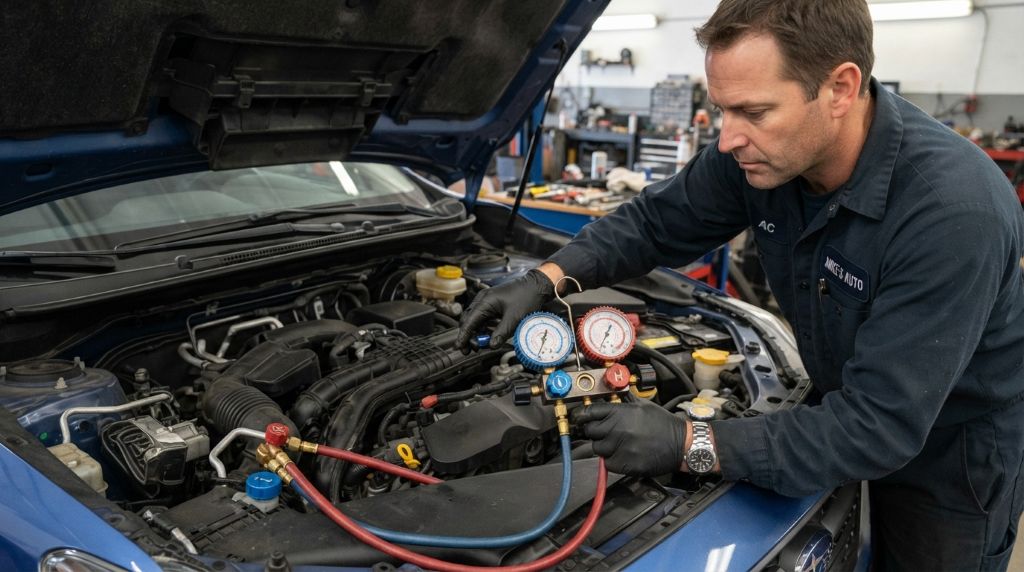
Professional shops have tools that homes do not. Their refrigerant recovery machines measure charge precisely. Their UV dye tests reveal leaks that eyes miss. A technician injects glowing dye into the system, runs the AC, and then shines a UV light across the lines. The leak glows like a campfire. Electronic sniffers detect escaping refrigerant even faster.
Expect these typical price ranges:
- Recharge with leak test: $150 to $300
- O-ring or hose repair: $150 to $400
- Condenser replacement: $300 to $700
- Blend door actuator: $150 to $450
- Compressor replacement: $500 to $1,500
Always ask for the leak test before agreeing to a recharge. A recharge without leak repair is money poured into a broken bucket. The system will be warm again within weeks, and you will pay twice. Additionally, released refrigerant harms the environment, which is why the law requires proper recovery. The NHTSA heatstroke page reminds us why summer cabin safety matters as well.
My lake trip repair ended with a new compressor, a new condenser, and a complete flush. The technician showed me the punctured old condenser under his shop light. Since then, I run the AC for ten minutes every week, even in winter. This habit keeps the seals lubricated and prevents the drying that starts most leaks.
Final Thoughts
So, why does my car AC blow warm air? Usually, low refrigerant from a small leak is to blame. However, a dead fan, a clogged condenser, a failed compressor, or a stuck blend door can all mimic the same symptom. Work through the simple checks first, then let a professional find any real leak. If you want to build your automotive knowledge, you can also explore these six platforms to learn automotive repair for practical guidance.
Remember my two-week delay. Warm air was the warning, and ignoring it turned $280 into $980. Therefore, act early, test your system this weekend, and book a leak check before the next heat wave.
Has your AC ever quit on a road trip? Share your story in the comments below. Additionally, share this guide with a friend who keeps saying the AC just needs a recharge.
Frequently Asked Questions
Why does my car AC blow warm air at idle but cold while driving?
A failed condenser cooling fan is the usual cause. At speed, airflow cools the condenser naturally.
Can I just recharge the AC myself?
You can, but it is risky. Kits hide leaks and overcharge systems. Professionals find the real leak first.
Is it safe to drive with the AC blowing warm air?
Yes, the car drives fine. However, running a low system can destroy the compressor, so repair it soon.
How much does a car AC repair usually cost?
Recharges run $150 to $300. Compressor replacement is the big one, often $500 to $1,500.
How often should car AC refrigerant be replaced?
Almost never. A sealed, healthy system holds its charge for years. Frequent recharges mean there is a leak.