
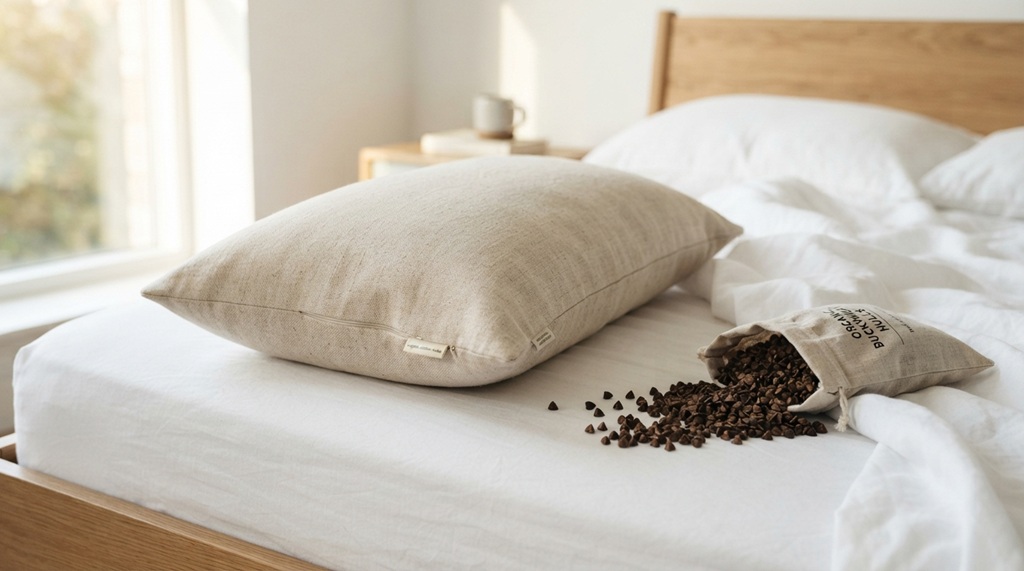
Waking up with a stiff neck is a frustrating way to start the day. If you’ve cycled through memory foam, down, and synthetic pillows without finding lasting relief, you may be considering a buckwheat pillow. These natural fill pillows provide firm, moldable support that many sleepers swear by, particularly for neck pain. However, choosing the right one involves more than just picking the first bag you see online. This guide will walk you through everything you need to know about selecting a buckwheat pillow for neck support in CA, from understanding fill weight and hull quality to navigating local climate considerations and finding the right loft for your sleeping position.
Key Takeaways
- Buckwheat pillows offer unmatched, customizable firmness because you can adjust the fill amount to match your exact body frame and sleep position.
- Fill weight is the most critical factor; it directly determines the loft (height) and firmness, which must align with whether you sleep on your back, side, or stomach.
- Hull quality and sourcing matter—organic, whole hulls create better airflow and last longer than broken or pulverized filler.
- California-specific considerations include dryness and allergies, so choosing a breathable, washable cover and knowing how to clean the hulls properly is essential for longevity.
- Most new buckwheat pillows need a 5–10 day adjustment period as your neck muscles adapt to the firm support; don’t judge the pillow on the first night alone.
Why Choose a Buckwheat Pillow for Neck Support?
Buckwheat pillows differ from conventional pillows because they don’t rely on compression for support. Instead, the hulls shift and conform to your unique contours, creating a stable, firm cradle for your head and neck. Unlike memory foam, which can sag or lose its shape, buckwheat hulls maintain their integrity for years. In California, where active lifestyles and an emphasis on wellness are common, many people prefer a natural, adjustable option that provides consistent spinal alignment throughout the night. The key benefit is that buckwheat pillows offer a barely-there “give” but firm resistance, which is ideal for those who find standard pillows too soft or unsupportive.
Finding a quality option is easier when you know what to look for. For a great starting point, check this detailed breakdown of the buckwheat pillow neck support CA options available, which lists top-rated models and their specific features.
How to Determine the Right Fill Weight for Your Body
The single biggest mistake buyers make is choosing a buckwheat pillow without considering the fill weight. The fill weight dictates the loft, and the loft dictates how well your spine stays aligned.
Fill weight is measured in pounds. A heavier fill means a firmer, taller pillow. A lighter fill means a flatter, more pliable pillow. Here’s how to choose based on your sleep position:
Back Sleepers
You need a medium loft to support the natural curve of your cervical spine. Typically, a fill weight between 4.5 and 5.5 pounds works well. The goal is to keep your forehead and chin aligned with your chest, without your chin tucked too far down or your head pushed too far back.
Side Sleepers
This is the trickiest category. Side sleepers need the highest loft to fill the gap between the ear and the outside of the shoulder. A fill weight of 6 to 7 pounds is common, but taller or broader individuals often require more. The rule of thumb is that the pillow should be tall enough that your neck is straight, not bent sideways toward the mattress.
Stomach Sleepers
Stomach sleepers need the thinnest profile to avoid straining the neck. Look for a fill weight under 4 pounds, or simply remove a significant amount of hulls from a standard 5-pound bag. Many stomach sleepers use the pillow more like a very soft prop than a full loft.
Practical Tip: When purchasing in California, look for pillows that come with a zipper opening. This allows you to remove or add hulls to fine-tune the loft at home. A one-size-fits-all weight rarely works perfectly without some adjustment.
Evaluating Hull Quality: Organic vs. Conventional
Not all buckwheat hulls are created equal. The quality of the hulls directly impacts the pillow’s feel, durability, and whether it will produce dust or allergens over time.
Whole Hull Integrity
High-quality pillows use 100% whole hulls. These are the hard, pyramid-shaped shells that retain their shape and bounce back after compression. Lower-quality pillows often contain a high percentage of broken hulls or dust. These broken pieces are less supportive and degrade faster. When you squeeze a high-quality buckwheat pillow, you should hear a rustle and feel the hulls move smoothly.
Organic Sourcing
In California, many sleepers prefer organic buckwheat hulls to avoid pesticides and chemicals. Organic certification ensures the buckwheat was grown without synthetic fertilizers or pesticides. While organic doesn’t necessarily change the physical feel, it is a significant consideration for those with chemical sensitivities or a preference for natural products.
Dust and Allergens
Buckwheat is naturally resistant to dust mites because it doesn’t provide a food source for them. However, the hulls themselves can harbor dust if not cleaned thoroughly during processing. Look for pillows that are listed as “double-cleaned” or “dust-free.” This reduces the initial strong odor and lessens the chance of sneezing or congestion during the first few nights.
Considerations Specific to California Shoppers
While the core mechanics of a buckwheat pillow are the same everywhere, there are a few practical factors that carry extra weight for those living in California.
Climate and Airflow
Buckwheat hulls are naturally heat-neutral. Unlike memory foam, which traps body heat, the hulls allow air to circulate freely through the pillow. This is a major advantage in Southern California’s warmer climates. However, in coastal areas with high humidity, moisture can be a concern. The hulls themselves dry quickly, but the cover must be breathable. Opt for a cover made of organic cotton or hemp, which wicks moisture and stops mold growth.
The “Crunch” Factor
Buckwheat pillows are noisy. They make a rustling sound when you move. For some, this is a soothing, natural white noise. For others, it is a dealbreaker. If you are a light sleeper or share a bed with someone who is easily disturbed, consider a pillow with a thicker, quilted cover. This dampens the sound significantly while still allowing you to feel the hull adjustment.
Sustainability
California consumers often prioritize eco-friendly options. Buckwheat is an excellent choice here. It is a renewable crop, and the hulls are a byproduct of the food industry, meaning you’re utilizing what would otherwise be waste. Check if the brand uses non-toxic glues or dyes in the cover to ensure your pillow aligns with a healthy home environment.
How to Adjust Your Buckwheat Pillow for the First Time
You cannot simply place a buckwheat pillow on your bed and expect it to be perfect. It requires setup. Here is a simple step-by-step process to get it right on the first night.
- Break It Up: Remove the pillow from the box and massages the hulls thoroughly. They will be compacted from shipping. Knead the pillow until the hulls feel free-flowing.
- Start at 80%: If your pillow came with a standard load of hulls, remove about 20% of the fill into a plastic bag. It is easier to add back than to take away later.
- Test the Loft: Lie down in your normal sleep position. Have a partner or use your hand to check if your neck is straight. If your head is tilted up, remove more hulls. If your neck is sagging downward, add hulls back.
- Shape the “Trough”: With your hand, push the hulls to the sides, creating a slight depression in the center for your head. The remaining hulls on the sides will support your neck’s natural curve.
- Wait It Out: The firmness will feel strange for the first few nights. Your neck muscles have been accustomed to a softer surface. Give it at least a week before deciding to return it.
Common Pitfalls When Buying a Buckwheat Pillow
Understanding what to avoid is just as crucial as knowing which features to seek, especially for first-time buyers trying to eliminate chronic neck strain. Common mistakes include overfilling the casing—which leaves the neck awkwardly elevated—and assuming a buckwheat pillow requires no break-in period or loft adjustment to match your specific sleep posture. If you ultimately find the firm, tactile feel of hulls too rigid for your preferences, consider exploring alternative supportive options alongside organic buckwheat by learning how to pick best budget latex pillows in PA for a naturally buoyant, contoured sleeping experience.
Buying Too Firm Off the Bat
Many users assume that because they have neck pain, they need the absolute hardest pillow possible. This is often incorrect. If the pillow is too tall and firm, it forces your head toward your shoulder, exacerbating the very stiffness you are trying to fix. Always start with less fill and build up to a comfortable firmness slowly.
Ignoring the Cover Quality
The inner hulls are only half the product. A low-thread-count cover will feel scratchy and may rip under the weight of the hulls. Look for a cover with a zipper that is at least half the length of the pillow. This makes refilling and adjusting much easier. A double-layer cover is a wise investment for durability.
Using a Buckwheat Pillow for Reading
Buckwheat pillows are firm. They are designed for sleeping, not for propping yourself up to read or watch TV. The hulls will shift and create pressure points that are uncomfortable for extended sitting. Keep a separate soft cushion for lounge activities to protect your buckwheat pillow’s shape.
How to Clean and Maintain Your Buckwheat Pillow

Proper maintenance extends the life of your pillow and ensures hygienic sleep. A high-quality buckwheat pillow can last 5 to 10 years if cared for correctly.
Spot Cleaning: For minor spills, do not wash the entire pillow. Spot clean the fabric cover with a damp cloth and mild soap immediately.
Sun Drying: Once a month, empty the hulls into a large cotton laundry bag or a spare pillowcase. Put the hulls out in the sun for a few hours. The sunlight naturally kills bacteria and removes any moisture that has accumulated.
Washing the Cover: Unzip and remove the cover. Most covers are machine washable in cold water. Air dry or tumble dry on low. Never use heat on the hulls themselves, as this can make them brittle.
Handling the Hulls: If the hulls get damp, they will clump. If this happens, spread them out on a dry towel and let them air dry completely before putting them back in the pillow cover.
Frequently Asked Questions
Are buckwheat pillows good for severe neck pain?
Buckwheat pillows are frequently recommended for neck pain because they offer firm, stable support that helps align the spine. However, they are not a medical device. If your neck pain is chronic or severe, consult a physical therapist or chiropractor. For mild stiffness, a buckwheat pillow can provide the supportive pressure needed to relax muscles during sleep.
How long do buckwheat hulls last?
With proper care, the hulls themselves can last for 5 years or more. Over time, they will break down into smaller pieces, reducing their loft and support. When you notice the pillow becoming softer and not holding its shape, it’s time to replace the hulls or buy a new pillow.
Can you use a buckwheat pillow on top of a regular pillow?
You can, but it is almost never recommended. Stacking a buckwheat pillow on a soft mattress or pillow can create an excessively high loft, misaligning your neck. The purpose of a buckwheat pillow is to replace the need for a soft base. It should sit directly on the mattress.
Will the pillow be too hard for a side sleeper?
No, if the fill is adjusted correctly. Side sleepers need the firmness to fill the space between their ear and shoulder. The hulls will sink slightly under the weight of your head, creating a cradling effect. The key is having enough hulls to support the neck without letting the head sink too deep.
Does the buckwheat pillow smell?
New buckwheat hulls have a grassy, earthy smell that often resembles oatmeal or hay. This smell dissipates in a few days to a week. Air drying the hulls before first use can speed up this process. The smell is a sign that the hulls are natural and untreated, but it should not be overpowering.
Are buckwheat pillows safe for children?
Yes, but with caution. Buckwheat pillows are firm and heavy. They are generally safe for children older than 2 years who are already using pillows. For younger toddlers, the heavy weight could restrict movement during sleep. For older children, the adjustability is excellent for preventing flat spots and promoting spinal alignment as they grow.
Conclusion
Choosing the right buckwheat pillow for neck support in CA comes down to understanding your unique sleep anatomy, prioritizing hull quality, and exercising a little patience. Remember to focus on adjustability—look for a zipper and a fill weight that gives you room to fine-tune the loft. Consider the climate-specific benefits of airflow and dust-free processing, and don’t skimp on the cover quality. While the firmness takes time to get used to, the long-term payoff of consistent spinal alignment and reduced morning stiffness is well worth the adjustment period. Take your time, set up your pillow correctly, and give your neck the natural support it has been craving.