
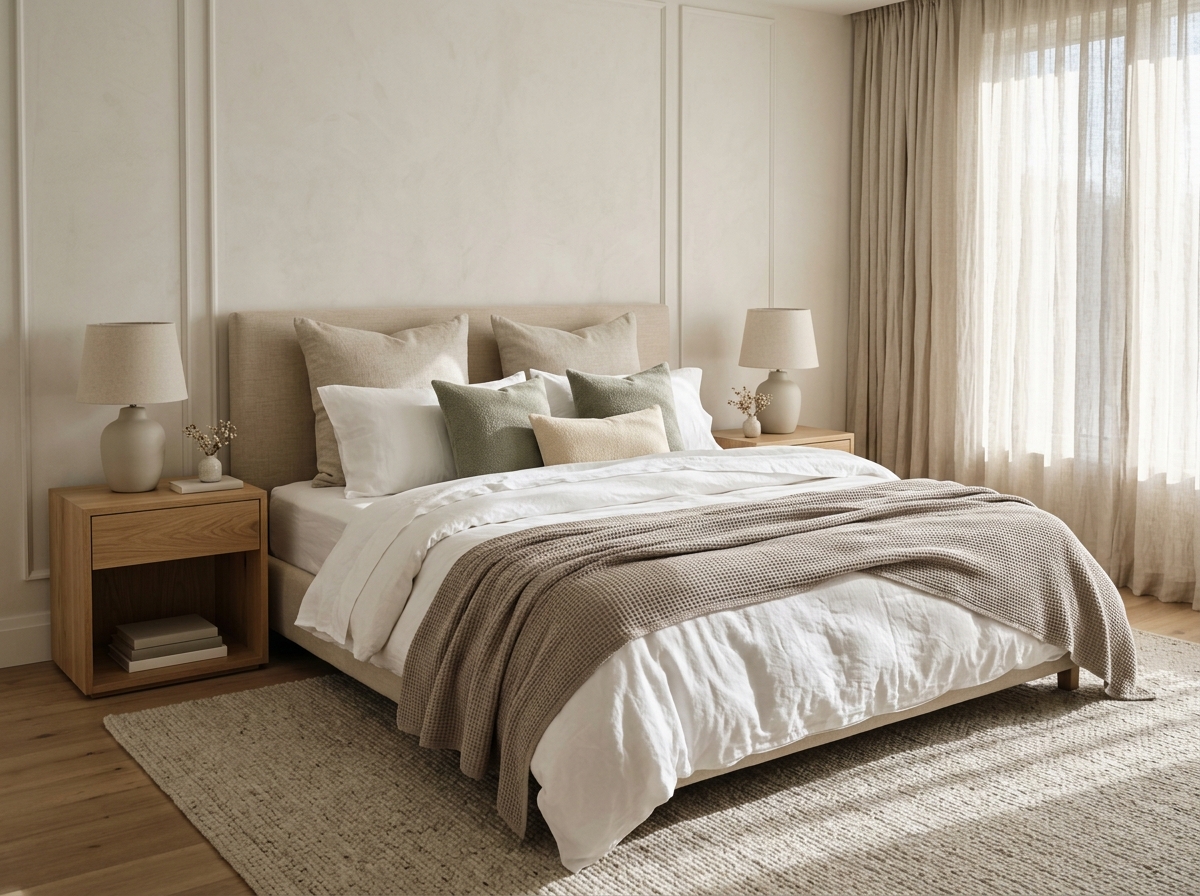
A beautifully styled bed can transform a bedroom from ordinary to magazine-worthy, but most people struggle because they treat pillow arrangement as an afterthought. The secret professionals rely on starts with understanding your foundation: knowing the standard regular size pillow dimensions //pillowshowcase.com/pillow-faq-guides/pillow-size-and-dimensions-chart/ helps you build layers that look intentional rather than cluttered. Whether you are working with a queen bed or a king, the principles remain consistent. This guide walks you through the exact layering techniques, proportion rules, and finishing touches that interior designers use to create beds that look effortlessly polished.
Quick Answer
To style a bed like an interior designer, start with functional sleeping pillows against the headboard, then add decorative layers in descending size order. Use odd numbers for visual interest, maintain a consistent color palette of two to three tones, and finish with a throw blanket draped asymmetrically. The goal is creating depth through layering while keeping the arrangement practical enough to remove each night.
Key Takeaways
- Interior designers layer pillows in descending size order from back to front, creating a pyramid effect that draws the eye upward
- Standard pillow dimensions matter because decorative shams and accent pillows need to proportionally complement, not overwhelm, the sleeping pillows beneath them
- Odd-numbered pillow groupings (three, five, or seven) generally look more dynamic and intentional than even numbers
- A consistent two-to-three color palette with varying textures creates visual interest without chaos
- The final styling step, draping a throw blanket, should look relaxed rather than perfectly arranged
Start With the Right Foundation: Pillow Sizing
Before arranging anything, you need pillows that fit your bed properly. A queen bed measures 60 inches wide by 80 inches long, while a king measures 76 inches wide by 80 inches long. Standard pillows, also called regular size pillows, typically measure 20 inches by 26 inches. These dimensions work well for both queen and full-size beds as sleeping pillows.
For king beds, you have two options: use standard pillows in pairs, or upgrade to king-size pillows measuring approximately 20 inches by 36 inches. Using undersized pillows on a large bed creates a proportion problem that no amount of decorative styling can fix.
The key insight many people miss is that your sleeping pillows form the visual base of your arrangement. If they look skimpy or mismatched, the entire bed feels unfinished regardless of how many decorative pillows you add on top.
The Descending Size Method for Pillow Arrangement
Interior designers arrange pillows in descending size order from back to front. This creates a natural visual slope that guides the eye from the tallest point near the headboard down toward the foot of the bed. The result feels deliberate and balanced.
Back Layer: Sleeping Pillows or Euro Shams
Place your largest pillows against the headboard first. On a queen or full bed, this typically means two standard sleeping pillows positioned flat. On a king bed, you might use three standard pillows across or two king-size pillows.
If you want a more designed look, use European shams (typically 26 inches square) as your back layer instead. Euro shams stand upright and create a substantial backdrop for the arrangement. They work particularly well on beds without a headboard or with a low headboard because they add height visually.
Middle Layer: Standard Shams or Decorative Pillows
The middle layer adds color and pattern. Standard shams matching your bedding or complementing it sit in front of the back layer, slightly leaning against it. Two shams work for most bed sizes, though a king bed can accommodate three if you prefer a fuller look.
This is where your color palette becomes visible. If your back layer is neutral, this is your opportunity to introduce an accent color or subtle pattern.
Front Layer: Accent and Throw Pillows
The front layer consists of smaller decorative pillows, often square or lumbar-shaped. This is where you can experiment with texture and personality. A common approach uses one or two accent pillows centered in front, or an odd-numbered grouping of three smaller pillows arranged symmetrically.
Lumbar pillows work especially well as the final pillow layer because their elongated shape contrasts with the squares behind them, adding visual variety without additional height.
How Many Pillows Should You Actually Use?
The answer depends on bed size and your tolerance for nightly removal. Here is a practical breakdown:
| Bed Size | Minimum Pillow Count | Designed Look |
|---|---|---|
| Twin | 2-3 | 4-5 |
| Full | 3-4 | 5-6 |
| Queen | 4-5 | 6-7 |
| King | 5-6 | 7-9 |
More pillows create a fuller, more luxurious appearance, but they also require more nightly maintenance. If you know you will not remove and replace seven pillows every day, choose a simpler arrangement you can realistically maintain. A well-executed five-pillow arrangement beats a sloppy nine-pillow arrangement every time.
Color and Texture: Building Visual Interest
Designers rarely use more than three colors in a bedding arrangement. The most reliable approach uses:
- A dominant neutral (white, cream, gray, or tan) for sheets and the base layer
- A secondary color for shams or the duvet
- An accent color appearing in smaller pillows or the throw blanket
Texture adds dimension without adding color. Mixing smooth cotton sheets with a linen duvet, velvet accent pillows, and a chunky knit throw creates richness that solid colors alone cannot achieve. The contrast between matte and sheen, smooth and nubby, keeps the arrangement interesting even in a monochromatic palette.
Mixing Patterns Without Creating Chaos
If you want patterns, follow the rule of scale variation. Combine one large-scale pattern (like a wide stripe or oversized floral), one medium pattern (like a geometric print), and one small pattern (like a subtle dot or thin stripe). Keep at least one element solid to give the eye a rest.
Stripes, in particular, work well in bedding because they create rhythm. Horizontal stripes on a duvet can make a bed appear wider, while vertical stripes on shams add height.
The Finishing Touch: Duvet and Throw Blanket Styling
How you arrange your duvet or comforter matters as much as your pillows. Designers typically use one of three approaches:
The Folded Top
Fold the top edge of your duvet back about one-third of the way down, revealing the sheets beneath. This adds visual depth and shows that the bed is layered. It also makes the bed look inviting rather than sealed shut.
The Full Cover
Pull the duvet all the way to the top of the mattress, tucking it neatly at the sides. This creates a cleaner, more minimalist look. Add pillows directly against the headboard without the folded reveal.
The Throw Blanket Drape
Drape a throw blanket across the lower third of the bed at a slight angle. The asymmetry prevents the arrangement from looking too rigid. Let the blanket fall naturally rather than arranging it precisely. A cashmere or chunky knit throw adds texture and a finishing layer that signals the bed is complete.
Common Styling Mistakes to Avoid
Even with good intentions, certain habits undermine the final result:
- Using too many matching pillows: Identical pillows in identical rows look flat. Vary size, shape, and texture while keeping colors coordinated.
- Ignoring proportion: Tiny accent pillows on a king bed look lost. Scale your decorative pillows to your bed size.
- Overstuffing: If you cannot comfortably remove the decorative pillows at night without a dedicated chair or basket, you have too many.
- Forgetting the bed skirt or base: A beautiful pillow arrangement on top of a messy, visible box spring or platform looks unfinished.
- Skipping the iron or steamer: Wrinkled shams and duvets undermine even the best arrangement. Steam your bedding before styling.
Adapting the Formula to Different Bedroom Styles
The same layering principles apply across design styles, but the execution changes:
Minimalist Bedrooms
Use fewer pillows (three to five total), stick to two colors, and choose pillows with clean edges and no fringe or tassels. Fold the duvet neatly and skip the throw blanket or use a simple, untextured one.
Traditional Bedrooms
Layer more heavily. Use Euro shams, standard shams, and multiple accent pillows. Incorporate patterns like toile, damask, or florals. A bed skirt or tailored bed base completes the look.
Bohemian Bedrooms
Mix textures freely. Combine linen, cotton, and woven materials. Use mismatched but coordinated pillow covers. Drape a patterned throw blanket loosely. The arrangement should feel collected rather than perfectly matched.
Frequently Asked Questions
What size pillows go on a queen bed?
Standard pillows (20 by 26 inches) work well for sleeping on a queen bed, typically used in pairs. For decorative layers, European shams (26 by 26 inches) and smaller accent pillows (18 by 18 inches or lumbar shapes) complete the arrangement. King-size pillows can also work on queen beds if you prefer a fuller look, though they may extend slightly beyond the mattress width.
Should decorative pillows match the bedding exactly?
No, exact matching often looks flat and uninspired. Instead, coordinate colors while varying texture, pattern scale, or shape. For example, if your duvet is solid white, use white shams with a subtle stripe and solid colored accent pillows in a complementary tone.
How do I keep pillows from sliding off the bed?
Lean decorative pillows against the layer behind them rather than stacking them directly on top of each other. Euro shams provide good support for smaller pillows placed in front. If sliding remains an issue, consider a textured or non-slip pillow insert, or place a firm lumbar pillow at the base of the arrangement.
Is it okay to use different pillow sizes in the same arrangement?
Yes, mixing sizes is exactly what creates visual interest. The key is maintaining a logical progression from largest at the back to smallest at the front. Mixing a 26-inch Euro sham with a 20-inch standard sham and an 18-inch accent pillow follows this principle successfully.
How often should bedding be washed and pillows replaced?
Sheets should be washed weekly. Pillowcases should be washed just as often. Decorative pillow covers can be washed monthly or as needed. Sleeping pillows themselves typically need replacement every one to two years depending on material and use, as they lose loft and accumulate allergens over time.
Conclusion
Styling a bed like a designer comes down to layering with intention. Start with properly sized sleeping pillows, add decorative layers in descending size order, and keep your color palette tight. The arrangement should look polished but remain practical enough for daily life. Begin with the pillow foundation, get the proportions right, and the rest of the styling will fall into place naturally. A well-made bed sets the tone for the entire bedroom, and these techniques can make yours look professionally designed without the professional price tag.