Keeping an aquarium healthy starts with knowing what is in your water. Fish and coral cannot tell you when something is wrong. However, the water chemistry will. An accurate aquarium test kit gives you the information you need to act before problems develop.
With so many test kits available today, choosing the right one can feel overwhelming. Some kits are highly precise. Others give vague or inconsistent results. This guide will help you understand what to look for, what to avoid, and how to get the most reliable readings every time you test.
Why Water Testing Matters for Every Aquarium Owner
Water quality directly affects the health of every living thing in your tank. Fish, invertebrates, and plants all depend on stable water parameters. Even small shifts in ammonia, nitrite, or pH can cause stress and illness.
Testing regularly allows you to catch problems early. Additionally, it helps you understand how your tank cycles and changes over time. Without testing, you are guessing. And guessing with a living ecosystem is never a good idea.
For reef tank owners, the stakes are even higher. Coral is extremely sensitive to changes in calcium, alkalinity, and magnesium. Reef tank safety depends on frequent and accurate monitoring of these parameters. A single missed spike can wipe out months of careful work.
Understanding the Different Types of Test Kits
Before you can choose the right kit, you need to understand what is available. There are three main types of aquarium test kits used in home settings.
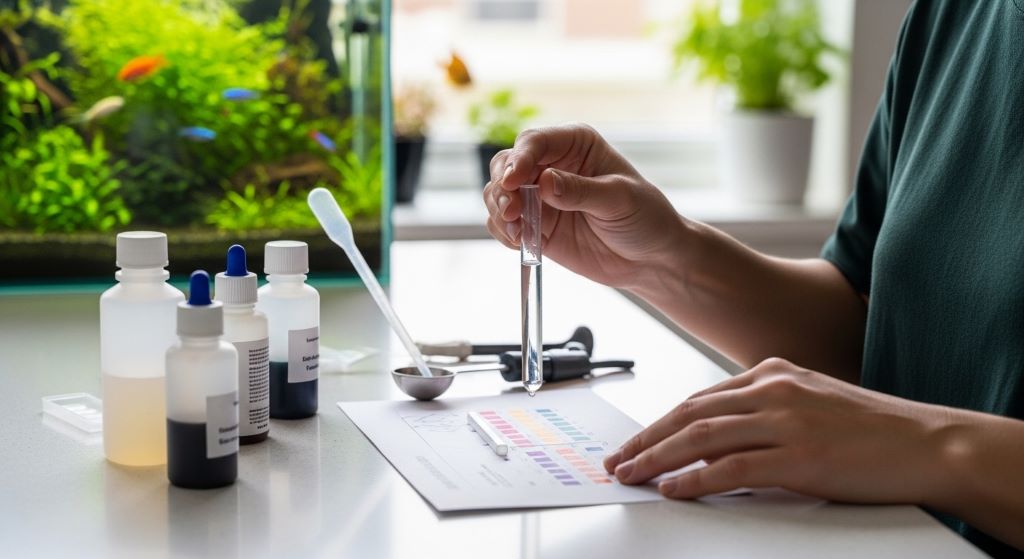
Liquid test kits use chemical reagents that you mix with your water sample. You then compare the resulting color to a printed chart. These kits are widely regarded as the most accurate option for home use. They tend to be more precise than other methods and work across a wide range of parameters.
Test strips are the quickest option. You dip a strip into the water and read the color change within seconds. They are convenient, but they are also the least accurate. Strips can degrade if exposed to moisture or heat, which leads to false readings. Therefore, they are best used as a quick general check rather than a precise measurement.
Electronic and digital testers are a third category. These devices measure parameters like pH and salinity with a probe. They are fast and remove the guesswork of color comparison. However, they require regular calibration and can be expensive to maintain properly.
Key Parameters Every Kit Should Be Able to Test
Not every kit covers every parameter. Knowing which ones matter most for your specific tank will help you choose wisely.
For freshwater tanks, the essential parameters include ammonia, nitrite, nitrate, and pH. These four form the foundation of home water monitoring. If these are stable and within healthy ranges, your tank is likely in good shape.
For saltwater and reef tanks, the list expands. You also need to monitor salinity, alkalinity, calcium, and magnesium. Additionally, phosphate levels matter because high phosphate suppresses coral growth. For serious reef keepers, testing for iodine and potassium may also be worthwhile.
A complete home water monitoring routine covers all the parameters relevant to your tank type. Buying a kit that misses key parameters means you will need to purchase additional kits later, which costs more in the long run.
How to Evaluate the Accuracy of a Test Kit
Accuracy is the most important quality in any test kit. However, it is not always easy to spot from the packaging alone. There are a few reliable ways to assess how accurate a kit is before and after you buy it.
Check the Resolution of the Color Chart
Liquid test kits rely on color comparison. A good kit will have a color chart with many closely spaced shades. This allows you to distinguish between, for example, 0 ppm and 0.25 ppm of ammonia. A kit with only four or five color options gives you very limited precision.
Look for charts printed on sturdy, waterproof material. Wet or faded charts make accurate reading nearly impossible. Additionally, the colors should be clearly distinct from each other under normal lighting conditions.
Look for Manufacturer Transparency
Reputable kit manufacturers publish information about their testing methodology. They often provide accuracy ranges and shelf life data. If a brand provides no technical details at all, that is a sign to be cautious.
Some brands also offer professional or laboratory-grade versions of their products. These are often the same reagents used in fishery research and aquaculture settings. Therefore, finding a brand that supplies both consumer and professional markets is a good indicator of overall quality.
Read Independent Reviews from Experienced Hobbyists
Online aquarium communities are full of experienced keepers who have tested many kits side by side. Their feedback is valuable. Look for reviews that compare kit results against professional lab tests. Consistent agreement between a home kit and a lab result is the strongest endorsement possible.
Forums dedicated to reef keeping are especially useful here. Reef tank safety is taken very seriously in these communities, and members often share detailed comparisons of different brands and methods.
Top Features That Separate Reliable Kits from Unreliable Ones
Once you know the basics, it helps to have a specific checklist in mind when shopping. Here are the features that consistently separate high-quality kits from poor ones.
- Clear, step-by-step instructions with precise measurements for reagents and water samples
- A color chart with fine gradations and weather-resistant printing
- Reagent bottles with dropper caps that allow consistent, accurate dosing
- A stated shelf life for the reagents, typically one to two years
- Packaging that seals properly to protect reagents from moisture and light
- A wide enough testing range to cover both healthy levels and dangerous spikes
Additionally, kits that include a reference vial for zeroing your color comparison tend to produce more consistent results. This simple feature removes errors caused by variations in natural lighting.

Brands Worth Considering for Home Aquarium Testing
Several brands have earned strong reputations among hobbyists and professionals alike. API is one of the most widely used brands for freshwater testing. Their Master Test Kit covers the four core parameters and offers good accuracy for the price.
Salifert is highly regarded in the reef community. Their kits are known for fine resolution and reliable reagents. Many reef keepers consider Salifert a standard for calcium and alkalinity testing.
Red Sea also produces test kits specifically designed for reef environments. Their coral pro test kits include color comparators that reduce lighting-related reading errors. Furthermore, Hanna Instruments offers electronic checkers that many hobbyists use alongside liquid kits for double-checking results.
No single brand covers every need perfectly. However, combining a trusted liquid kit brand with an electronic checker for key parameters gives you a well-rounded testing routine.
How to Get the Most Accurate Results When Testing
Even the best kit gives poor results if used incorrectly. Following a few simple habits will improve your readings significantly.
Always rinse the test vial with tank water before taking a sample. This removes any residue from a previous test. Use the correct amount of water specified in the instructions. Too much or too little water throws off the reagent ratio and distorts the result.
Shake reagent bottles before use. Reagents can settle over time. A few firm shakes ensure the solution is fully mixed. Additionally, count your drops carefully and hold the bottle vertically for consistent drop size.
Compare your color reading in natural daylight or a daylight-balanced light source. Incandescent bulbs cast a yellow tint that can shift color perception. Therefore, testing near a window on a bright day gives the most accurate visual comparison.
Record your results in a log. Tracking changes over time helps you spot trends before they become problems. A simple notebook or a spreadsheet works perfectly for this purpose.
When to Replace Your Test Kit
Test kits do not last forever. Reagents degrade over time, especially once opened. Most liquid reagents remain reliable for one to two years after opening if stored correctly. However, exposure to heat, light, or moisture speeds up degradation.
If your reagents produce a color that falls outside the chart entirely, they may have expired. Similarly, if your readings seem inconsistent from one day to the next without a clear cause, it may be time for a fresh kit.
Store your kits in a cool, dark location away from direct sunlight. A closed cabinet works well. Avoid storing them near chemical products that release fumes, as these can contaminate reagents through the bottle caps.
Conclusion
Choosing an accurate aquarium test kit is one of the most important decisions you will make as an aquarium keeper. Liquid test kits offer the best accuracy for most home users. Look for kits with detailed color charts, quality reagents, and transparent manufacturer information.
Understanding which parameters matter for your specific tank helps you buy the right kit from the start. Consistent home water monitoring gives you the data you need to keep your fish and coral healthy. For reef keepers, accurate testing is not optional. Reef tank safety relies on it.
By using your kit correctly, storing it properly, and replacing it when needed, you can maintain reliable readings that protect your aquarium for years to come.
Frequently Asked Questions
How often should I test my aquarium water?
For established tanks, testing once a week is usually enough. New tanks going through the nitrogen cycle should be tested every day or two until the cycle is complete.
Are test strips accurate enough for reef tanks?
Generally, no. Test strips lack the precision needed for reef keeping. Liquid test kits or electronic testers are better choices for monitoring sensitive reef parameters.
Can I use a freshwater test kit for a saltwater tank?
Some parameters like pH and ammonia can be tested with the same kit. However, saltwater tanks require additional tests for salinity, alkalinity, and calcium that freshwater kits do not include.
How do I know if my test kit has expired?
Check the expiry date printed on the bottle. Additionally, if reagents produce colors outside the chart range or give readings that seem inconsistent, the kit has likely degraded and should be replaced.
What is the most important parameter to test in a home aquarium?
Ammonia is the most critical parameter, especially in new or recently changed tanks. Elevated ammonia is toxic to fish even at low levels and should be addressed immediately.
Related Topics:
What You Actually Need to Start a Reef Aquarium
How to Fertilize Aquarium Plants Naturally: A Complete Guide for Healthier Aquascapes