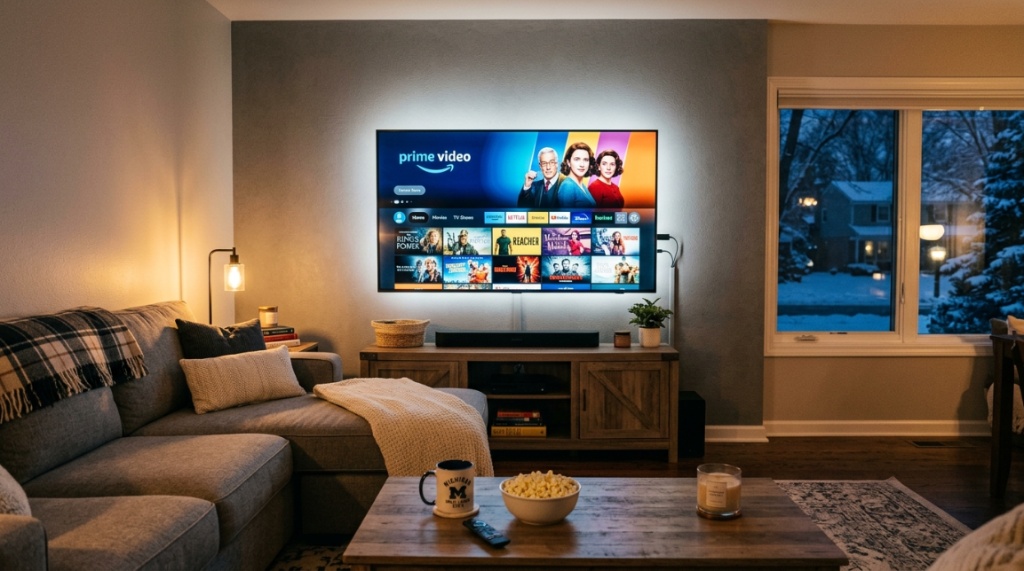
Picture this: you’ve just unboxed a brand-new 4K television in your living room, only to find the streaming interface lags, buffers, or worse—refuses to play content in crisp Ultra HD. This is the exact frustration many Michigan residents face, especially when Wi-Fi signals battle with thick walls or long distances from the router. The problem isn’t your TV; it’s the streaming device driving it. Choosing a smooth 4k fire tv stick michigan households rely on requires understanding your home network, your TV’s ports, and the specific processor inside the stick. Without this knowledge, you’re throwing money at a device that stutters during the final season of your favorite series. But here is the good news: finding a smooth 4K experience isn’t about buying the most expensive model. It’s about matching hardware capabilities to your actual home setup—from Detroit lofts to Upper Peninsula cabins. This guide walks you through every critical decision point, ensuring your streaming experience feels as smooth as fresh Michigan ice on a winter lake.
What Does “Smooth 4K” Really Mean for a Fire TV Stick?
Smooth 4K means the ability to stream Ultra High Definition content (3840 x 2160 pixels) without frame drops, stuttering, or prolonged buffering. For a Fire TV Stick, this depends on three core hardware components: the system-on-chip (SoC), the Wi-Fi standard, and the graphics processor. In Michigan, where broadband penetration varies from urban fiber to rural DSL, achieving this smoothness often requires more than just a sticker that says “4K.”
Understanding the Processor and RAM Requirements
The processor is the brain. For true smooth 4K, you need at least a quad-core processor clocked at 1.7GHz or higher. RAM is equally critical; 1GB is the absolute baseline, but 2GB is the practical minimum for navigating menus without lag. The Fire TV Stick 4K Max (2nd Gen) features a hexa-core processor, which handles high-bitrate 4K streams with ease. If you see “4K” on a stick with only 1.5GB RAM, expect occasional jitter during action-heavy scenes.
Why Wi-Fi 6 Matters for Michigan Homes
Michigan homes often feature plaster walls, brick exteriors, or multi-level floor plans that interfere with signals. Wi-Fi 6 (802.11ax) provides faster speeds and better performance in congested environments, critical for 4K streaming, which requires a sustained 25 Mbps connection. The older Fire TV Stick 4K features Wi-Fi 5 (ac); while workable, it may struggle in dense apartment complexes in Ann Arbor or Lansing. The newer models with Wi-Fi 6 handle these obstacles much better, reducing buffering dramatically.
The Role of HDMI Port Versions
You need an HDMI 2.0 port for standard 4K at 60fps. If your TV only has HDMI 1.4, the stick will still work but may force you into a lower refresh rate, causing judder. Always check your TV’s manual to confirm the HDMI port supports HDCP 2.2, a necessary protocol for streaming services like Netflix and Disney+ after 2018.
Which Fire TV Stick Model Is Best for 4K in Michigan?
Amazon currently offers three primary models with 4K support: the Fire TV Stick 4K, the Fire TV Stick 4K Max, and the Fire TV Cube. For most Michigan households, the Fire TV Stick 4K Max offers the best balance of price and performance, especially if you have a newer router. However, the right choice depends on your TV’s age, your internet plan, and how many devices are connected to your network.
Breaking Down the Fire TV Stick 4K (2023 Release)
This is the entry-level 4K option. It supports Dolby Vision, HDR10+, and offers a quad-core processor. It’s an excellent upgrade for older TVs where you only need basic 4K streaming. However, its Wi-Fi 5 chip and 1.5GB RAM mean it is *not* ideal for heavy multitasking or if your router is located two floors away.
Why the Fire TV Stick 4K Max Is the Michigan Favorite
The 4K Max (2nd Gen, released 2023) doubles the RAM to 2GB and includes a hexa-core processor. The most significant upgrade is Wi-Fi 6 support. In a smooth 4k fire tv stick michigan setup, this model ensures stable streaming even with multiple ring cameras and smart home devices eating bandwidth. It also supports Wi-Fi 6E in newer versions, though this is often overkill unless you have a compatible router.
When Does the Fire TV Cube Make Sense?
The Cube is for AV enthusiasts. It offers an octa-core processor and built-in speaker, but its main advantage is the Ethernet port. If you live in a rural area of Traverse City where Wi-Fi is unreliable, spending extra on the Cube to use a wired connection guarantees smooth 4K. Otherwise, skip it.
How Does Your Internet Speed Affect 4K Performance in Michigan?

To stream 4K smoothly, you need a sustained download speed of at least 25 Mbps for most services, but 50 Mbps is safer, especially if others are using the internet. Michigan’s internet landscape varies dramatically—areas near Detroit have fiber, while Northern Michigan often relies on cable or satellite. Your plan’s upload speed doesn’t matter for streaming, but download stability does. High latency caused by satellite internet (like HughesNet) will kill a “smooth” experience, regardless of the stick.
Calculating Your Household Bandwidth Needs
Consider the total load: one 4K stream uses 7-8 GB per hour. If two people stream 4K simultaneously, you need roughly 50 Mbps. Add in gaming (which uses about 3-5 Mbps), and you hit 60 Mbps. If you rarely exceed 100 Mbps download from Xfinity in Grand Rapids, the 4K Max is sufficient. However, if you have a 1Gbps fiber plan in Holland, consider the Cube for wired reliability.
How to Diagnose Network Bottlenecks in Your Home
Use the Fire TV’s built-in network test (Settings > Network > Check Connection). It shows your current link speed. If it reads below 25 Mbps while your plan claims higher, the problem is your router placement. Consider a mesh network like eero (popular in Michigan’s larger homes) to relay signals effectively.
Can a Good VPN Help or Hurt Streaming?
Some Michigan users use VPNs for out-of-market sports. Avoid this during 4K streaming. VPNs often reduce your effective speed by 30–50%, turning a smooth stream into a pixelated mess. If you must use one, choose a protocol like WireGuard, and connect to a VPN server in Chicago to reduce latency.
When Should You Choose the 4K Max Over the Standard Stick?
Choose the 4K Max if you have a 4K TV that is less than five years old, you own a router that supports Wi-Fi 6 (or plan to buy one), or you often have more than five devices connected to your network. The standard Stick is acceptable if your TV is in a bedroom, you have a simple open floor plan, and your router sits nearby.
Understanding the Price-to-Performance Ratio
The 4K Max typically costs only $20-$30 more than the standard 4K. This premium buys you twice the RAM, a faster processor, and Wi-Fi 6. Over the lifespan of the device (roughly three years), this price difference is negligible compared to the frustration of daily buffering. Consider the extra cost an insurance policy against video lag.
What About the Fire TV Stick Lite?
Do not purchase the Lite for 4K. It is capped at 1080p HD. You will not get a 4K signal, and the hardware internally downscales, making the interface feel sluggish. Always check the product title for “4K” before adding to your cart.
The Impact of Local Michigan Retailer Stock
Big-box retailers in Michigan often stock the standard 4K more than the Max. If you see a great deal on the previous-generation 4K Max (1st Gen, 2021), be cautious—it has older Wi-Fi 6 hardware. Always verify the model number. The current one ends in “T3M” (for Max) or “B” (for standard).
Why Does Dolby Vision and HDR+ Matter for Smooth Playback?
These high dynamic range formats offer better contrast and colors. But they also require more processing power. A stick that fails to decode these formats smoothly will often stutter when switching from a standard stream to a Dolby Vision stream, causing a brief black screen or audio delay. Fire TV Stick 4K Max handles both formats natively without performance hitches.
Is HDR10+ Essential for Michigan Sports Fans?
If you watch live sports on services like Peacock or Amazon Thursday Night Football, HDR10+ can help with fast-moving scenes. However, the broadcast is often locked to standard SDR. Don’t choose a stick solely for HDR10+ support; prioritise processing speed over format compatibility, as most streaming services prioritize Dolby Vision anyway.
How to Check if Your TV Supports These Formats
Hook up the stick and look for an “HDR” badge on the home screen. If you have an older 4K TV (2016-2017), it might not support Dolby Vision. In that case, the standard Fire TV Stick 4K will suffice, as the Max’s extra power won’t be utilized.
How Can You Optimize the Fire TV Stick for Smooth 4K Streaming?
Once you have the right hardware, software tweaks can further eliminate stutter. First, ensure your Fire TV Stick is plugged directly into the TV’s HDMI port, not through an older AV receiver that might bottleneck the signal. Second, update the firmware: go to Settings > My Fire TV > About > Check for Updates. Finally, adjust the display settings to match your TV’s native resolution (usually 4K @ 60Hz).
Selecting the Correct Display Resolution
Go to Settings > Display & Sounds > Display > Video Resolution. Choose “4K Ultra HD – 60Hz” if you are connecting to an HDMI 2.0 port. If you choose “4K – 30Hz” (because your TV only has HDMI 1.4), the interface will feel less fluid, but video playback will remain smooth for film content (24fps).
Turning Off Data-Hogging Features
Disable “Data Monitoring” if you have an unlimited plan. This feature can throttle background processes, causing lag. Also, disable “Search for Wi-Fi networks” in the Privacy settings to prevent the stick from scanning airwaves unnecessarily, which can cause ping spikes.
Using the Built-in Network Troubleshooter
Running the network check after a reboot can refresh your internal IP address. In many Michigan homes with static IPs, a simple “forget network” and rejoin can fix underlying packet loss. Navigate to Settings > Network > Select your SSID > Forget, then re-enter the password.
Is the Ethernet Adapter Worth It for Michigan Residents?
Yes, but only if you can physically run a cable. Amazon sells a proprietary Ethernet adapter (often $20) that plugs into the power port. This bypasses Wi-Fi entirely, giving you stable speeds up to 100 Mbps. For those in areas with severe congestion—like condos near Wayne State University—this is the only way to achieve a truly smooth 4K stream during peak hours.
Wired vs. Wi-Fi: Latency and Speed Tests
Wired connections reduce latency by at least 10-20ms. While this doesn’t matter for movies, it’s critical for live streaming or news where buffering appears. A wired connection will not increase your download speed beyond your plan, but it will deliver the maximum speed consistently, whereas Wi-Fi fluctuates.
Comparing the Official Amazon Adapter vs. Third-Party
Stick to the official adapter. Third-party ones with USB hubs can cause power issues, leading to random reboots. The official one has been tested to support the strict power requirements of the 4K Max without overheating in warmer Michigan summer months.
Can a Fire TV Stick Overheat in Michigan’s Climate?
While Michigan winters are frigid, home entertainment centers are typically warm. Overheating is a real risk if the stick is placed behind a TV where airflow is restricted. When the processor overheats, it throttles performance, causing severe lag and stuttering in 4K. Ensure you have at least two inches of clearance around the device.
Signs of Thermal Throttling to Watch For
If the video continues to stutter even when the network speed is fine, and the device casing feels hot to the touch, it’s thermal throttling. The Fire TV UI has no direct temperature sensor, but you can check by feeling the device after 30 minutes of streaming. If it’s painful to touch, move it.
Best Placement Tips for Heat Dissipation
Use an HDMI extension cable to hang the stick away from the TV’s back panel. This allows ambient air to cool it. Avoid placing it on top of a cable box or AV receiver, which emits heat. For in-wall installations, use the USB power cord to extend it out.
Which Streaming Apps Test the Stick’s 4K Capabilities Best?
Netflix and Disney+ are the most demanding. Their bitrate-heavy streams (up to 15-25 Mbps) will quickly expose a weak processor. YouTube also tests HDR performance with high frame rates. If these apps run smoothly, your stick is performing correctly. Amazon Prime Video’s 4K content is encoded efficiently, so it may not show problems that Netflix will.
Using the “Info” Overlay to Monitor Quality
On most Fire TV apps, press the “Info” button (the one with three horizontal lines) while playing content. It will display current resolution and bitrate. If it shows intermittent dips from 4K to 1080p, your connection or hardware is struggling. This is the ultimate test for “smoothness.”
Why Live TV Apps Like YouTube TV Are Different
Live television is broadcast at a lower bitrate than on-demand 4K (often 8-10 Mbps). Therefore, any 4K stick will handle YouTube TV without lag. This makes live TV a less reliable test of 4K capability. Focus on high-bitrate VOD content for testing.
How to Set Up Your Fire TV Stick for First-Time Use in 2026
Start with the remote: insert the two AA batteries (included). Power on the stick via the included power adapter (rated 6.25W). Once the boot logo appears, select your language and connect to Wi-Fi. The setup process takes roughly five minutes. Ensure “Automatic Updates” are enabled to receive the latest smoothness patches.
Completing the Amazon Account Registration
You must register the device to an Amazon account. Use your existing account or create a new one. If you subscribe to Amazon Prime, login to unlock the Prime Video interface. This step is mandatory; you cannot bypass the account setup and still use the Home screen.
Installing Essential Apps for Michigan Users
Beyond Prime Video, install streaming apps like Paramount+, Hulu, and YouTube. For local sports, consider downloading Bally Sports Detroit (now FanDuel Sports Network Detroit) for Tigers, Red Wings, and Pistons games. These are optimized for Fire TV OS and support seamless playback.
Essential Settings Tweaks Right After Setup
Immediately go to Settings > Preferences > Data Monitoring. Toggle it off. Then go to Sound & Display > Audio > Dolby Digital Plus. Set it to “Best Available.” This prevents audio drops. Finally, in Display, set “Video Resolution” to “Up to 4K Ultra HD.,
While setting up your home entertainment center, if you ever run into household appliance issues, check out why Why Does My Vacuum Make a Quick ‘Pfft’ Sound for troubleshooting tips.
What Are the Hidden Costs of Choosing the Cheapest 4K Stick?
The cheapest “4K” stick (often the Fire TV Stick 4K when on sale for $29.99) seems appealing. However, the cost of frustration—frequent buffering, laggy menus, and app crashes—eventually outweighs the savings. In Michigan, where many homes have older wiring and brick construction, the standard 4K stick often fails to deliver the advertised smoothness.
The Cost of Upgrading Your Router Prematurely
Many users blame the stick, but the root cause is the router. Buying a cheap stick and then discovering it can’t handle Wi-Fi signals across walls forces you to buy a $200 mesh Wi-Fi system. If you had purchased the 4K Max with Wi-Fi 6, a simpler (and cheaper) Wi-Fi 5 router upgrade would have sufficed.
App Compatibility and Future Proofing
Amazon continuously updates its OS. Older sticks stop receiving feature updates after three years, leading to compatibility issues with new app versions. The 4K Max, with its stronger processor and additional RAM, is likely to receive support through late 2028, making it a better long-term investment.
Comparing Total Cost of Ownership Over Three Years
Standard 4K stick ($35) + occasional lag (priceless) vs. 4K Max ($55) + zero lag. Over three years, the difference is only $20. Divide that by 1,095 days, and you’re paying less than 2 cents a day for a significantly better experience. That’s a trivial cost for eliminating nightly frustrations.
Frequently Asked Questions
Can I use a Fire TV Stick 4K with an older 1080p TV?
Yes, the stick will automatically output at 1080p. However, you are wasting the 4K capabilities and paying a premium for a resolution your TV cannot display. If you don’t plan on upgrading your TV soon, consider buying the cheaper Fire TV Stick (non-4K), but be aware that its processor might feel slower in 2026.
Do I need a 4K Fire TV Stick for streaming sports in Michigan?
If you’re watching sports through cable or YouTube TV, those broadcasts are typically in 1080p or 720p upscaled. A standard 4K stick will handle this easily. However, if you subscribe to local DTC streaming or watch soccer on apps like Fubo TV that offer 4K for select events, then the 4K Max is necessary for smooth high-motion clarity.
Is there a subscription fee for using a Fire TV Stick?
No, Amazon charges no monthly fee to use the device. You only pay for streaming services (Netflix, Hulu, etc.). Some apps, like Tubi, are free with ads. The stick itself is a one-time purchase.
Can I connect a Bluetooth keyboard to the Fire TV Stick?
Yes, you can pair a Bluetooth keyboard or game controller in Settings > Controllers & Bluetooth Devices > Other Devices. This does not affect 4K performance. It’s useful for typing long search queries on the home screen.
What internet speed do I need for a smooth 4K experience?
For a single stream, 25 Mbps is the baseline, but 50 Mbps is recommended for consistent quality. If you have multiple devices or users, add 10 Mbps per additional active stream. A smooth 4K setup requires a stable 50 Mbps connection from your ISP.
Can the Fire TV Stick work with a mobile hotspot for 4K?
Technically yes, but most mobile hotspots throttle data after a certain limit (like 25-50GB on Verizon or AT&T). 4K streaming consumes 7-8GB per hour, so a hotspot plan would be exhausted within a week of normal viewing. It is not a practical solution for households.
Conclusion
Choosing a Fire TV Stick for smooth 4K in Michigan is about more than checking a spec sheet. It’s about understanding your environment—from the age of your TV to the construction of your walls. The Fire TV Stick 4K Max remains the most reliable choice for most residents, owing to its Wi-Fi 6 support, extra RAM, and robust processor. It handles Michigan’s inconsistent home network conditions with far better resilience than its budget siblings. If your home has network dead zones or dense interference, the wired Ethernet adapter for the Cube or 4K Max is a worthwhile investment for absolute reliability.
Your goal is to enjoy content without interruption. Review your current internet plan, check your router’s generation, and inspect the HDMI ports on your TV. With the right setup, you’ll get a buttery-smooth 4K picture—whether you’re deep in the Detroit suburbs or remote Upper Peninsula town. Make the smart choice today, and your future self will thank you during every movie night and game-winning play. Don’t settle for lag; upgrade your streaming experience now.