

Rain can arrive without warning on a golf course. When it does, a small umbrella simply does not cut it. Serious golfers and outdoor enthusiasts know that size matters when the clouds open up. A large umbrella keeps you dry, protects your equipment, and lets you stay focused on your game instead of scrambling for shelter. This guide covers everything you need to know about choosing the right umbrella for maximum rain coverage, including what features to prioritize, which materials hold up best, and how to get the most value for your money.
Why Size Matters More Than You Think
Most standard umbrellas cover one person from the shoulders up. That might work on a short walk to your car. However, on a golf course, you are carrying clubs, wearing expensive gear, and often standing still in heavy rain. A small umbrella leaves your sides, bag, and lower body exposed.
A larger canopy changes everything. It creates a dry zone wide enough to cover you and a companion. It keeps your golf bag dry during a downpour. It also reduces wind-driven rain from soaking your clothes from the side. Therefore, investing in a properly sized umbrella is one of the smartest decisions any golfer can make before the season starts.
The difference in coverage between a standard umbrella and a large one is significant. Standard umbrellas typically measure around forty-two to forty-eight inches across the canopy. A 68-inch golf umbrella, by comparison, covers nearly twice that area. That extra width is not a luxury. On a rainy round, it is a necessity.
Key Features to Look for in a Golf Umbrella
Not all large umbrellas are built the same. Some look impressive in a store but collapse under the first gust of wind. Others feel light and sturdy but leak at the seams after a season of use. Knowing what to look for helps you avoid wasting money.
Here are the features that matter most:
- Canopy size: Aim for a canopy diameter of at least sixty inches. An extra-large umbrella in the sixty-two to sixty-eight inch range offers the best balance of coverage and portability.
- Wind resistance: Look for vented double-canopy designs. The vents allow wind to pass through without flipping the umbrella inside out.
- Frame material: Fiberglass shafts and ribs are lighter and more flexible than steel. They bend under pressure instead of snapping.
- Handle grip: A rubber or ergonomic handle reduces hand fatigue during long rounds. A straight handle is easier to carry alongside your golf bag.
- Fabric quality: Pongee and nylon fabrics offer good water repellency. Look for a canopy with a tight weave and a UV-protective coating for all-weather use.
- Auto-open mechanism: A single-button auto-open makes deploying the umbrella fast and easy, even with wet hands.
Additionally, consider the weight of the umbrella. A lighter model reduces strain during a full round of golf. However, very lightweight options sometimes sacrifice durability. The best models find a balance between both.
Wind Resistance: The Feature Most People Overlook
Rain and wind often arrive together. Many golfers focus entirely on canopy size and forget about wind performance. This is a costly mistake.
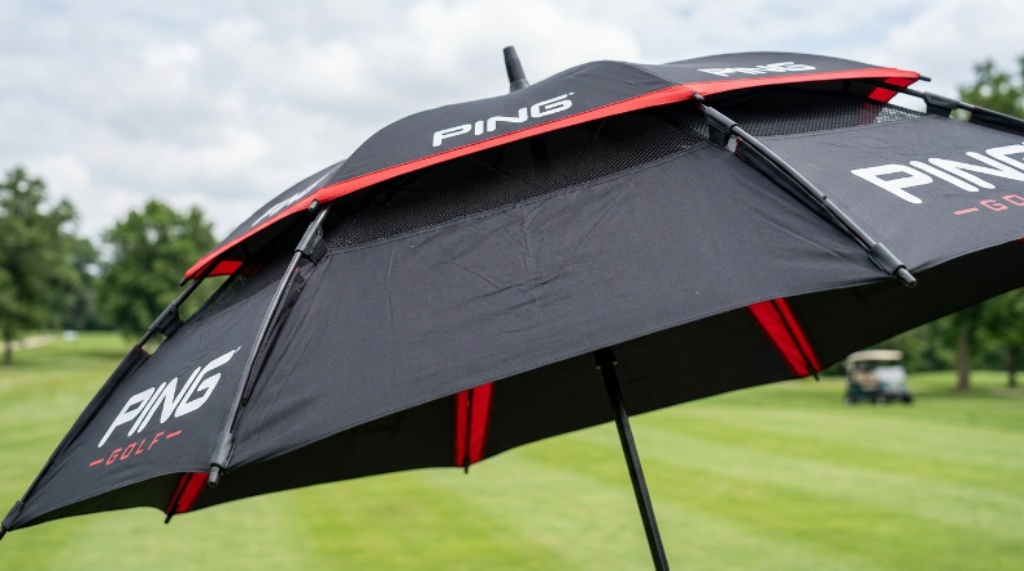
A standard single-canopy umbrella acts like a sail in strong wind. It catches the gusts and either flips inside out or pulls you off balance. A double-canopy design solves this problem. The two layers create a channel that lets wind pass through the top vent while the lower canopy continues to block rain.
Therefore, when shopping for a large golf umbrella, always check whether the design includes a double canopy or wind vents. This single feature can be the difference between an umbrella that lasts one stormy round and one that performs reliably for years.
The Best Materials for Long-Lasting Performance
Durability comes down to materials. A great-looking umbrella made from poor materials will let you down when you need it most. However, an umbrella built with the right components will stay reliable season after season.
The shaft should be made from fiberglass or a fiberglass-steel combination. Fiberglass is naturally flexible and rust-resistant. It holds up in salt air environments near coastal courses and handles rough weather without corroding.
The canopy fabric should be tightly woven and treated with a water-repellent coating. Some premium options use UV-blocking fabric as well. This protects you from sun exposure on partially cloudy days when the rain clears but the UV index remains high.
The runner and stretcher mechanism inside the canopy should be made from rust-resistant materials. These components are the most vulnerable to moisture damage. Rust in the mechanism makes opening and closing the umbrella stiff and unreliable over time.
How a 68-Inch Golf Umbrella Compares to Smaller Options
Size comparison is straightforward, but the real-world difference is worth spelling out. A standard forty-eight inch umbrella covers roughly one adult standing upright. Wind-driven rain at an angle reduces that coverage further.
A 68-inch golf umbrella covers two adults standing side by side. It keeps your golf bag fully sheltered even when leaned at an angle. It also provides more overhead clearance, which reduces the feeling of being cramped under the canopy.
The trade-off is that larger umbrellas are heavier and take up more space in a golf bag. However, most modern large-canopy designs use lightweight frames that keep the total weight manageable. Many weigh under one pound despite their generous size. Furthermore, the coverage benefit far outweighs the minor inconvenience of carrying a slightly larger umbrella.
Choosing the Right Colour and Design
Function comes first, but design still matters. Golf umbrellas come in a wide range of colours and patterns. Some golfers prefer classic solid colours that match their gear. Others choose bright stripes or club-branded designs.
From a practical standpoint, darker canopy colours absorb more heat on sunny days. Lighter colours reflect sunlight and keep the temperature under the canopy more comfortable. Additionally, high-visibility colours and patterns make you easier to spot on a foggy or overcast morning, which improves safety on a busy course.
Some umbrellas feature colour-blocked panels that combine style with function. These are a popular choice among club players who want to look sharp even in bad weather.
Caring for Your Golf Umbrella to Extend Its Life
A quality umbrella can last many years with proper care. Most people overlook maintenance, which shortens the lifespan of even the best models.
After each use in the rain, open the umbrella fully and allow it to air dry completely before storing. Never store a wet umbrella in a closed bag or cupboard. Moisture trapped inside promotes mildew growth and weakens the fabric over time.
Periodically clean the canopy with a damp cloth and mild soap. Rinse thoroughly and let it dry in the open air. Avoid machine washing, as this strips the water-repellent coating from the fabric.
If the water-repellent coating begins to wear off, you can restore it with a fabric reproofer spray. These sprays are widely available and extend the life of the canopy fabric significantly. Therefore, a small investment in maintenance protects your larger investment in the umbrella itself.
Getting Value Without Overspending
You do not need to spend a lot to get a reliable large golf umbrella. The market offers excellent options across a wide price range. Mid-range models between twenty and fifty dollars often deliver everything a recreational golfer needs.
Premium models above fifty dollars usually offer better materials, tighter construction, and longer warranties. They are worth considering if you play frequently or in consistently harsh weather conditions. However, for most golfers, a well-reviewed mid-range option provides excellent performance and durability.
Reading genuine customer reviews is the best way to separate reliable models from disappointing ones. Look for reviews that mention long-term use, wind performance, and whether the canopy holds up after multiple seasons.
Conclusion
Staying dry on the course is not just about comfort. It helps you concentrate, protects your equipment, and keeps your clothing in good condition. Choosing the right umbrella makes all of that possible. A large canopy, wind-resistant double-canopy design, and durable fiberglass frame are the three most important things to prioritize.
An extra-large umbrella designed specifically for golf offers coverage that a standard umbrella simply cannot match. Additionally, proper care and maintenance ensure that your investment lasts for many seasons. Whether you play once a month or every weekend, a high-quality large golf umbrella is one of the most practical additions to your golf bag.
Frequently Asked Questions
What size golf umbrella gives the best rain coverage?
A canopy diameter of sixty to sixty-eight inches offers the best balance of coverage and portability. This size comfortably covers one adult and a golf bag, or two adults standing closely together.
Are double-canopy golf umbrellas really better in wind?
Yes. A double-canopy design allows wind to pass through the top vent rather than flipping the umbrella inside out. This makes them significantly more stable in strong gusts compared to single-canopy models.
How heavy is a large golf umbrella?
Most quality large golf umbrellas weigh between twelve and twenty ounces. Fiberglass-frame models tend to be lighter while still offering excellent durability and wind resistance.
Can I use a golf umbrella for everyday use outside the course?
Absolutely. A large golf umbrella works well in any outdoor setting where maximum rain coverage is needed. They are popular at outdoor events, sports matches, and during daily commutes in rainy climates.
How do I stop my golf umbrella from flipping inside out?
Choose a model with a vented double canopy and flexible fiberglass ribs. These two features together greatly reduce the risk of the canopy inverting in strong wind. Holding the umbrella at a slight angle into the wind also helps maintain stability.