

Getting a good night’s sleep outdoors in cold weather is harder than most people expect. The temperature drops fast after sunset. Your sleeping bag might keep your body warm, but your head and neck can still suffer without the right pillow. A quality camping pillow designed for cold conditions makes a real difference. It helps you sleep deeper, wake up less stiff, and feel ready for whatever the next day brings.
This guide covers everything you need to know about choosing the best camping pillow for cold weather. You will learn what features matter most, how to layer your sleep system properly, and what cold weather sleep tips can help you rest better no matter where you pitch your tent.
Why Your Pillow Matters More Than You Think
Most campers spend a lot of time researching sleeping bags and sleeping pads. However, they often overlook the pillow. That is a mistake. Your pillow affects how well your neck and shoulders recover overnight. A poor pillow leads to poor sleep. Poor sleep leads to poor performance on the trail.
In cold weather, the challenge is even greater. Standard inflatable pillows lose heat quickly. They feel cold against your face and ears in low temperatures. Therefore, a pillow built for warmth and insulation is not just a comfort upgrade. It is a practical necessity.
What Makes a Camping Pillow Suitable for Cold Weather
Not every camping pillow handles cold conditions equally. Several key features separate a warm-weather pillow from one built to handle freezing nights.
Here is what to look for:
- Insulated fill: Down or synthetic insulation inside the pillow traps heat and keeps the surface warmer against your skin.
- Soft outer fabric: A fleece or brushed fabric cover feels gentle on your face and adds a layer of warmth that bare nylon cannot.
- Compressible design: A pillow that compresses into a small stuff sack is easier to pack and can be layered inside your sleeping bag for extra warmth.
- Moisture resistance: Cold environments often bring condensation. A pillow with a moisture-resistant shell holds up better over multiple nights.
- Loft and support: Adequate loft keeps your neck aligned with your spine, which prevents stiffness and soreness in the morning.
Additionally, weight matters for backpackers. The best cold weather pillows balance warmth and packability without adding unnecessary bulk to your pack.
Types of Camping Pillows and How They Perform in the Cold
Understanding the different pillow types helps you match the right option to your trip style.
Compressible Pillows
Compressible pillows are filled with down or synthetic insulation. They are the warmest option available for cold weather camping. They feel closest to a regular pillow and work well inside a tent on freezing nights. However, they are bulkier than inflatable options. For car camping or base camp trips, that trade-off is easy to accept.
Inflatable Pillows
Inflatable pillows pack down to almost nothing. They are lightweight and easy to carry on long backpacking trips. In cold weather, however, the air inside the pillow cools down quickly. This makes them feel less comfortable than compressible options. Some inflatable pillows come with a soft cover that adds warmth. That cover makes a noticeable difference on cold nights.
Hybrid Pillows
Hybrid pillows combine an inflatable core with a compressible outer layer. They offer a middle ground between warmth and packability. Therefore, they are a smart choice for backpackers who camp in variable or cold conditions. You get the support of insulation without the full bulk of a compressible pillow.
Top Features to Prioritize When Buying
Once you understand the types, narrowing down your choice becomes easier. Focus on these priorities based on your specific camping style.
For backpackers covering long distances, weight and pack size come first. A hybrid or lightweight compressible pillow with synthetic insulation works well. It handles cold nights and still fits inside a full pack.
For car campers or those setting up base camps, comfort takes priority. A full-size compressible pillow with a down fill and fleece cover provides the most warmth and the best sleep experience.
For all-season campers who travel frequently, versatility matters most. Look for a pillow that performs well across a range of temperatures and comes with a removable, washable cover.
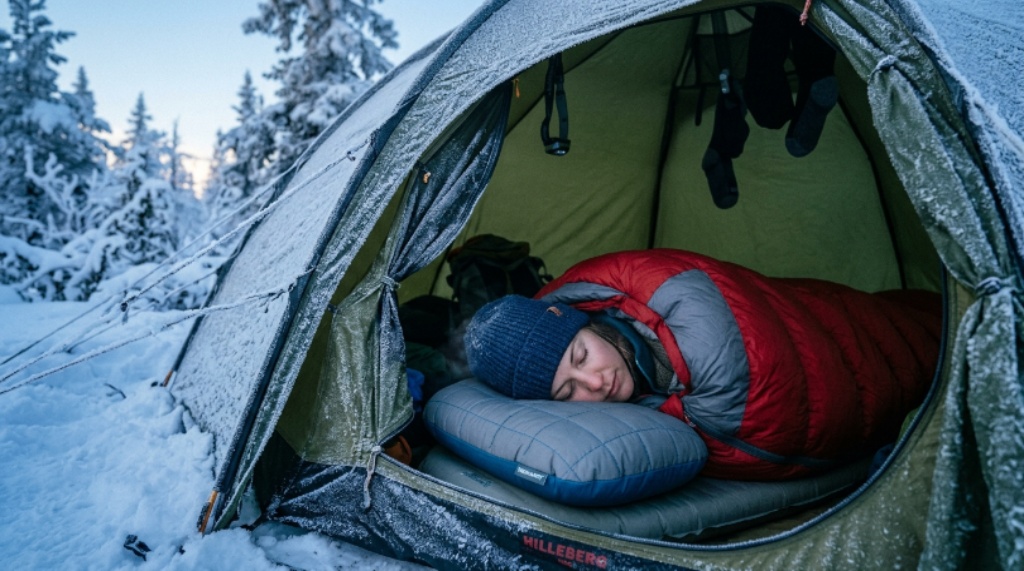
Cold Weather Sleep Tips That Actually Work
Even the best pillow is only part of your sleep system. Combining it with smart habits leads to significantly better rest in cold conditions.
First, wear a light beanie or fleece hat to bed. A large percentage of body heat escapes through your head. A simple hat keeps that heat in and helps the rest of your body stay warmer through the night.
Second, place your pillow inside your sleeping bag near the bottom before bed. This pre-warms the pillow using your body heat. When you lie down, the surface is already warm instead of cold against your face.
Third, avoid eating a heavy meal right before sleep. Digestion raises your core temperature temporarily, which sounds helpful. However, it can disrupt your sleep cycle and leave you feeling colder later in the night.
Fourth, use a sleeping pad with a high R-value. Cold ground pulls heat away from your body faster than cold air does. A well-insulated pad stops that heat loss at the base of your sleep system.
Fifth, ventilate your tent slightly even on cold nights. A closed tent traps moisture from your breathing. That moisture condenses on your gear and makes everything feel colder and damper by morning.
Camping in Cold Mountain Environments
High-altitude camping destinations present some of the most challenging sleep conditions. Temperatures at elevation drop significantly after dark, even in summer. Wind adds another layer of difficulty. Your entire sleep system needs to work together to keep you comfortable.
Colorado camping gear designed for mountain conditions often includes features like reinforced seams, moisture-wicking fabrics, and insulation rated for sub-freezing temperatures. When camping at elevation in places like the Rockies, choosing gear built for those specific conditions is important. A pillow rated for warm weather camping may feel adequate at lower elevations but fall short above ten thousand feet.
Additionally, altitude can disrupt your sleep on its own. The combination of thinner air and cold temperatures means your body works harder to stay warm and rested. Using a properly insulated camping pillow reduces one variable in that difficult equation.
How to Care for Your Cold Weather Camping Pillow
Proper care extends the life of your pillow and keeps it performing well season after season.
Down-filled pillows need occasional fluffing to maintain their loft. Store them uncompressed in a breathable bag between trips. Compressing down for long periods breaks down the fill clusters and reduces warmth over time.
Synthetic-fill pillows are more forgiving. They handle moisture better and dry faster than down. Most synthetic pillows can be machine washed on a gentle cycle. Always check the care label before washing.
For all pillow types, air them out after every trip. This prevents mildew and removes any odors that build up from use. A pillow stored damp can develop unpleasant smells that are difficult to remove later.
Conclusion
Sleeping comfortably in cold weather is entirely possible with the right gear and the right habits. Your pillow plays a bigger role in that comfort than most people realize. An insulated camping pillow keeps the surface warm against your skin and supports your neck through the night, which leads to better sleep and better days on the trail.
Choose your pillow based on your trip type. Backpackers benefit from lightweight hybrid options. Car campers can prioritize comfort with a full compressible down pillow. Pair your pillow with cold weather sleep tips like pre-warming your gear, wearing a hat to bed, and using a high R-value sleeping pad.
Additionally, if you regularly camp at elevation or in mountain environments, invest in Colorado camping gear rated for those specific conditions. Quality gear designed for cold and altitude will serve you far better than general-purpose alternatives. With the right pillow and a smart sleep system, cold weather camping becomes something to look forward to rather than endure.
Frequently Asked Questions
What is an insulated camping pillow and how is it different from a regular one?
An insulated camping pillow contains down or synthetic fill that traps heat and keeps the surface warmer in cold temperatures. A regular camping pillow is usually just inflatable with no insulating layer, which makes it feel cold against your face on chilly nights.
Can I use a regular travel pillow for cold weather camping?
You can, but it will not perform as well. Regular travel pillows are not designed to retain warmth. In cold conditions, you will likely feel the chill through the pillow surface. A pillow built for cold weather offers noticeably better comfort below forty degrees Fahrenheit.
How do I keep my camping pillow warm throughout the night?
Pre-warm it inside your sleeping bag before bed. You can also wear a light pillowcase or cover made from fleece. Keeping your tent ventilated reduces condensation, which also helps the pillow stay dry and warm longer.
What is the best pillow fill for cold weather camping?
Down fill offers the best warmth-to-weight ratio and feels softest against your skin. However, synthetic fill handles moisture better and is easier to care for. For wet or variable conditions, synthetic is often the more reliable choice.
How much should I expect to spend on a good cold weather camping pillow?
Quality options range from about twenty-five dollars to over eighty dollars. Spending more typically gets you better insulation, a softer cover, and more durable construction. For regular cold weather camping, a mid-range option between forty and sixty dollars usually offers the best value.