A wedge that performed perfectly last season can quietly lose its bite. The grooves look fine at a glance, the face still shines, and yet approach shots start rolling out farther than expected. That gap between how a club looks and how it performs is exactly why clubface and groove condition deserve regular attention. As detailed in this article on club brush and groove cleaner tools, keeping the face clean and the grooves sharp is one of the simplest ways to protect both spin and consistency. Before diving into wear patterns and cleaning routines, here is the short version of what actually matters.
Quick Answer
Grooves channel away debris and moisture so the clubface can make cleaner contact with the ball, which helps generate spin and control. When grooves fill with dirt or wear down, and when the face develops rust, smooth spots, or impact marks, spin drops and shots fly higher and roll out farther. Cleaning grooves after every round and inspecting faces monthly preserves performance far longer than most golfers realize.
Key Takeaways
- Dirty or worn grooves reduce spin, which increases rollout and makes distances harder to predict.
- Groove wear is gradual, so most golfers do not notice declining performance until it is significant.
- Cleaning after every round is the single most effective habit for protecting groove performance.
- Face rust, smooth spots, and rounded groove edges matter more than cosmetics suggest.
- Wedges usually wear fastest because they see the most impact and turf contact.
What Grooves Actually Do
Grooves are not the primary source of spin, but they are essential to it. On a clean, dry lie, friction between the ball and the flat parts of the face produces most of the spin. Grooves handle the rest: they channel away grass, sand, water, and debris so the face can grip the ball properly. On wet or grassy lies, that channeling becomes the difference between a shot that checks and one that skids.
This is why a dirty clubface hurts performance even when the grooves themselves are in good shape. Mud packed into a groove stops it from doing its job. The ball then contacts a mix of metal and debris, and the result is less friction, less spin, and a flatter, hotter trajectory than intended.
Grooves vs. Face Texture
Golf club rules limit how sharp and deep grooves can be, and manufacturers also add micro-texture to the flat areas between grooves. That texture contributes to friction on clean lies. Both elements degrade over time: grooves round off at the edges, and face texture wears away. Paying attention to one while ignoring the other gives an incomplete picture of a club’s condition, for extra protection on the course, check out our guide on best large golf umbrellas for maximum rain coverage.
How to Recognize Wear Before It Costs You Shots
Groove wear is subtle by design. It happens gradually over hundreds of impacts, so there is rarely a single round where a club suddenly stops performing. Instead, golfers tend to adapt unconsciously, swinging harder or aiming differently to compensate for lost spin. By the time the decline feels obvious, the club may already be well past its useful life for scoring shots.
Several physical signs point to meaningful wear:
- Rounded groove edges. Run a fingernail across a groove. A sharp groove catches slightly; a worn one feels smooth or slippery.
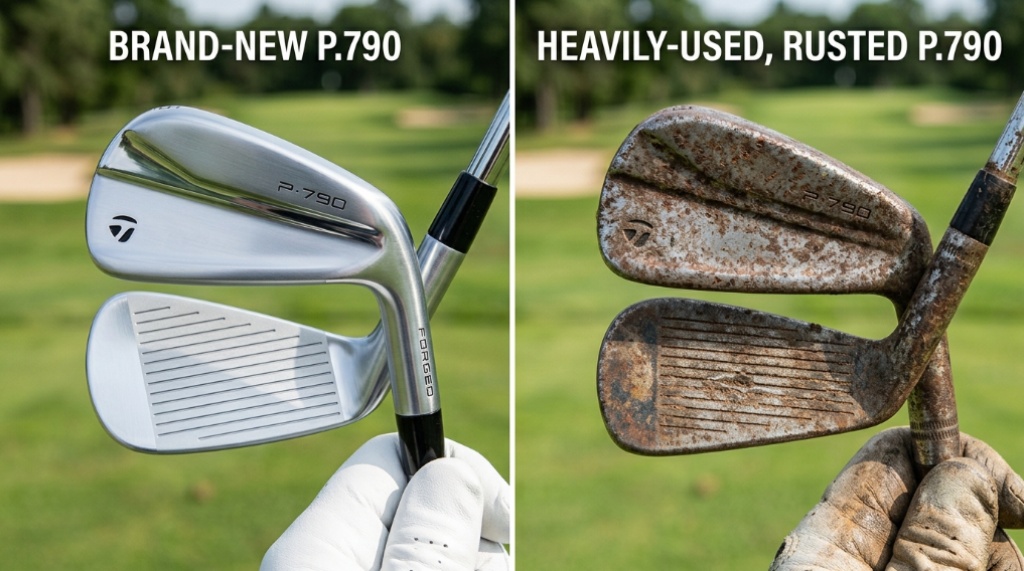
- Shallow grooves. Compare a heavily used wedge to a newer one of the same model. The difference in depth is often visible side by side.
- A worn “sweet spot.” A dull, smoothed patch in the center of the face, usually where most impacts land, indicates concentrated wear.
- Rust and pitting. Surface rust is mostly cosmetic, but deep pitting changes the face and can affect contact.
- Impact marks and nicks. Sharp dents or burrs near the grooves interfere with clean contact.
Why Wedges Wear Out First
Wedges take more full and partial swings than any other club, and they frequently contact sand and rough. That combination accelerates wear. A lob wedge used for practice sessions in a sandy bunker can lose meaningful groove sharpness in a single season, while a 5-iron might last several times longer under similar use.
A Simple Visual Test
Hold the clubface under a strong light and tilt it. Sharp grooves cast crisp shadows and reflect light in thin lines. Worn grooves scatter light and appear flatter. You do not need special equipment for this check; a lamp and a few seconds are enough to spot the difference.

How Condition Directly Affects Spin, Distance, and Control
Spin is the link between clubface condition and scoring. Reduced spin shows up in three predictable ways: shots fly slightly higher, land steeper but run out more, and stop less predictably on firm greens. This matters most on approach shots into greens and on chips and pitches where stopping power is the entire point.
| Condition Factor | Effect on Performance | Practical Consequence |
|---|---|---|
| Debris in grooves | Reduced contact friction | Less spin, more rollout |
| Rounded groove edges | Weaker channeling and grip | Flatter trajectory, longer carry |
| Worn face texture | Lower friction on clean lies | Less check on short shots |
| Rust or pitting | Inconsistent ball contact | Unpredictable spin and distance |
| Deep nicks or burrs | Interferes with clean strike | Occasional flyers, off-line shots |
Notice that none of these issues necessarily change how far a club carries the ball in calm conditions. The bigger problem is inconsistency: the same swing produces different results from round to round, which erodes confidence and makes club selection harder.
Cleaning vs. Replacing: What to Do and When
Cleaning addresses debris; it cannot restore worn metal. Understanding the difference prevents wasted effort and helps you decide when a club has genuinely reached the end of its useful life for scoring shots.
Cleaning: The Routine That Matters
A brush with stiff nylon or brass bristles, a groove pick, and a towel handle most cleaning needs. The routine that works well for most golfers:
- Wipe the face with a damp towel after each shot, especially after bunker or rough contact.
- Use a brush to scrub grooves from heel to toe, following the groove direction rather than against it.
- Use a pointed tool to lift compacted dirt out of the grooves if the brush does not reach it.
- Dry the face to prevent rust from forming, especially in humid conditions.
- Do a deeper clean at home after rounds played in wet or sandy conditions.
On-course tools make this easier because they combine a brush and a pick in one handle, but the principle is the same regardless of what you carry. Consistency matters more than the specific tool.
Replacement: When Cleaning Is No Longer Enough
If a wedge’s grooves feel noticeably smoother than a new one of the same model, or if a fingernail test shows rounded edges across most of the face, cleaning will not bring the spin back. At that point, the club can still serve as a practice or backup option, but it should not be relied on for shots where stopping power is critical. Groove sharpeners exist and can restore some edge to heavily used wedges, though the results depend on how much material remains.
Common Mistakes That Accelerate Wear
Most premature clubface wear comes from habits rather than heavy use. A few specific patterns stand out:
- Practicing exclusively from sand. Bunker practice is hard on grooves. Rotating practice locations preserves wedges longer.
- Leaving clubs dirty between rounds. Dirt held against the face for long periods contributes to corrosion, particularly in humid climates.
- Using abrasive cleaners. Harsh chemicals and steel wool can remove protective finishes and degrade face texture.
- Ignoring the face in favor of the sole. Golfers often clean the sole and back of a club while leaving the grooves packed.
- Assuming a club is fine because it looks new. A polished finish can hide rounded grooves underneath.
Why This Matters More for Some Golfers Than Others
Not every golfer needs to think about groove condition the same way. Players who rely on stopping power, such as those who attack flags, play firm greens, or use wedges frequently around the greens, will notice spin loss much sooner than players who mostly hit low-running shots. High-handicap golfers may not see an immediate scoring difference from worn grooves because their contact is less consistent to begin with, but the underlying effect still exists.
Similarly, golfers who play in wet climates or on sandy courses will see faster wear than those on soft, clean fairways. Home course conditions are a useful guide for how often to inspect and clean clubs.
For anyone who takes wedges seriously, a simple routine of regular cleaning and periodic groove inspection provides real value at essentially no cost. It also makes club replacement decisions more informed, because you know whether a performance drop comes from the club or from your swing.
Frequently Asked Questions
Do dirty grooves actually reduce spin?
Yes. Debris in the grooves prevents them from channeling away grass, moisture, and sand, which reduces friction between the ball and face. Less friction means less spin, which typically shows up as increased rollout on approach shots.
How often should I clean my grooves?
Wipe the face after every shot and brush the grooves after every round. A deeper clean is worth doing after rounds played in wet conditions or heavy sand. Regular cleaning prevents buildup that is harder to remove later.
Can I restore worn grooves?
Groove sharpeners can partially restore the edges of moderately worn wedges, but results depend on how much material remains. If the grooves are significantly rounded or shallow, sharpening cannot fully recover original performance.
Does rust on the clubface affect performance?
Light surface rust is mostly cosmetic and can often be removed with a brush. Deep pitting and heavy rust change the face surface and can affect contact consistency, making spin less predictable.
How long do wedges typically last?
There is no fixed answer because wear depends on usage, practice habits, and course conditions. Golfers who practice frequently from sand may notice meaningful groove wear within a season or two, while occasional players may get several years from a wedge.
Is face condition as important as groove condition?
Both matter. Grooves channel debris and generate spin on wet or grassy lies, while face texture contributes friction on clean lies. Wear in either area reduces overall spin performance.
Conclusion
Clubface and groove condition directly influence spin, control, and consistency, which makes them worth checking regularly rather than assuming they are fine because a club looks clean. The practical routine is simple: wipe and brush after every round, inspect grooves monthly with a fingernail and a light source, and replace wedges once the edges are visibly rounded. These small habits preserve performance, make club decisions more informed, and help ensure the shots you expect are the shots you actually get.