
Key Takeaways
- Most decorative pillows are machine washable, but always check the care label first.
- Memory foam, silk, beaded, and heavily embellished pillows should never go in the washer.
- Use a gentle cycle, mild detergent, and cold or warm water for safe results.
- Dry pillows completely on low heat with dryer balls to prevent clumps and mold.
- Wash pillow covers every three to six months and inserts two to three times a year.
Last spring, I tossed my favorite embroidered throw pillow into the washer without a second thought. An hour later, it came out lumpy, faded, and half its original size. That mistake cost me a pillow, but it taught me a valuable lesson. Decorative pillows can go in the washing machine, yet only under the right conditions.
Since then, I have washed dozens of pillows safely at home. In this guide, I will share everything I learned through trial and error. You will know exactly when machine washing is safe and when it is not. Let’s dive in.
Can You Wash Decorative Pillows in the Washing Machine?
Yes, most decorative pillows can be washed in a machine. However, the answer depends on two things: the cover fabric and the inner filling. Polyester, cotton, and down pillows usually handle machine washing well. Memory foam, on the other hand, never belongs in a washer. The agitation breaks its structure apart.
Here is the surprising part: pillows collect far more dirt than people realize. The Asthma and Allergy Foundation of America explains that dust mites thrive in soft furnishings and feed on dead skin cells. Over time, pillows gather these allergens along with body oils, dust, and pet dander. Washing removes them and improves your indoor air quality.
Therefore, washing your decorative pillows every few months is not just about looks. It is also a matter of health. Additionally, clean pillows simply feel fresher and smell better in your living space.
Before you start, always remove the cover if it has a zipper. Covers and inserts often need different care. Wash them separately for the best results.
Check the Care Label Before You Wash
The care label is your best friend. Manufacturers include it for a good reason. Look for words like “machine washable” or a symbol showing a tub with water. If the label says “dry clean only,” listen to it. My embroidered pillow had that exact warning. I ignored it, and I paid the price.
Here is what common materials mean for washing:
- Cotton and linen: Usually safe on a gentle cycle with warm water.
- Polyester fills: Machine washable and quick to dry.
- Down and feather: Washable, but they need extra drying time.
- Memory foam: Never machine wash, because the foam will crumble.
- Velvet, silk, and wool: Often require hand washing or dry cleaning.
- Beads, sequins, or embroidery: These decorations can loosen or fall off.
If the label is missing or faded, test the fabric first. Dampen a white cloth with water and dab a hidden corner. If color transfers, skip the machine. Furthermore, older pillows may not survive heavy agitation. In those cases, spot cleaning is the safer choice. Taking five minutes to check now saves you from replacing pillows later.
How to Wash Decorative Pillows Step by Step
Washing decorative pillows is simple once you know the steps. Follow this process to protect your pillows and get them truly clean.
- Remove the cover. Zip off any removable covers and wash them separately.
- Pre-treat stains. Apply a small amount of mild detergent to stains. Let it sit for 15 minutes.
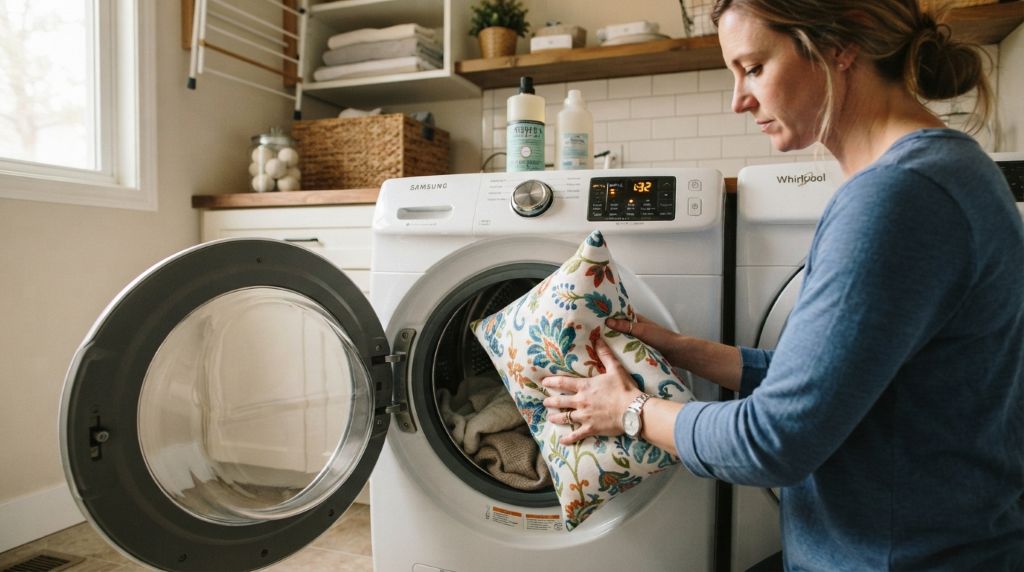
- Load the machine. Wash two pillows at a time. This balances the drum and prevents loud banging.
- Choose the right settings. Pick the gentle or delicate cycle. Use cold or warm water, never hot.
- Add mild detergent. Use a small amount of gentle liquid detergent. Avoid bleach and fabric softener, because they damage fills.
- Run an extra rinse. This step flushes out leftover soap that causes clumping.
- Shake and fluff. After the cycle, fluff each pillow by hand before drying.
A front-loading washer works best because it has no center agitator. However, a top-loader without an agitator also performs well. If your machine has an agitator, use the gentlest setting available. Additionally, place pillows in mesh laundry bags for extra protection.
The American Cleaning Institute also recommends using the correct detergent amount for your load size. More soap does not mean more clean. In fact, leftover residue can attract dirt faster.
When You Should Not Machine Wash Decorative Pillows
Not every pillow belongs in the washer. Some materials break down, clump, or lose their shape under agitation. Knowing the exceptions saves you money and frustration.
Skip the machine in these cases:
- Memory foam or latex: Water ruins the structure, and the foam can tear apart.
- Pillows with beads or gel inserts: These can leak and damage your machine.
- Delicate fabrics: Silk, satin, and fragile lace often need hand washing only.
- Heavily embellished pillows: Sequins, tassels, and stones can come loose.
- Vintage or antique pillows: Old stitching and fills rarely survive a wash cycle.
- Pillows with mold or strong odors: Replacement is often safer than cleaning.
For these pillows, spot cleaning works well. Mix a drop of mild detergent with warm water. Dip a clean cloth into the solution and blot the stained area gently. Never soak the pillow. Next, press a dry towel against the spot to absorb moisture. Allow it to air dry completely.
I learned this lesson the hard way. After ruining my embroidered pillow, I spot cleaned a sequined one instead. It looked fresh and kept every bead in place. Therefore, a little patience protects both your decor and your wallet.
How to Dry Decorative Pillows the Right Way
Drying is where many pillows get ruined. Wet fills clump together and create stubborn lumps. Worse, trapped moisture leads to mold and mildew. So proper drying matters just as much as washing.
Tumble dry pillows on low heat. High heat shrinks fabrics and damages synthetic fills. Add two or three wool dryer balls or clean tennis balls to the drum. They bounce around and break up clumps as the pillows tumble. As a result, your pillows come out fluffy and even.
Check the pillows every 30 minutes. Pull them out, fluff them by hand, and feel for damp spots. Down pillows may take several hours to dry fully. Be patient here. A pillow can feel dry outside while holding moisture inside.
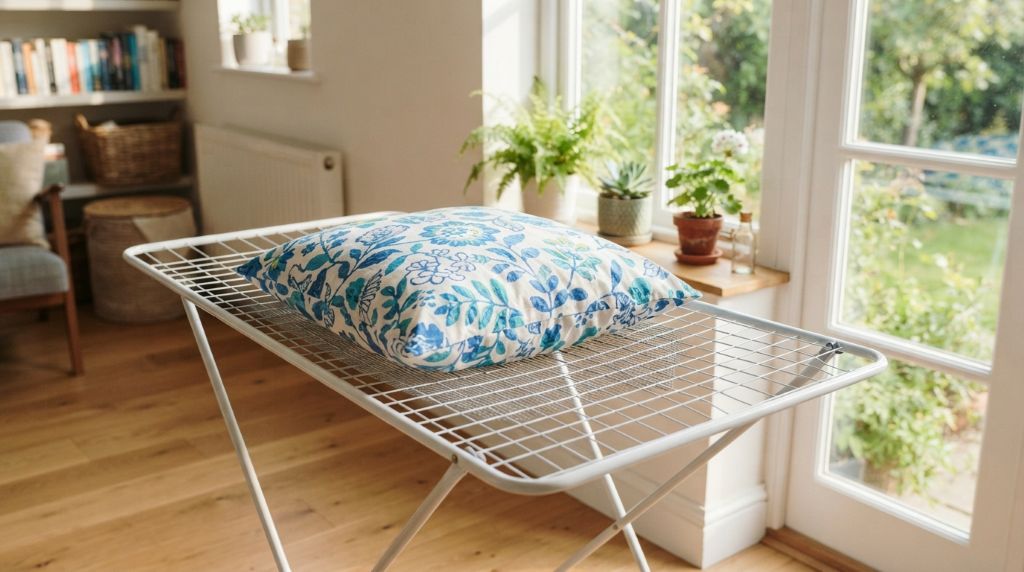
Air drying is another option, especially for delicate pillows. Lay them flat on a drying rack in a well-ventilated room. Turn them every few hours so both sides dry evenly. Avoid direct sunlight because it fades colors quickly.
Before storing or using a pillow, squeeze it firmly. Feel for any cool or damp areas. If moisture remains, keep drying. This simple check prevents musty smells and hidden mold growth later.
How Often Should You Wash Decorative Pillows?
Frequency depends on use. Pillows on your bed need washing more often than ones on a couch. Still, decorative pillows collect dust, oils, and allergens every day.
Here is a simple schedule to follow:
- Pillow covers: Wash every three to six months, or monthly if pets share your sofa.
- Pillow inserts: Wash two to three times a year.
- Spot cleaning: Do this whenever you notice stains or spills.
- Deep cleaning: Give all pillows a full wash at least twice a year.
Regular washing also protects allergy sufferers in your home. The Asthma and Allergy Foundation of America reports that dust mite allergens are among the most common indoor triggers. Consistent cleaning reduces these triggers significantly.
Between washes, a few habits help too. Vacuum pillows with an upholstery attachment once a month. Rotate and fluff them weekly to maintain their shape. Keep them away from windows where dust and sunlight cause fading. Finally, replace any pillow that stays flat, smells odd, or shows mold. These small steps stretch the time between deep cleans.
Conclusion
So, can you wash decorative pillows in the washing machine? Yes, in most cases you can. Check the care label, use a gentle cycle, and dry them completely. Avoid the machine for memory foam, silk, and embellished designs. It’s also worth keeping your washer in good condition, especially if you notice leaks or other problems, so this guide on how to fix a leaky washing machine can be useful. When in doubt, spot cleaning is always a safe backup.
My ruined pillow taught me an expensive lesson. However, it also showed me how easy pillow care becomes with the right knowledge. Clean pillows look better, last longer, and support a healthier home.
Now it is your turn. Pull those pillows off the couch and give them the refresh they deserve. Have you ever ruined a pillow in the wash? Or do you have a cleaning trick that works wonders? Share your story in the comments below. Additionally, if this guide helped you, pass it along to a friend or share it on social media. Fresh, fluffy pillows are just one wash away!
Frequently Asked Questions
Can memory foam decorative pillows go in the washing machine?
No. Water and agitation destroy memory foam. Spot clean instead, or use a removable washable cover.
How do I wash a pillow with no care label?
Test a hidden spot with a damp cloth for color bleeding. If safe, hand wash or use the gentle cycle in a mesh bag.
Can I put decorative pillows in the dryer?
Most polyester and cotton pillows can tumble dry on low heat. Add dryer balls to prevent clumps. Air dry delicate fabrics.
Why did my pillow get lumpy after washing?
Too much detergent, hot water, or poor drying causes filling clumps. Wash with mild detergent on a gentle cycle and dry fully with dryer balls.
Can I wash pillows with sequins or embroidery?
No, the machine can tear decorations off. Hand wash gently or spot clean to protect the details.