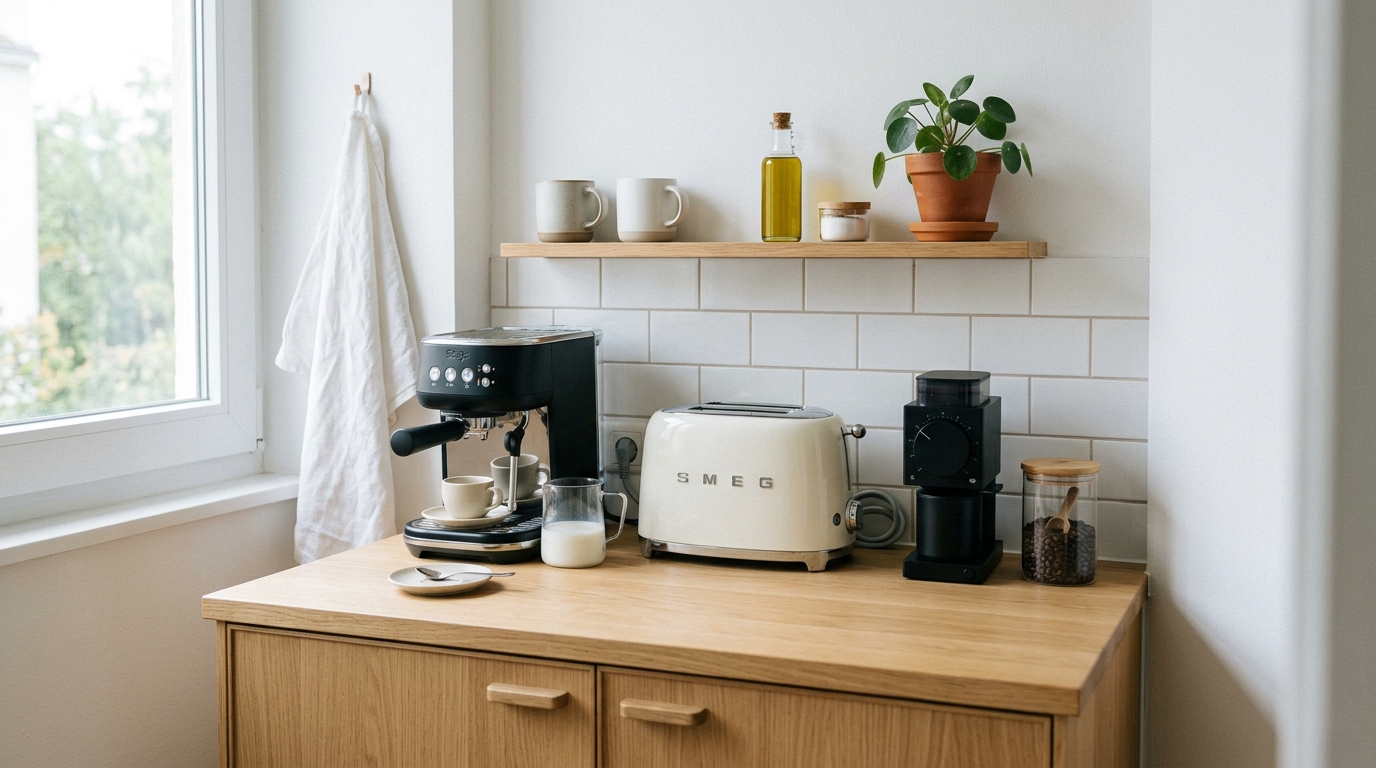
Buying a new toaster, air fryer, or coffee maker only to discover it swallows half your prep area is a frustration most small-kitchen owners know well. The problem usually is not the appliance itself — it is that the decision was made without measuring first. If you are weighing a compact option like the Amazon Basics 2-slice toaster, it helps to read the full review before you buy, but the same planning logic applies to every small appliance you bring home. This guide walks through the measurements, features, and trade-offs that actually matter when counter space is tight
Quick Answer
Choose appliances that fit limited counter space by measuring your usable depth and height first, then prioritizing vertical designs, multi-function devices, and models with short cords or front-facing controls. Match the footprint to your real clearance — not the product photo. When two models perform similarly, pick the one that can be stored or repositioned easily, because usable space matters more than total available space.
Key Takeaways
- Measure usable depth, not just length and width — most counters are shallower than they look once a backsplash or upper cabinet is in the way.
- Vertical and multi-function appliances often free up more space than several single-purpose units combined.
- Clearance above and in front of an appliance matters as much as its base footprint.
- Weight and cord length determine whether an appliance is genuinely easy to move and store.
- A slightly larger appliance you use daily usually beats a tiny one you avoid because it is frustrating to operate.
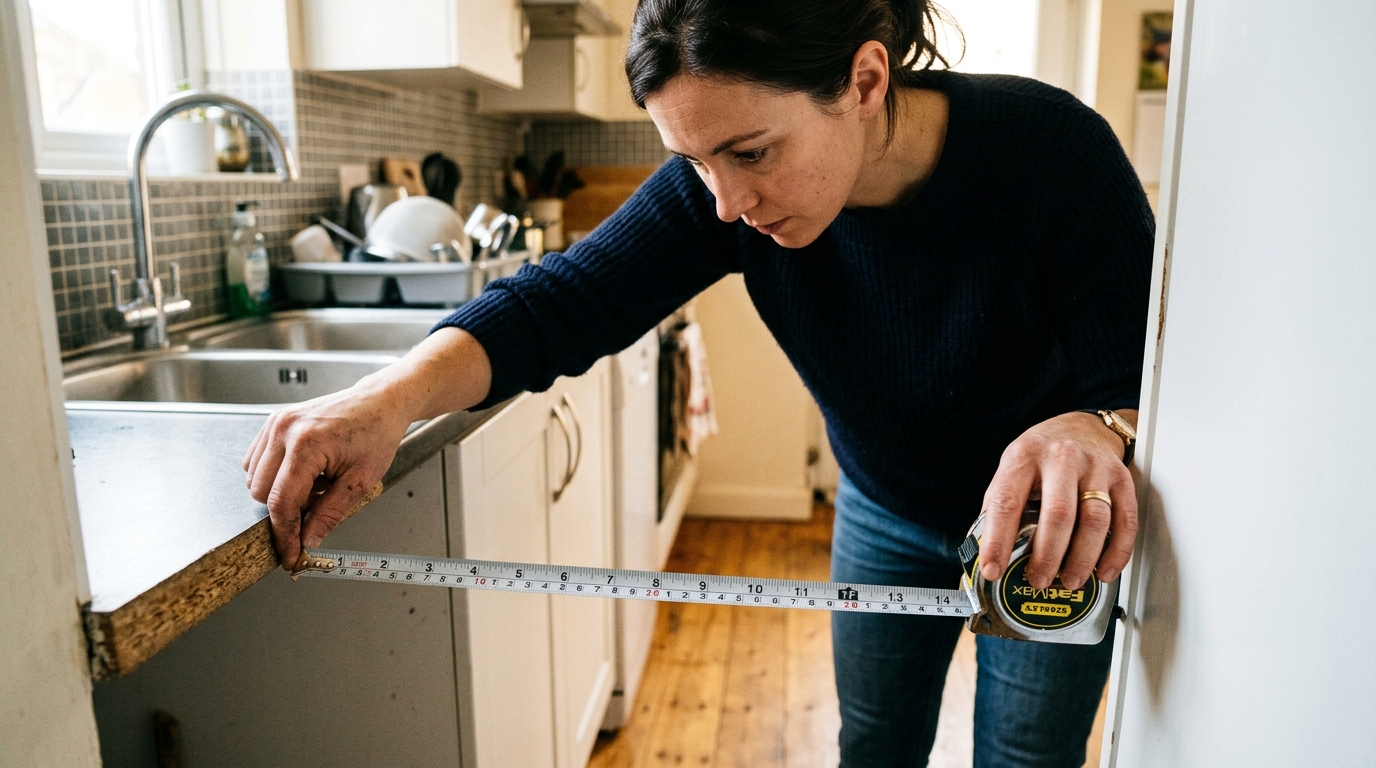
Start With Real Measurements, Not the Product Listing
The single biggest mistake is buying based on the dimensions printed on a box without checking the actual space the appliance will occupy. That number tells you the product size, not whether it fits your kitchen.
Measure usable depth, not just width
Counter depth is the measurement people skip most often. A standard counter is roughly 24 inches deep, but usable depth shrinks fast once you account for a backsplash, a window sill, or an upper cabinet that overhangs the counter. An appliance that is 12 inches deep might leave only a few inches of working room in front of it if it sits against the wall.
Check height clearance, especially under cabinets
Upper cabinets typically sit about 18 inches above the counter, though this varies. A tall appliance — a stand mixer, a large air fryer, or a coffee machine with a tall carafe — may fit the footprint but not the vertical clearance. If the appliance cannot sit under the cabinet, it has to live somewhere else, which defeats the purpose.
Leave room for lids, doors, and handles
Toaster oven doors swing out. Air fryer baskets pull forward. Blender lids lift up. These movements require free space that the base footprint does not show. Measure the fully open or fully extended position, not just the closed one, While optimizing your layout, check out the busy person’s guide to a sparkling kitchen: quick cleaning strategies to keep your compact cooking area spotless.
Match the Appliance Type to the Space You Actually Have
Different appliance categories have different space demands. Knowing what each type typically requires helps you rule out options before you even shop.
| Appliance Type | Space Consideration | Better Fit For |
|---|---|---|
| Two-slice toaster | Small footprint, needs side clearance for heat | Very tight counters |
| Toaster oven | Needs front clearance for the door and heat clearance behind | Counters with depth but limited width |
| Air fryer | Tall body, needs room for the basket to pull out | Counters under open shelving |
| Coffee maker | Height for the carafe, plus a nearby outlet | Corners or counter ends |
| Stand mixer | Heavy, tall, and needs headroom to tilt back | Dedicated appliance stations |
If you are choosing between a two-slot toaster and a larger model, a compact two-slice unit is often the smarter pick for cramped counters, since it does the core job without demanding significant width or depth.
Prioritize Vertical Design Over Wide Design
When counter length is scarce but height is available, vertical appliances win. A tall, narrow coffee maker or a vertical air fryer uses the same footprint as a short, wide model while freeing horizontal space for chopping and prep.
The trade-off: vertical appliances tend to be less stable and can be easier to knock over if they are lightweight. Check the base width relative to the height. A tall unit with a narrow base is a tipping risk in a busy kitchen, While optimizing your layout, check out the busy person’s guide to a sparkling kitchen: quick cleaning strategies to keep your compact cooking area spotless.
Consider Multi-Function Appliances Carefully
A single appliance that toasts, bakes, and air fries sounds like the perfect small-kitchen solution, and sometimes it is. But multi-function devices often combine the bulk of the largest function with the limitations of the smallest. An air fryer toaster oven, for example, may be large enough to dominate the counter while performing each task less well than a dedicated unit.
Use this test before buying: would you genuinely use at least three of its functions regularly? If only one function matters, a single-purpose appliance is usually smaller, cheaper, and easier to store.
Do Not Ignore Weight, Cord, and Storage
An appliance you can lift easily is an appliance you will actually move out of the way. Weight matters more than most buyers expect, especially for anything stored in a cabinet between uses.
- Weight: Heavier appliances are harder to move and more likely to scratch counters when dragged.
- Cord length: A short cord limits where the appliance can sit relative to an outlet. A long cord creates clutter.
- Storage: If the appliance does not stay out, confirm it fits in the cabinet or pantry you plan to use.
- Non-slip feet: Small but useful for keeping a lightweight appliance steady on a smooth counter.
Common Mistakes That Waste Counter Space
Most space problems come from a handful of predictable decisions.
- Buying based on sale price before measuring the intended spot.
- Assuming a “compact” label means it fits your specific counter.
- Ignoring clearance for doors, lids, and heat vents.
- Stacking appliances on top of each other, which blocks access and looks cluttered.
- Choosing several single-purpose gadgets instead of one well-chosen multi-function unit.
- Forgetting that a nearby outlet may force the appliance into an awkward position.
Avoiding these six issues solves most counter-space complaints before they happen.
When to Choose a Smaller Appliance — and When Not To
Smaller is not automatically better. An appliance that is too small to do the job well will frustrate you daily, and frustration leads to replacement — which wastes both money and space over time.
Choose the smallest appliance that fully handles your regular needs, not your occasional ones. If you toast two slices most mornings, a two-slice toaster is ideal. If you regularly feed four people, a four-slice model may be worth the extra width. Buy for your typical day, not your busiest one.
Frequently Asked Questions
How do I know if an appliance will fit my counter?
Measure the usable length, width, and depth where the appliance will sit, then compare those numbers to the appliance’s dimensions plus clearance for doors, vents, and handles. Do not rely on the box dimensions alone.
Is a toaster oven or an air fryer better for small counters?
It depends on your layout. A toaster oven needs depth and heat clearance behind it, while an air fryer is often taller and needs front clearance for the basket. Choose based on which clearance you actually have.
Should I choose a multi-function appliance to save space?
Only if you will regularly use at least three of its functions. Otherwise, a single-purpose appliance is usually smaller and simpler, and it takes up less room than a bulky all-in-one you rarely use.
Does appliance weight matter for small kitchens?
Yes. Lighter appliances are easier to move, clean around, and store. If you plan to relocate the appliance regularly, weight should be a real deciding factor, not an afterthought.
How much clearance should I leave behind an appliance?
Follow the manufacturer’s guidance for heat-producing appliances, and always leave enough room for cords and ventilation. Blocking a vent can affect performance and in some cases create a safety risk.
Can I store small appliances in a cabinet instead of on the counter?
Yes, and it is often the best solution for limited counters. Just confirm the appliance fits with room for the cord, and that lifting it in and out is comfortable enough that you will not avoid using it.
Conclusion
Choosing appliances for limited counter space comes down to measurement, clearance, and honest use. Start by measuring the usable depth, width, and height of your counter, then match the appliance type to that space rather than to its marketing photos. Favor vertical and multi-function designs only when they genuinely fit your habits, and always account for how the appliance opens, vents, and moves. Get those basics right, and you will end up with a kitchen that works instead of one that just looks full.