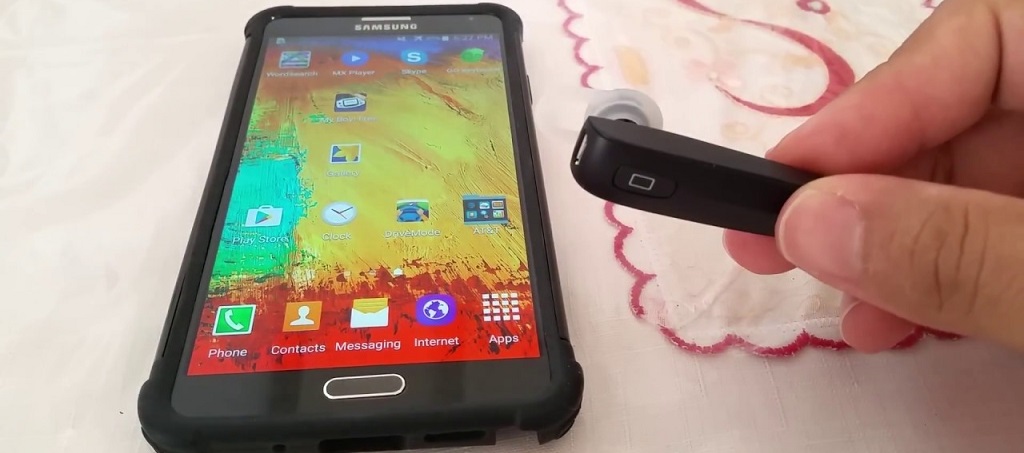
The dream of a universal translator, once the exclusive domain of science fiction like Star Trek, is rapidly becoming a reality. We are standing on the precipice of a communication revolution, driven not by bulky handheld devices, but by the discreet and increasingly powerful technology packed into our earbuds. The evolution of audio hardware, as chronicled by experts at platforms like Headphones Unboxed, shows a clear trajectory towards more integrated and intelligent personal devices. This evolution is set to tear down language barriers in ways we are only just beginning to imagine, changing how we travel, conduct business, and connect with people from every corner of the globe.
However, the technology is still in its nascent stages, leading to significant consumer curiosity and skepticism. Many people wonder, do translation earbuds work effectively enough to justify their current price tag and limitations? Today’s models generally rely on a companion smartphone app and a stable internet connection. The process typically involves one person speaking, the audio being sent to a cloud server for translation, and the translated audio being sent back to the listener’s earbud. This introduces a noticeable delay, or latency, which can disrupt the natural flow of conversation.
Furthermore, current systems often struggle with noisy environments, regional accents, and the rich tapestry of slang and idioms that color our everyday language. While impressive, they are more of a helpful tool than a seamless bridge between languages. But this is merely the starting point. The future of real-time translation technology in earbuds promises to overcome these hurdles, delivering an experience that is instantaneous, nuanced, and fundamentally human.
The Technological Leaps on the Horizon
The transition from functional to flawless translation hinges on several key technological advancements. The most significant of these is the shift from cloud-based processing to on-device AI.
On-Device AI and Edge Computing
The single greatest limitation of current translation earbuds is their reliance on the internet. Future generations of earbuds will be equipped with powerful, specialized processors capable of running sophisticated AI language models directly on the device. This is known as edge computing. By cutting out the trip to a distant server, translation will become virtually instantaneous.
This leap offers several profound benefits. Firstly, it eliminates latency, allowing for natural, back-and-forth conversations without awkward pauses. Secondly, it makes the technology viable anywhere, from a remote village with no cell service to an airplane mid-flight. Thirdly, it dramatically enhances privacy. With on-device processing, your private conversations are no longer being sent to a third-party server, a critical concern for both personal and professional discussions.
Neural Processing Units (NPUs) in Earbuds
To make on-device AI a reality, earbuds will need more than just a standard processor. They will incorporate Neural Processing Units (NPUs), which are microchips specifically designed to handle the complex calculations of artificial intelligence tasks efficiently. NPUs can perform these tasks using significantly less power than a traditional CPU or GPU. Therefore, you can have lightning-fast translation without draining your earbud battery in minutes. This efficiency is the key to creating a device that is not only powerful but also practical for all-day use.
Enhanced Microphone Technology
Accurate translation begins with clean audio input. You cannot translate what you cannot hear clearly. The future of translation earbuds involves major upgrades in microphone technology. Advanced beamforming microphone arrays will be able to pinpoint the user’s voice and isolate it from surrounding noise, whether in a bustling market or a noisy restaurant. Additionally, bone conduction sensors, which pick up the vibrations of your speech through your jawbone, can be used in tandem with traditional microphones to create a crystal-clear audio signal for the AI to process, ensuring the highest possible accuracy.
Beyond Simple Words: Translating Nuance and Context
True communication is about more than just exchanging literal words. It is about understanding intent, emotion, and cultural context. The next frontier for translation AI is to capture and convey these subtle but crucial layers of meaning.

The Challenge of Idioms and Cultural Context
Idiomatic expressions pose a massive challenge for translation software. A literal translation of “it’s raining cats and dogs” would be confusing, to say the least. Future AI models will be trained on vast datasets that include not just language, but also cultural context. This will allow the AI to recognize an idiom in one language and find its cultural equivalent in another, translating the meaning rather than the words. It will understand that “break a leg” is a message of good luck, not a threat of physical harm.
Understanding Tone, Sarcasm, and Emotion
The same sentence can have entirely different meanings depending on the speaker’s tone. “That’s just great” can be a genuine expression of approval or a scathing remark dripping with sarcasm. The next generation of translation AI will analyze vocal inflections—pitch, cadence, and volume—to interpret the emotional state of the speaker. The translated output could then be delivered in a synthetic voice that mirrors the original tone, ensuring that the emotional subtext of the conversation is not lost in translation.
The Seamless User Experience of Tomorrow
The ultimate goal is to make the technology invisible. The user should not have to think about the translation process; it should just happen naturally, as if they were fluent in the other language.
The End of “Push-to-Talk”: Conversational Flow
Many current systems require users to tap their earbud or phone to switch between speaking and listening modes. This is clunky and unnatural. Future systems will feature full-duplex, or two-way, simultaneous translation. Imagine a scenario where two people, each wearing an earbud, can speak freely and simultaneously. Each person hears the other’s words seamlessly translated in their own ear, creating a conversational flow that is indistinguishable from a native-language discussion.
Augmented Reality and Ecosystem Integration
Translation earbuds will not exist in a vacuum. They will be a key component of a larger ecosystem of wearable technology. For example, they could sync with augmented reality (AR) glasses. While you hear a translated conversation through your earbuds, your AR glasses could display translated text of a restaurant menu or a street sign in real-time. This combination of audio and visual translation will create a deeply immersive and frictionless experience for navigating a foreign environment.
Real-World Applications of Future Translation Earbuds
The impact of truly effective real-time translation will be felt across every sector of society.
- Travel and Tourism: Tourists will be able to confidently navigate foreign countries, ordering food, asking for directions, and engaging with locals on a deeper level, transforming travel from a daunting to an enriching experience.
- International Business: Negotiations, meetings, and global collaborations will become radically more efficient. The need for human interpreters in many situations will diminish, speeding up deals and fostering better relationships.
- Healthcare: A doctor will be able to communicate flawlessly with a patient who speaks a different language, ensuring an accurate diagnosis and clear instructions for care, which could be life-saving.
- Education: Students from around the world can attend lectures and participate in discussions in any language, creating a truly global classroom.
- Emergency Services: First responders can communicate effectively with accident victims or witnesses in critical situations, regardless of the language they speak.
Conclusion
The journey toward a world without language barriers is well underway, with earbuds serving as the primary vehicle. While today’s technology offers a glimpse of what’s possible, it is the future advancements—on-device AI, nuance detection, and a seamless user experience—that will truly fulfill the promise of a universal translator. This technology will do more than just translate words; it will foster understanding, dissolve cultural divides, and connect humanity in a way that has never before been possible. The future is not just about hearing another language; it is about understanding another world.
Frequently Asked Questions (FAQs)
-
Are today’s translation earbuds worth buying?
Current translation earbuds can be very useful for travelers in specific situations, like asking for directions or ordering from a menu. However, they are not yet suitable for complex or fast-paced conversations due to latency and accuracy limitations. They are best viewed as a helpful tool rather than a complete replacement for language learning.
-
How will future earbuds handle conversations with multiple speakers?
Future systems will likely use advanced voice recognition and microphone arrays to identify and isolate different speakers in a group. The AI will be able to track who is speaking and provide a translated stream for each individual voice, potentially assigning a unique synthetic voice to each person to avoid confusion.
-
Will translation earbuds ever be 100% accurate?
While accuracy will improve dramatically, achieving 100% perfection is unlikely due to the inherent complexity and ambiguity of human language. The goal is to reach a level of accuracy, probably above 99%, where any minor errors do not disrupt the meaning or flow of the conversation.
-
What about data privacy with future translation earbuds?
The shift to on-device processing will be a major step forward for privacy. By keeping the entire translation process on the earbud itself and not sending voice data to the cloud, the risk of your conversations being intercepted or stored by third parties is significantly minimized.
-
How much will advanced translation earbuds cost?
Initially, earbuds with powerful on-device AI and NPUs will likely be premium, high-end products. However, as with all technology, the costs of these components will decrease over time. Within a decade, these advanced translation features are expected to become a standard feature in most mid-range and even budget-friendly earbuds.
Related Topics:
Why is My Fujifilm Camera Flashing Red? A Troubleshooting Guide
The Unsung Hero Caliper of Accurate Measurement