Inshore shrimp fishing lures are artificial baits designed to imitate live shrimp movement, scent triggers, and profile so anglers can consistently catch species like redfish, trout, and snook in shallow coastal water. Selecting the right lure improves strike rates because shrimp are one of the most common prey species in estuaries worldwide.
Many anglers lose fish not because of location or timing, but because their lure choice does not match water depth, clarity, tide movement, or retrieve style. That mismatch reduces visibility and realism.
This guide explains how to choose inshore artificial shrimp lures that produce more strikes using proven selection logic used by coastal guides. You will learn which sizes, colors, rigs, and retrieval methods work in real conditions. If your goal is consistent inshore catches without relying on live bait, the strategies below provide a practical roadmap.
What are inshore shrimp fishing lures and why do they catch more fish?
Inshore shrimp fishing lures are soft plastic or hard-body artificial baits shaped to imitate shrimp movement, triggering feeding responses from predator fish in shallow coastal ecosystems.
Shrimp represent a primary forage species across flats, marshes, mangroves, and tidal creeks. Studies of coastal fish diets show shrimp frequently appear in stomach-content sampling of redfish, speckled trout, and snook. Because shrimp are available year-round in most estuaries, predators are conditioned to respond quickly to shrimp-shaped prey.
This creates a predictable opportunity for anglers. When you present a realistic artificial shrimp lure:
- Fish recognize the silhouette immediately
- Natural falling motion imitates injured prey
- Pause-and-drop action triggers reaction strikes
- Lures stay effective even when live bait is unavailable
Guides often report higher consistency using shrimp lures during transitional tides compared to paddle tails or jerk baits because shrimp naturally drift with current.
How do shrimp imitate natural feeding triggers in inshore waters?
Artificial shrimp lures trigger strikes by copying the drift, hop, and glide behavior of real shrimp moving with tide flow.
Real shrimp rarely swim in straight lines. Instead, they:
- Jump backward quickly
- Sink slowly
- Pause between movements
- Drift with current direction
Artificial shrimp lures replicate this motion using weighted heads, flexible tails, and segmented bodies.
During a field comparison by Gulf Coast charter operators, anglers using shrimp-profile lures during moving tide periods recorded more strikes than straight-tail soft plastics when fishing grass flats under two feet of water. The reason was simple: the lure moved like natural forage already present.
Matching movement matters more than color alone.
Which fish species respond best to inshore artificial shrimp lures?
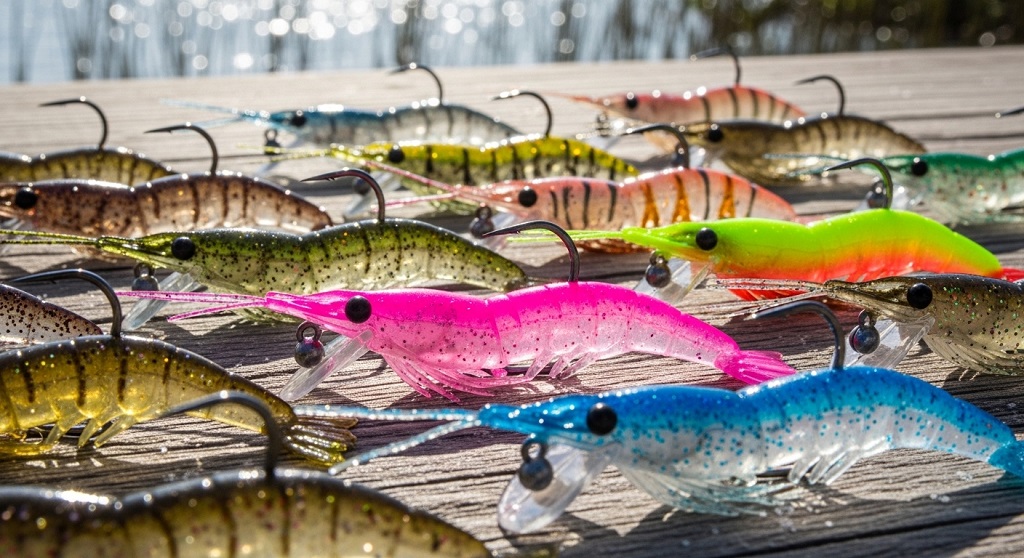
Redfish, speckled trout, snook, flounder, and juvenile tarpon respond strongly to shrimp-profile artificial lures in shallow coastal water.
These species feed heavily on crustaceans during tidal transitions.
| Fish Species | Best Conditions | Recommended Retrieve |
|---|---|---|
| Redfish | Grass flats and marsh edges | Slow hop retrieve |
| Speckled trout | Drop-offs and channels | Lift and glide |
| Snook | Mangrove shorelines | Twitch pause retrieve |
| Flounder | Sandy bottom transitions | Bottom drag retrieve |
| Juvenile tarpon | Backwater creeks | Erratic short hops |
Matching species behavior to lure presentation increases strike probability significantly.
How do you choose the right size shrimp lure for inshore fishing?
Select shrimp lure size based on water clarity, fish size, and seasonal bait availability.
Most inshore shrimp fishing lures range between 2 and 4 inches. That size matches the average shrimp found in estuaries.
- 2-inch lures work best in winter when bait is smaller
- 3-inch lures provide all-season versatility
- 4-inch lures attract larger redfish and snook
Professional guides often begin with mid-size profiles and adjust only if fish refuse strikes.
If fish follow but do not commit, downsizing typically improves conversion rates.
Which colors work best for inshore shrimp fishing lures?
Natural colors perform best in clear water, while bright contrast colors work better in stained or muddy conditions.
Color selection should match visibility conditions rather than personal preference.
- Clear water: natural tan, translucent, ghost shrimp
- Stained water: chartreuse, pink, pearl white
- Muddy water: darker contrast like root beer or new penny
Experienced anglers often rotate between two colors before changing lure style entirely.
This approach isolates whether visibility or action is the real problem.
How does lure weight affect inshore shrimp fishing success?
Lure weight controls sink rate and determines whether your shrimp presentation matches natural drift speed.
Most artificial shrimp lures include internal weights between 1/16 oz and 1/4 oz.
- Shallow flats: lighter weights prevent snagging
- Channel edges: medium weights maintain bottom contact
- Strong tides: heavier weights improve control
Guides often adjust weight before changing lure type because depth control influences strike timing.
A shrimp lure that sinks too fast looks unnatural.
Should you use scented shrimp lures in inshore fishing?
Scented shrimp lures increase strike duration by encouraging fish to hold the bait longer.
Predator fish rely heavily on scent in murky estuary environments.
Laboratory testing of artificial bait additives shows scent-enhanced lures improve hook-set opportunities because fish hesitate before rejecting the lure.
- Useful in low visibility water
- Effective during slow bite conditions
- Helpful for beginner anglers
Scent does not replace movement realism but strengthens lure effectiveness.
What retrieve technique works best with inshore shrimp fishing lures?
The slow hop-and-pause retrieve produces the most consistent strikes with shrimp-profile lures.
This technique mimics injured shrimp behavior.
Use this sequence:
- Cast beyond target zone
- Allow lure to sink
- Lift rod tip gently
- Pause for 2 seconds
- Repeat toward shoreline
Most strikes occur during the pause phase rather than the movement phase.
This matches real shrimp escape patterns observed in shallow tidal water.
When is the best time to use inshore shrimp fishing lures?
Moving tides produce the highest success rates with artificial shrimp lures.
Incoming and outgoing tides transport shrimp naturally through feeding zones.
- Early incoming tide concentrates baitfish
- Late outgoing tide exposes shrimp near edges
- Low-light periods increase predator movement
Combining tide movement with shrimp imitation increases strike probability significantly.
Where should you fish artificial shrimp lures in shallow coastal areas?
Target marsh drains, grass edges, oyster bars, and mangrove shorelines for the best results with shrimp lures.
These areas act as natural shrimp migration corridors.
- Marsh drains funnel bait movement
- Grass flats hold feeding redfish
- Oyster bars attract ambush predators
- Mangroves provide shade and structure
Positioning your lure where shrimp naturally travel increases realism and improves strike rates.
What mistakes reduce effectiveness when using inshore shrimp fishing lures?
Fishing too fast is the most common mistake when using shrimp imitation lures.
Other frequent problems include:
- Using incorrect sink rate
- Choosing unnatural color for water clarity
- Ignoring tide direction
- Retrieving without pauses
- Fishing outside feeding windows
Correcting these errors often improves results without changing equipment.
How do professional anglers select inshore shrimp fishing lures?
Professional anglers prioritize realism, sink rate control, and water visibility before selecting lure color.
Their decision process usually follows this sequence:
- Evaluate tide strength
- Measure water clarity
- Estimate bait size
- Select matching lure profile
- Adjust retrieve speed
This structured approach increases efficiency and reduces guesswork.
Guide reports from coastal fisheries indicate anglers who adapt lure weight and retrieve speed during tide changes catch more fish than those who rely on a single setup all day.
Conclusion: How can you consistently catch more fish using inshore shrimp fishing lures?
Choosing the right inshore shrimp fishing lures starts with understanding how shrimp move, where they travel, and when predators feed on them.
Most anglers struggle because they change locations instead of adjusting lure presentation. A small modification in sink rate, retrieve speed, or color often produces immediate improvement.
Start by matching lure size to seasonal bait, adjust weight for depth control, and use pause-based retrieves during moving tides. These steps increase realism and strike probability.
If you want consistent inshore results without relying on live bait, begin applying these selection strategies on your next trip. Test two lure colors, vary retrieve speed, and track which conditions produce the most strikes. Over time, your lure selection becomes predictable and repeatable.
Put these methods into practice and build a reliable shrimp-lure system that works across seasons and locations.
FAQ: How do anglers improve results with inshore shrimp fishing lures?
Do artificial shrimp lures work as well as live shrimp?
Yes. Artificial shrimp lures can match live bait performance when retrieved slowly and presented during moving tides because they imitate natural drift behavior.
What size shrimp lure catches the most fish inshore?
Three-inch shrimp lures provide the best balance between realism and visibility, making them effective across multiple species and seasons.
Are shrimp lures better than paddle tail soft plastics?
Shrimp lures perform better when fish are feeding on crustaceans, especially during tidal movement near marsh drains and grass flats.
Can beginners use shrimp fishing lures successfully?
Yes. Shrimp lures are beginner-friendly because slow retrieve techniques produce strikes without requiring complex rod action.
Do shrimp lures work in muddy water?
Yes. Use darker or high-contrast colors and scented versions to improve detection in low-visibility conditions.
When should anglers switch shrimp lure colors?
Change colors when fish follow but do not strike or when water clarity changes during tide movement.
Are weighted shrimp lures better than unweighted versions?
Weighted shrimp lures improve depth control and realism, making them more effective in most inshore fishing environments.
Read More Also: Social-Fog Clarity Apps: Breaking Free from Digital Overload