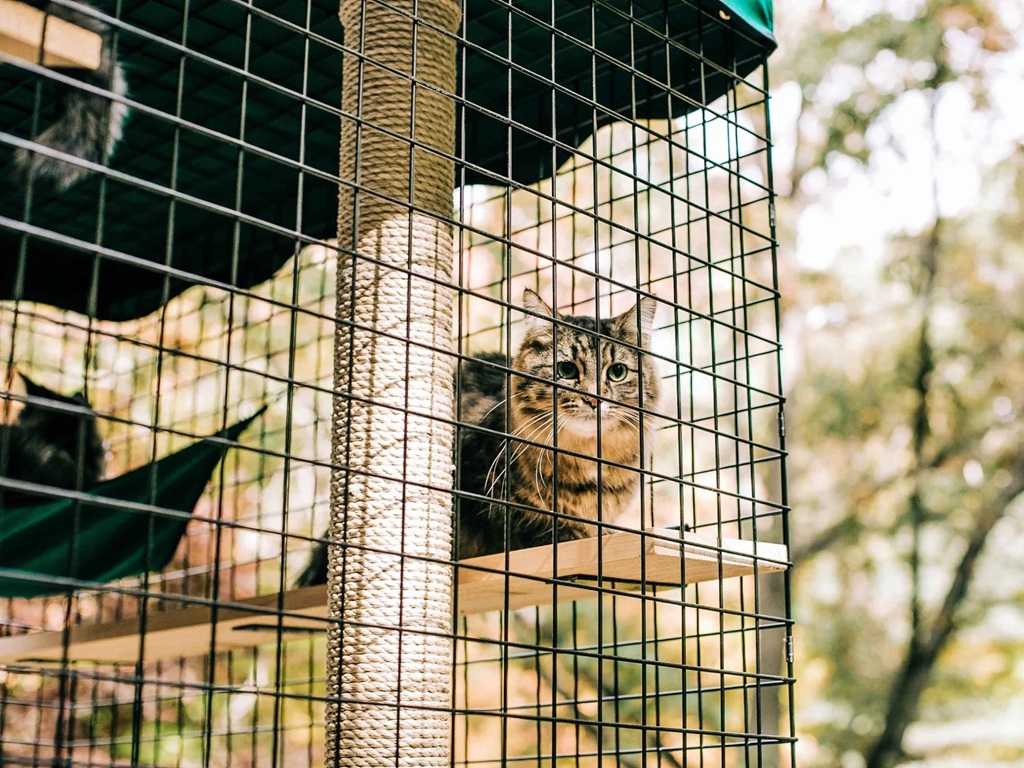
Every cat owner wants their feline friends to enjoy the wonders of the outdoors while staying safe. A safe outdoor enclosure (catio) offers the perfect balance, letting your cat explore, play, and relax without the risks of free-roaming. Not only does a catio protect your pet, but it also shields local wildlife from predation. Whether you’re a seasoned cat lover or new to the concept, this guide provides everything you need to know about designing and building the perfect catio for your furry companion. Explore Homepetusa and discover how to craft a cat-friendly space while keeping safety in mind.
What Is a Catio and Why Is It Important?
A catio is a secured, outdoor space designed exclusively for cats. Cats are naturally curious and love to explore their surroundings. However, free-roaming cats face dangers like traffic, predators, and toxic plants. Additionally, unrestrained cats are known to hunt birds and small animals, which has led to significant impacts on local ecosystems.
By building a catio, you provide your cat with safe outdoor access while also promoting responsible pet ownership. Research shows that outdoor enclosures can reduce stress in cats and prevent destructive behaviors often caused by indoor boredom. For additional tips, click on https://homepetusa.com/pet-care/how-to-stop-rabbit-from-chewing-carpet/.
Benefits of a Catio for Your Cat
- Physical Safety: A well-built catio prevents your cat from wandering into dangerous situations. It keeps them safe from vehicles, predators, and harmful substances.
- Mental Stimulation: Outdoor enclosures stimulate a cat’s senses with new sights, sounds, and smells. This sensory enrichment improves overall well-being.
- Healthier Lifestyle: Cats in catios often engage in more physical activity, reducing obesity and related health problems.
- Protecting Wildlife: Free-roaming cats are estimated to kill billions of birds annually in the U.S. A catio minimizes their impact on local wildlife.
- A Happy Home: Cats with access to a catio are less likely to develop behavioral issues like clawing furniture, as they have an outlet for their natural instincts.
Designing the Perfect Catio for Your Cat
Choosing the Right Location
The location of your catio is crucial. It should be easily accessible from your home and provide both sunny spots and shade. Placing the catio near a window or door allows your cat to move freely between the indoors and outdoors.
Selecting Durable Materials
Use sturdy, weather-resistant materials to ensure the catio lasts. Common materials include metal mesh, treated wood, and durable plastic. Avoid materials that can be chewed or scratched easily, as they won’t withstand long-term use.
Incorporating Levels and Perches
Cats love climbing and observing from elevated positions. Add platforms, perches, and ramps to create a multi-dimensional space. These features mimic their natural instincts to climb and survey their surroundings.
Creating Safe Entry Points
A secure door or window access point is essential. Magnetic or lockable flaps prevent accidental escapes.
Adding Enrichment Features
Include scratching posts, tunnels, and interactive toys. Plants like cat grass or catnip can add an extra layer of fun.
Step-by-Step Guide to Building a DIY Catio

Step 1: Plan Your Design
Sketch a blueprint, including dimensions and features. Consider your budget, available space, and your cat’s personality.
Step 2: Gather Materials
Purchase materials that match your design. Include weatherproof wood, galvanized mesh, and sturdy fasteners.
Step 3: Build the Frame
Assemble the structure’s frame using treated wood or metal pipes. Ensure it’s level and stable.
Step 4: Install Mesh and Panels
Attach wire mesh to the frame securely. This prevents escapes while allowing ventilation.
Step 5: Add Finishing Touches
Install shelves, toys, and other enrichment features. Finally, test the enclosure to ensure there are no weak points.
Related: How to train a cat not to bite
Pre-Built Catios: A Convenient Option
If DIY isn’t your style, pre-built catios offer a quick and hassle-free solution. Many companies provide customizable options to suit your needs. Although more expensive, pre-built models save time and guarantee professional craftsmanship.
FAQs
What are the benefits of a catio over letting my cat roam freely?
A catio keeps your pet safe from outdoor dangers while allowing them to enjoy fresh air and sunshine. It also reduces their impact on local wildlife.
Can I install a catio in an apartment?
Yes! Compact, window-mounted catios are perfect for apartments. They provide outdoor access without requiring a yard.
How much does it cost to build a catio?
DIY catios can cost as little as $100, while pre-built models range from $300 to over $1,000 depending on size and materials.
What should I avoid when building a catio?
Avoid weak materials, sharp edges, and gaps larger than 2 inches, as these pose safety risks.
Can I include plants in my catio?
Yes, but ensure they’re non-toxic to cats. Cat grass, catnip, and spider plants are excellent choices.
Related: Safe Plants for Cats
How do I transition my indoor cat to using a catio?
Start with short, supervised sessions to help your cat feel comfortable. Gradually increase the time spent in the enclosure.
By exploring options, you’ll find inspiration for creating a catio that’s both functional and stylish. With proper planning and creativity, your cat will have a safe, enriching outdoor space they’ll love.