

Long-distance cycling is more than just a physical challenge. It is a mental one too. Hours on the road can feel isolating, especially on quiet stretches with little to see or hear. Music, podcasts, and navigation cues can change that experience completely. Wireless bicycle speakers have become a popular solution for riders who want sound without sacrificing awareness or safety. This article explores how these devices improve long rides, what to look for when choosing one, and how they fit into a smarter cycling setup.
The Growing Role of Audio in Cycling
Cyclists have always found ways to stay entertained on long rides. Earbuds were the first popular option. However, they come with a serious drawback. Blocking both ears reduces your ability to hear traffic, other riders, and road hazards. In many regions, riding with both ears covered is illegal on public roads.
Wireless speakers solve this problem. They project sound outward rather than into your ears. Therefore, you remain fully aware of your surroundings while still enjoying your audio. This shift has made wireless sound a preferred choice among long-distance riders who value both entertainment and safety.
The rise of bike-mounted Bluetooth speakers has also aligned with a broader trend. Cyclists are investing more in technology that enhances performance and comfort. Navigation devices, fitness trackers, and smart lighting are now common on touring and endurance bikes. Adding a quality speaker fits naturally into that ecosystem.
How Sound Affects Endurance and Motivation
Research consistently shows that music improves athletic performance. It distracts the mind from fatigue, helps regulate pace, and elevates mood during physical effort. For cyclists tackling long routes, these benefits are significant.
Listening to upbeat music during a climb can make the effort feel less intense. Audiobooks and podcasts help pass time on long flat stretches. Navigation audio from a mapping app keeps you informed without forcing you to look down at a screen. All of these uses become possible when you have a reliable speaker mounted to your bike.
Additionally, mental fatigue is just as real as physical fatigue on long rides. Staying mentally engaged through audio content helps riders push through difficult sections. Many long-distance cyclists report that having something to listen to makes them more likely to complete ambitious rides rather than cutting them short.
What Makes a Good Wireless Bicycle Speaker
Not every Bluetooth speaker works well on a bike. A speaker designed for home or desk use will not survive the vibrations, weather, and mounting demands of outdoor cycling. Therefore, understanding what features matter most will help you make a smart choice.
Here are the key features to look for:
- Weather resistance: Look for an IPX5 rating or higher. This means the speaker can handle rain, splashing water, and humidity without damage.
- Battery life: Long-distance rides can last six hours or more. A speaker with at least eight hours of playtime ensures you will not run out of power mid-ride.
- Volume output: Road noise at cycling speed is significant. A speaker that sounds good at low volume in a quiet room may be nearly inaudible outdoors. Look for models with strong, clear sound at higher volumes.
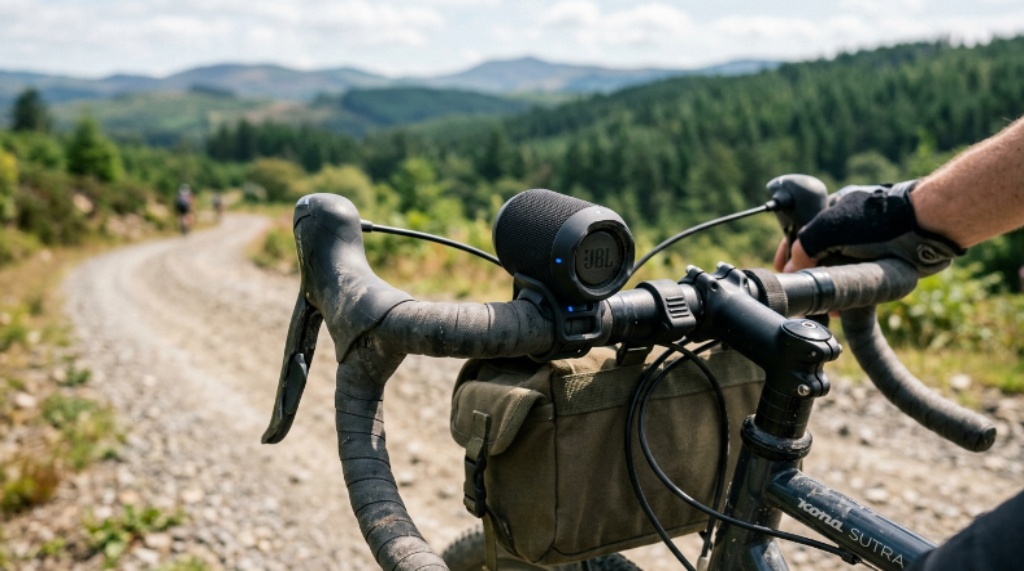
- Mounting system: A secure mount is essential. Vibrations from rough roads can dislodge a poorly attached speaker. Many quality speakers include adjustable straps or clamps designed specifically for handlebars.
- Size and weight: Extra weight matters on a long ride. Choose a compact, lightweight option that does not affect your bike’s handling.
- Bluetooth range and connectivity: Stable connectivity prevents audio dropouts. A range of ten meters or more gives you flexibility when your phone is in a jersey pocket or bag.
Bike-Mounted Bluetooth Speakers vs. Handlebar Bags with Phone Speakers
Some riders simply place their phone in a handlebar bag and rely on its built-in speaker. This approach costs nothing extra. However, it comes with clear limitations. Phone speakers are not designed for outdoor use. Wind noise drowns them out at even moderate cycling speeds. They offer no weather protection. And the audio quality is often poor compared to a dedicated device.
Bike-mounted Bluetooth speakers are purpose-built for this environment. They are louder, more durable, and better positioned to project sound toward the rider. Furthermore, keeping your phone protected inside a bag or pocket rather than exposed on the handlebars reduces the risk of damage from a fall or sudden rain.
Safety Considerations Every Cyclist Should Know
Safety is the most important reason to choose a speaker over earbuds. However, using a speaker does not automatically make riding safe. There are still guidelines every rider should follow.
First, keep the volume at a level where you can clearly hear approaching vehicles, horns, and other cyclists calling out. A good rule is that you should be able to hold a normal conversation with someone next to you while the speaker is playing.
Second, position the speaker so it faces toward you, not away. This reduces sound pollution for pedestrians and other riders while maximizing what you hear.
Third, be aware of local regulations. Some regions have specific rules about audio devices while cycling. Checking your local laws before riding with any speaker is a responsible habit.
Additionally, avoid distracting content while navigating complex traffic. Save detailed podcast episodes or engaging audiobooks for open roads where mental focus on navigation is less critical.
Integrating Speakers into a Broader Cycling Setup
Wireless speakers are just one category within the wider world of cycling gadgets. Riders who take long-distance cycling seriously often build a kit that works together. A GPS computer, smart lights, a power bank, and a wireless speaker can all function simultaneously without interfering with each other.
Many cyclists use their phone as the central hub. It handles navigation, music playback, and fitness tracking. The speaker then receives audio wirelessly from the phone. This keeps the setup simple and reduces the number of separate devices you need to manage.
Furthermore, some modern cycling gadgets connect through dedicated apps. These apps allow you to control speaker volume, check battery levels, and adjust settings without stopping. This kind of seamless integration makes long rides more enjoyable and less interrupted.
Tips for Getting the Best Sound Quality Outdoors
Outdoor audio behaves differently from indoor audio. Wind, road noise, and open space all affect how music sounds while you ride. A few simple adjustments can make a big difference.
Positioning matters more than most riders expect. Mounting the speaker on the front of the handlebars and angling it slightly upward directs sound more effectively toward your ears. Mounting it too low or facing forward pushes the sound away from you.
EQ settings also help. Many Bluetooth speakers come with companion apps that let you adjust bass and treble. On a bike, boosting the mid-range frequencies often makes vocals and melodies clearer over road noise.
Finally, keep the speaker clean. Dust and debris can clog speaker grilles over time and reduce audio quality. A quick wipe-down after muddy or dusty rides keeps performance consistent.
Conclusion
Wireless bicycle speakers have become a genuine upgrade for long-distance riders. They solve the safety problem of earbuds by keeping your ears open to the road. They improve motivation, help manage mental fatigue, and make long hours in the saddle more enjoyable. Choosing the right speaker means looking for durability, battery life, volume, and a secure mounting system. When combined with other cycling gadgets, a quality speaker becomes part of a connected, efficient riding setup. Whether you are tackling a multi-day tour or a long weekend ride, the right audio companion can genuinely change how the experience feels from start to finish.
Frequently Asked Questions
Are wireless bicycle speakers safe to use while riding in traffic?
Yes, they are generally safer than earbuds because they do not block your ears. However, you should always keep the volume at a level that allows you to hear surrounding traffic and road sounds clearly.
What is the minimum battery life I should look for in a bike speaker?
For long-distance rides, look for at least eight hours of battery life. If your rides regularly exceed that, consider a speaker with ten or more hours, or carry a small power bank to recharge on the go.
Will a wireless bicycle speaker stay attached on rough terrain?
A speaker with a quality clamp or adjustable handlebar strap will stay secure on most surfaces. However, always test the mount on a short ride before committing to a long one to confirm stability.
Can I use any Bluetooth speaker on my bike, or do I need a special one?
You can use any Bluetooth speaker, but purpose-built bike speakers offer better weather resistance, secure mounting options, and louder output suited for outdoor riding conditions.
Do bike-mounted Bluetooth speakers work with navigation apps?
Yes. Most Bluetooth speakers connect directly to your phone and play audio from any app, including navigation apps like Google Maps or Komoot. Turn-by-turn voice directions come through the speaker clearly during your ride.

