
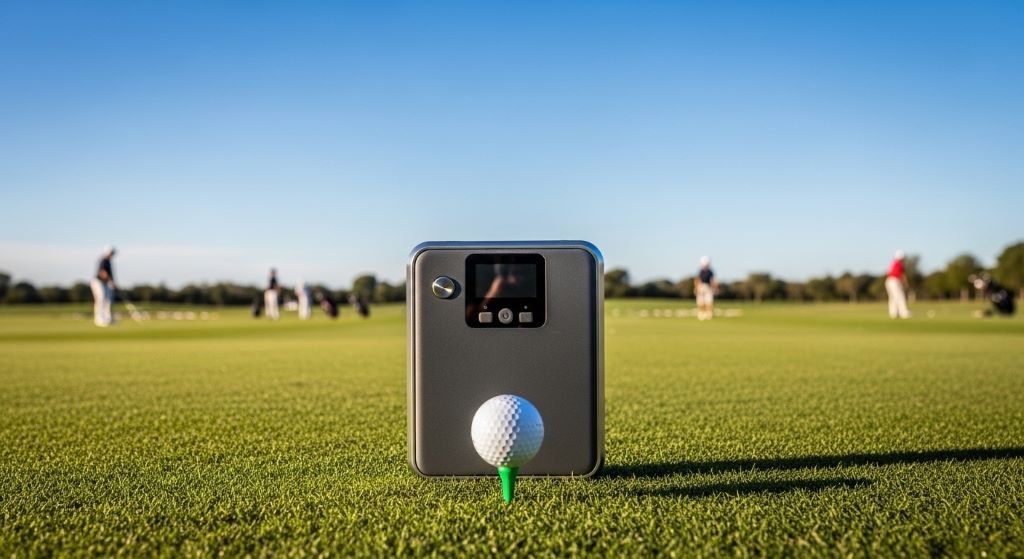
Golf is a game of precision. Every swing matters. Knowing how far your ball travels, how fast your clubhead moves, and what spin you put on the ball can make a real difference. That is why launch monitors have become so popular among golfers of all skill levels.
However, not every golfer has access to an indoor simulator or a fitting studio. Many players practice outdoors, on the range or in the backyard. Therefore, choosing the right portable launch monitor for outdoor use is an important decision. This guide will walk you through everything you need to know before you buy.
What Is a Portable Golf Launch Monitor?
A launch monitor is a device that tracks your golf shot data in real time. It measures things like ball speed, launch angle, carry distance, spin rate, and clubhead speed. These numbers help you understand your game better and make smarter decisions on the course.
Portable launch monitors are smaller versions of the professional-grade machines you see in fitting studios. They are designed to go where you go. You can use them on the driving range, in your backyard, or even on the golf course itself. They are a key part of modern compact golf devices that make game improvement more accessible than ever.
Why Outdoor Use Demands Special Attention
Using a launch monitor outdoors is different from using one indoors. Outdoors, conditions change constantly. Wind, sunlight, and uneven ground can all affect how a device performs.
Additionally, some launch monitors rely on cameras or radar. Each technology works differently in outdoor light. A device that works well inside a dark simulator room may struggle in bright afternoon sun. Therefore, you must pay attention to the technology behind the monitor you choose.
Radar vs. Photometric Technology
There are two main types of launch monitor technology. The first is radar-based, and the second is photometric (camera-based).
Radar devices send out radio waves and track the ball as it flies through the air. They tend to perform very well outdoors because they do not depend on light conditions. However, they usually need the ball to actually fly through the air to give accurate readings. This means they work best on a real driving range or open field.
Photometric devices use high-speed cameras to capture the moment of impact. They read data from the ball and club at the point of contact. These devices can work indoors with foam balls. However, outdoors, bright sunlight can sometimes interfere with the cameras. Choosing a photometric device that has been optimized for outdoor use is important.
Some newer compact golf devices combine both technologies to give the most complete data picture possible. These hybrid models are often more expensive, but they offer the best of both worlds.
Key Features to Look For
When shopping for a portable launch monitor for outdoor use, several features stand out as especially important.
Accuracy is the most critical factor. A monitor that gives you wrong data is worse than no monitor at all. Look for devices that have been tested against professional-grade systems. Many manufacturers publish comparison data on their websites. Read independent reviews as well.
Battery life matters a great deal when you are outdoors. You do not want your device to die in the middle of a practice session. Look for a monitor with at least four to six hours of battery life. Some models offer up to eight hours, which is ideal for long days on the range.
Durability is another key consideration. Outdoor use means exposure to dust, humidity, and the occasional accidental kick. Look for a monitor with a sturdy build. Some models come with weather-resistant coatings, which is a bonus.
A companion app is almost essential these days. Most portable monitors connect to your smartphone via Bluetooth or Wi-Fi. The app displays your shot data in real time. Good apps also store your session history, show trends over time, and let you compare clubs. Make sure the app works on your phone’s operating system before you buy.
Setup speed is something many golfers overlook. You want a device that is ready to go in seconds, not minutes. The simpler the setup, the more time you spend actually hitting balls.
Understanding the Data You Will Receive
Not all launch monitors give you the same data. Entry-level models may only show carry distance and ball speed. More advanced devices can give you over a dozen data points per shot.
Here are some of the most useful metrics for outdoor practice:
- Ball speed: How fast the ball leaves the clubface.
- Carry distance: How far the ball travels through the air before landing.
- Total distance: Carry plus roll.
- Launch angle: The angle at which the ball leaves the club.
- Spin rate: How much the ball is spinning, which affects flight and stopping power.
- Clubhead speed: How fast the club is moving at impact.
- Smash factor: The ratio of ball speed to clubhead speed, which reflects how cleanly you are hitting the ball.
For most recreational golfers, carry distance, ball speed, and clubhead speed are the three most important numbers. However, if you are working seriously on improving your game, spin rate and launch angle can be very helpful.

Budget Considerations
Portable launch monitors come in a wide range of prices. Entry-level devices start around $200. High-end professional models can cost several thousand dollars. Most golfers will find a solid option in the $500 to $1,000 range.
At the lower end, you get reliable distance and speed data. However, you may miss out on spin rate and more advanced metrics. At the mid-range, you typically get a full suite of data points and a polished companion app. At the high end, you get accuracy that rivals professional fitting equipment.
Think about how seriously you take your game and how much use you will get out of the device. If you practice twice a week, investing in a mid-range or high-end model makes sense. If you practice occasionally, a budget-friendly option may be all you need.
Portability and Size
The whole point of travel golf gear is that it goes with you. Therefore, the physical size and weight of a launch monitor matter. Most portable models are small enough to fit in a jacket pocket or a side pocket of your golf bag.
Some devices sit on the ground behind the ball. Others clip onto your bag or stand on a small tripod. Each setup style has its advantages. Ground-placed devices tend to be more stable and accurate. Bag-mounted or wrist-worn devices are more convenient but may sacrifice some accuracy.
When you are thinking about travel golf gear specifically, weight is a big factor. If you travel for golf and want to bring your monitor with you on a plane, every ounce counts. Look for models under 200 grams if travel is a priority for you.
Top Tips for Using a Launch Monitor Outdoors
Even the best launch monitor needs to be used correctly to give you good data. Here are some practical tips for outdoor use.
Position the device correctly. Most radar-based monitors need to be placed directly behind the ball, aligned with your target line. Photometric devices are often placed to the side of the ball. Read your specific model’s instructions carefully.
Avoid using the device in very bright sunlight if you have a camera-based model. Try to position yourself so the sun is behind the device, not shining directly into the lens.
Give the device a moment to warm up if it has been sitting in the cold. Electronics can behave differently in low temperatures, and a brief warm-up period helps.
Always check your settings before you start hitting. Make sure the correct club type is selected in the app. Using the wrong club setting can cause inaccurate readings.
Keep the device charged between sessions. Getting to the range and finding a dead battery is frustrating and avoidable.
Popular Models Worth Considering
Several brands have earned strong reputations in the portable launch monitor space. Garmin, Bushnell, Rapsodo, Flightscope, and Trackman all offer portable models with varying features and price points.
Rapsodo’s MLM2PRO is popular among recreational golfers for its value and solid companion app. The Garmin Approach R10 offers good accuracy and integrates with Garmin Golf’s app ecosystem. For serious players, Flightscope Mevo+ and Trackman’s portable offerings are industry favorites, though they come at a higher cost.
Additionally, Shot Scope and SkyTrak have built loyal followings for offering excellent performance at mid-range prices. Each device has its own strengths, so matching the device to your specific needs is always more important than chasing brand names.
Conclusion
Choosing the right portable launch monitor for outdoor use comes down to a few clear priorities. You need to understand the technology, whether radar or photometric, and how it performs in outdoor conditions. You need to think about which data metrics matter most to your game. Budget, portability, durability, and battery life all play a role in making the right choice.
Modern compact golf devices have made high-quality shot data available to everyday golfers. Whether you are a weekend player or a serious competitor, having accurate data from your outdoor practice sessions can accelerate your improvement. The investment pays off when you start making smarter swings and seeing lower scores on the course.
Take your time, do your research, and choose the device that fits your game and your lifestyle. Your next practice session could be the most informative one you have ever had.
Frequently Asked Questions
Can I use a portable launch monitor in direct sunlight?
Yes, but it depends on the technology. Radar-based monitors work well in any light. Camera-based devices may struggle in very bright conditions. Look for photometric models that are specifically designed for outdoor use.
Do I need a subscription to use a launch monitor app?
Some devices require a subscription for full app features. Others offer all features for free. Always check the app’s pricing model before purchasing the device. Hidden subscription costs can significantly add to the total price.
How accurate are portable launch monitors compared to professional ones?
Mid-range and high-end portable monitors are quite accurate. They typically come within a few yards of professional-grade systems for distance, and within a few miles per hour for ball speed. Entry-level devices are less precise but still useful for general improvement.
How far from the ball should I place my launch monitor?
Most radar monitors should be placed six to eight inches directly behind the ball. Photometric devices are typically placed two to three feet to the side of the ball. Always follow the manufacturer’s guidelines for proper placement.
Can I use a portable launch monitor on the actual golf course?
Some models are compact and discreet enough to use on the course. However, many golf courses have rules against using electronic devices during play. Always check your course’s policies before bringing a launch monitor onto the fairway.
Related Topics:
Essential Gear for First-Time Skateboarders: Choosing the Perfect Beginner Skateboard Board and Beyond


