
Setting up an aquarium isn’t just about filling it with water and adding fish. One of the most critical yet often overlooked aspects is the substrate layering process. The right substrate setup can make a world of difference, impacting water chemistry, plant growth, and the overall health of your aquatic ecosystem. Whether you’re setting up a freshwater planted tank, a reef aquarium, or a cichlid habitat, understanding how to layer aquarium substrate correctly is key to long-term success.
When done properly, substrate layering promotes biological filtration, nutrient absorption, and stable water parameters. In this guide, we’ll break down the science behind substrate selection, step-by-step layering techniques, and how to maintain a balanced tank over time. If you’re a reef keeper, be sure to visit the Reef Aquarium Blog for expert advice on saltwater setups.
Why Substrate Layering Matters
The substrate is more than just an aesthetic feature—it plays a crucial role in the ecosystem of your aquarium. Proper layering ensures:
- Nutrient Distribution – Rooted plants need access to nutrients for healthy growth. Layering helps provide long-term sustenance.
- Biological Filtration – Beneficial bacteria colonize the substrate, breaking down waste and keeping ammonia levels in check.
- pH and Water Chemistry Stability – Certain substrates influence pH, alkalinity, and hardness, affecting fish and plant health.
- Aesthetic Appeal – A well-layered substrate enhances the natural look of the aquarium while preventing excessive debris buildup.
For reef tanks, understanding the reef tank lighting schedule is equally important for coral health. If you need guidance on LED installation, check out https://reefaquariumblog.com/lighting/how-to-install-led-reef-aquarium-lighting/.

Choosing the Right Substrate for Your Aquarium Type
Before diving into layering techniques, it’s important to select the appropriate substrate based on your aquarium type:
1. Freshwater Planted Tanks
- Best Substrate: Nutrient-rich planted tank soil, fine gravel, or sand.
- Why? Plants need a substrate that holds nutrients and allows root penetration. A combination of aquasoil and cap layers (gravel or sand) prevents excessive leaching into the water column.
2. Reef and Saltwater Tanks
- Best Substrate: Live sand or crushed coral.
- Why? These help maintain pH and provide a home for beneficial bacteria and invertebrates. Be mindful of grain size—too fine can cause compaction, and too coarse can trap detritus.
3. Cichlid and Hardwater Tanks
- Best Substrate: Crushed coral or aragonite sand.
- Why? These materials help maintain the high pH and hardness levels that cichlids prefer.
4. General Community Tanks
- Best Substrate: Fine gravel or inert sand.
- Why? These provide a safe environment for most fish while being easy to clean and maintain.
Step-by-Step Guide: How to Layer Aquarium Substrate
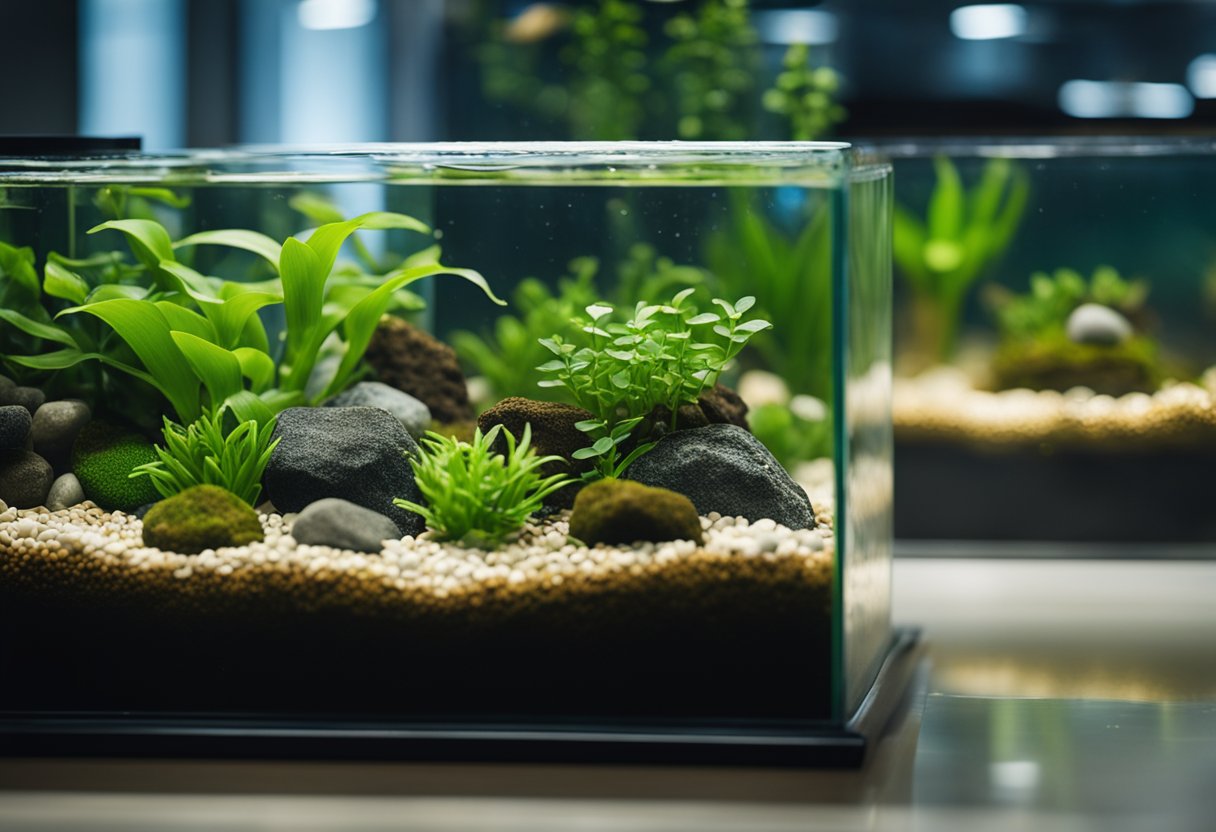
Once you’ve chosen the appropriate substrate, it’s time to layer it correctly. Here’s the optimal layering process for a balanced tank:
1: Create a Foundation Layer (Optional) – 1 to 2 Inches
- Purpose: Acts as a base for beneficial bacteria and provides stability for additional layers.
- Materials: Laterite, volcanic rock, or porous bio-media.
- Tip: If you’re using laterite, pre-rinse it to remove excess dust.
2: Nutrient-Rich Layer – 1 to 2 Inches
- Purpose: Provides long-term nutrient storage for rooted plants.
- Materials: Aquarium soil (e.g., ADA Amazonia, Fluval Stratum) or DIY mineralized soil.
- Tip: Avoid disturbing this layer when planting to prevent nutrient leaching.
3: Cap Layer – 1 to 2 Inches
- Purpose: Prevents nutrient leaching, enhances aesthetics, and stabilizes plant roots.
- Materials: Fine gravel, inert sand, or crushed coral (depending on tank type).
- Tip: Choose a grain size that supports gas exchange while preventing compaction.
4: Adjust Slope and Depth for Aquascaping
- Purpose: Creates depth, improves circulation, and enhances visual appeal.
- Technique:
- Higher substrate in the back for perspective.
- Sloped areas to encourage natural water flow.
- Uneven terrain to mimic natural habitats.
Common Substrate Layering Mistakes and How to Avoid Them
1. Using Too Much Substrate
- Why It’s a Problem: Excessive substrate can lead to anaerobic pockets, causing toxic gas buildup.
- Solution: Stick to a total depth of 3 to 4 inches, unless setting up a deep sand bed for certain marine tanks.
2. Choosing the Wrong Grain Size
- Why It’s a Problem: Fine sand can compact too much, while large gravel can trap waste.
- Solution: Use a balanced mix of medium-grain sand or gravel for proper water flow and root penetration.
3. Not Rinsing the Substrate Before Adding It
- Why It’s a Problem: Unwashed substrate can cloud the water and introduce unwanted debris.
- Solution: Always rinse sand, gravel, or crushed coral until the water runs clear.
4. Ignoring pH and Hardness Effects
- Why It’s a Problem: Some substrates can alter water chemistry unexpectedly.
- Solution: Test water parameters regularly and choose substrates suited to your fish and plants.
How to Fertilize Aquarium Plants Naturally: A Complete Guide for Healthier Aquascapes
Maintaining Your Substrate for Long-Term Success
- Vacuum the top layer regularly to remove excess detritus.
- Avoid deep substrate disturbance to prevent disrupting beneficial bacteria.
- Replenish nutrient layers with root tabs or liquid fertilizers as needed.
- Monitor pH and hardness if using coral or mineral-based substrates.
Final Thoughts
Layering aquarium substrate correctly is a game-changer for both freshwater and saltwater tanks. Whether you’re cultivating lush aquatic plants, maintaining a thriving reef, or setting up a species-specific habitat, the right substrate setup ensures long-term success. Learn how to layer aquarium substrate for a thriving tank. By following the proper layering techniques and avoiding common mistakes, you can create a stable, aesthetically pleasing, and biologically sound environment for your aquatic pets. Plus, explore how the right aquarium lighting illuminates your underwater world.