
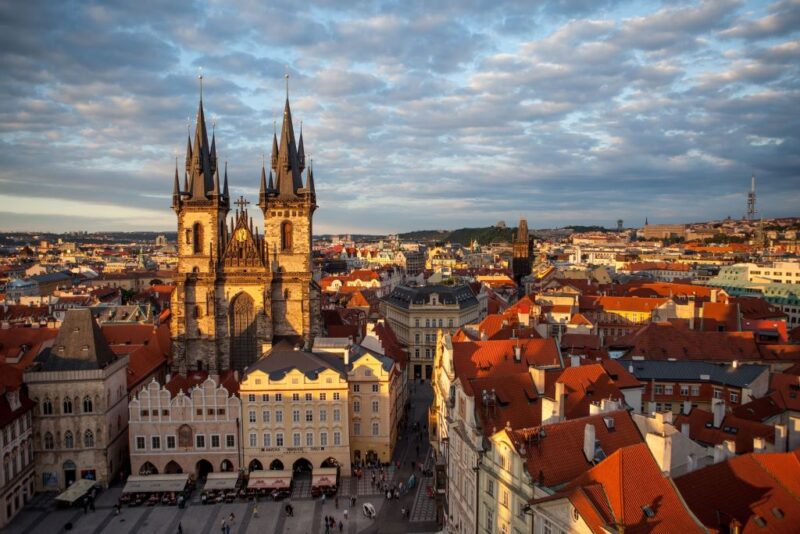
The phrase “Europe is like a frying pan” might seem like a quirky riddle at first, but it offers a fascinating lens through which to understand the continent’s unique characteristics. This analogy invites us to examine Europe’s shape, its vibrant history, and its dynamic cultural landscape.
A Geographic Resemblance
The most obvious connection between Europe and a frying pan is in their shape. Europe is a relatively compact continent with a long, irregular “handle” formed by the Iberian Peninsula (Spain and Portugal). Its broadest part resembles the round base of our kitchen utensil. Of course, Europe’s coastline is far more intricate, dotted with fjords, islands, and peninsulas that add texture and complexity – just as a well-used frying pan might have a slightly uneven surface.

The Sizzle of History
Just like a frying pan is a place where ingredients come together and transform, Europe has been a crucible of change throughout history. From the rise and fall of empires to the clash of cultures and the birth of revolutionary ideas, Europe has witnessed countless events that have shaped the world.
Think of a frying pan sizzling with activity:
- Ancient Legacies: The foundations of Western civilization were laid in Greece and Rome. Their philosophies, art, and political structures continue to influence us today.
- Medieval Power Struggles: Feudal lords, powerful kingdoms, and the Church constantly jostled for dominance across the continent, leading to conflicts and changing alliances.
- Renaissance and Exploration: A rebirth of art, science, and thought swept through Europe, fueling exploration that dramatically altered world maps.
- Revolution and Enlightenment: Europe was at the forefront of political and intellectual revolutions, with ideas like democracy and human rights finding their voice.
- The Scars of World Wars: The first half of the 20th century saw two devastating world wars originate on European soil, reshaping borders and leading to lasting geopolitical consequences.
These are merely highlights; much like a seasoned frying pan holds the flavors of many dishes, Europe’s past is a rich tapestry woven with countless threads.
A Melting Pot of Cultures
The historical churn of Europe, coupled with its easy movement of people across relatively short distances, has created a unique cultural blend. Europe is like a frying pan where diverse ingredients meld and influence each other, resulting in a dish with distinct flavor but layers of complexity.
Consider these aspects:
- Languages: Europe is a linguistic smorgasbord. Romance languages (French, Italian, Spanish), Germanic languages (German, English, Dutch), Slavic languages (Russian, Polish, Czech), and others exist side by side, making the continent truly multilingual.
- Arts and Architecture: From Gothic cathedrals to Renaissance palaces, Baroque flourishes to Art Deco lines, Europe’s architectural heritage reflects its evolving artistic movements. Its museums are treasure troves of world-renowned masterpieces.
- Cuisines: Picture sizzling Spanish tapas, delicate French pastries, hearty German meals, and zesty Italian pasta dishes. Each country, and often even regions within them, boasts a distinct culinary identity.
- Traditions and Festivals: Each region is proud of its unique traditions. Think of the pageantry of Venice’s carnival, the solemn commemorations on Remembrance Day, or the infectious cheer of Oktoberfest.
While countries maintain strong political and national identities, they are part of a larger European mosaic. Ideas, art, food, and people have traversed borders for centuries, contributing to both shared experiences and enriching local identities.
Beyond the Classroom: Valuable Insights
The “Europe as a frying pan” analogy provides insights beyond textbooks. Here’s why it’s valuable for a kitchen-savvy audience:
- Appreciating Complexity: A good cook knows a dish’s success lies in the careful balance of flavors and textures. Similarly, understanding and appreciating Europe means acknowledging its nuances—the tensions between tradition and modernity, national pride and a pan-European consciousness.
- The Power of Transformation: Just as heat transforms ingredients in a pan, historical forces have shaped, and continue to shape, the nations of Europe. Understanding history helps us make sense of their current positions and future trajectories.
- Embracing Diversity: A skilled cook uses a variety of ingredients to create exciting flavors. Europe’s cultural diversity is one of its greatest strengths, a source of creativity, innovation, and a testament to human resilience.
Let me know if you’d like a deeper dive into any of these points!