
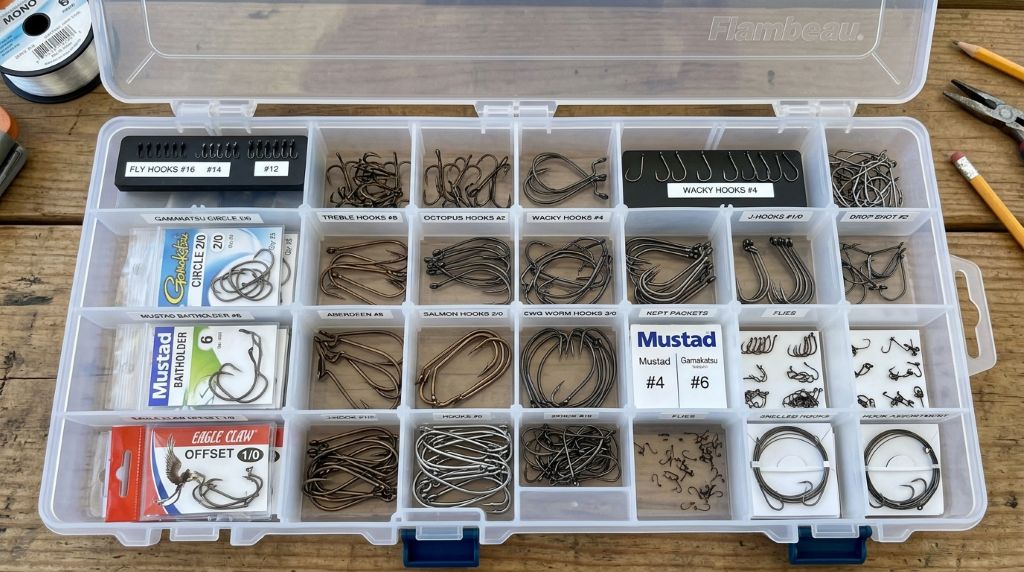
Every angler knows the moment. You reach into a tackle box for a hook and find a metallic nest of barbs and line. Untangling it wastes fishing time, and one careless grab can bury a barb in your thumb. However, a tidy tackle box is not a luxury. It keeps your hooks sharp, rust-free, and ready. Therefore, good hook storage protects your gear, your skin, and your fishing day at the same time. According to industry experts at CrazyFishingGear and data from the American Sportfishing Association, hook-related injuries are among the most common accidents in recreational angling, which is an authoritative reason to take storage seriously. In this post, you will learn how to organize hooks by type and size, prevent rust, and handle them safely every time you open the box. Read on, because a well-organized tackle box saves time and fingers alike.
Key Takeaways
- Store hooks by type and size in divided trays to prevent tangles and lost time.
- Keep hooks dry and add moisture absorbers to stop rust from forming.
- Use terminal tackle trays with silicone or foam inserts to hold hooks securely.
- Dispose of damaged, rusty, or bent hooks instead of fishing with them.
- Keep hook boxes out of reach of children and pets at all times.
- Carry pliers and first-aid supplies to handle any accident quickly.
Why Tidy Hook Storage Actually Matters
Hook storage sounds like a small topic. However, it affects your fishing results more than you might think. A rusted hook loses its point fast, and a dull hook loses fish. According to fisheries researchers, sharp hooks penetrate better and improve hook-up rates, especially in catch-and-release fishing where a clean hookup causes less harm to fish. Additionally, a well-maintained point holds better during the fight and reduces deep hooking. Consequently, sharp hooks mean more fish and better fish care at the same time.
Organization improves your speed on the water too. Fish move, weather changes, and bites come in bursts. Therefore, the angler who swaps a hook size in thirty seconds outfishes the one digging through a tangled pile. Additionally, sorted hooks make restocking simple, because you can see exactly what you own and what ran out. Consequently, an organized box saves both money and fishing time.
Safety deserves equal billing. Hooks carry barbs, and barbs tear skin on the way out. A jumbled tray of hooks invites pokes every time you dig in. However, a properly stored hook sits point-down in foam or lies flat in a divided compartment. Therefore, tidy storage is injury prevention, not fussiness.
Rust is the third reason. Hooks are steel, and steel plus moisture equals corrosion. A rusty hook weakens and its point softens quickly. Additionally, rust spreads between touching hooks in a closed box. Consequently, dry storage and a little maintenance keep your whole hook collection fishable for years.
In short, good storage protects three things at once. It keeps hooks sharp, fishing time long, and fingers intact. The rest of this post shows you exactly how to build that system.
Sort Hooks by Type, Size, and Purpose
The first step is sorting. Most tackle box chaos comes from hooks mixed together with no system. Therefore, build a system that matches how you actually fish. Start with three sorting rules.
- Sort by hook type first, such as bait holders, circle hooks, and trebles.
- Sort by size within each type, smallest to largest.
- Separate hooks by technique, such as live bait rigs from lure hooks.
Hook type matters more than most beginners realize. Bait holder hooks have barbs on the shank that grip worms and soft bait. Circle hooks curve inward and hook fish in the corner of the mouth, which makes them ideal for catch and release. Trebles carry three points and suit lures like crankbaits. Additionally, jig hooks hold weighted heads for soft plastics. Consequently, each type belongs in its own compartment, because swapping types mid-rig needs speed.
Size sorting comes second. Hooks run on a number scale where larger numbers mean smaller hooks, up to a point, then the scale flips to “aught” sizes like 1/0 and upward. However, you do not need to memorize the whole scale. Just keep sizes in order within each compartment, smallest at one end. Additionally, a small label on each divider saves guesswork later. Therefore, you grab the right hook the first time, every time.
Buy divided trays designed for terminal tackle. Shallow trays with adjustable dividers beat deep boxes, because hooks stay visible and flat. Additionally, small sealable containers or original hook packets slide into the dividers neatly. Consequently, one tray holds your entire hook collection without a single tangle.
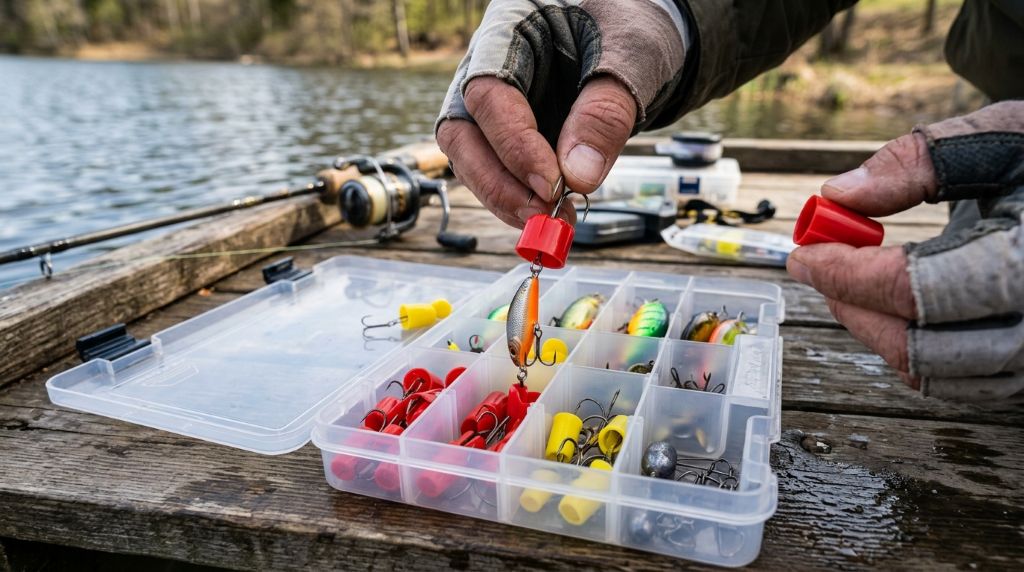
For very small hooks, add a trick from fly anglers. Foam inserts and silicone strips hold hooks by the eye so points stay buried and visible. Therefore, you lift hooks out by the eye instead of fishing through a pile of points. Additionally, hook wallets, which are book-style organizers with slit pages, work brilliantly for trebles and spinner hooks. Consequently, no hook ever touches another.
Finally, carry only what you need. A giant hook collection at home is fine, but your travel box should hold the types and sizes for your current fishing. Therefore, a lean box means less weight, less clutter, and less risk. Restock from your home supply between trips.
Prevent Rust and Keep Hooks Sharp
Rust destroys more hooks than fish ever will. Therefore, dry storage habits decide how long your hooks last. Moisture enters a tackle box from wet hands, rain, and humid air. However, a few cheap habits stop corrosion before it starts.
- Dry your hands and hooks before returning them to the box.
- Wipe hooks with a dry cloth after every wet trip.
- Add silica gel packs or a moisture absorber to each tray.
- Store the tackle box in a dry, room-temperature spot, never a damp garage corner.
- Rinse and fully dry all tackle after saltwater trips.
Saltwater demands extra respect. Salt corrodes steel far faster than fresh water. Therefore, rinse every hook and tray in fresh water after ocean fishing, then dry them completely before storage. Additionally, apply a light coating of reel oil or a corrosion inhibitor to the trays for saltwater boxes. Consequently, a ten-minute rinse routine saves a whole season of gear.
Silica gel packs are the cheapest rust insurance available. Toss one into each hook tray and replace them every season. Additionally, rice in a small cloth pouch works in a pinch. Therefore, even humid climates cannot rust a properly packed tray.
Sharpening is the second half of maintenance. A hook point catches on your thumbnail when pressed sideways if it is sharp. However, if it slides, the point needs work. Use a small hook file with a few gentle strokes toward the point. Additionally, test again after every few strokes. Consequently, you restore a factory edge in under a minute.
Inspect hooks during every sort session. Look for rust patches, bent points, and weak eyes. Damaged hooks fail exactly when the biggest fish pulls. Therefore, toss anything bent, cracked, or deeply rusted without regret. A hook costs cents, but a lost fish of a lifetime costs memories.
Finally, rotate your stock. Use older hooks before newer ones, because even well-kept steel ages slowly. Additionally, buy hooks in modest amounts rather than bulk unless you fish constantly. Consequently, every hook in your box stays sharp and strong.
Safe Handling Habits for the Whole Family
Storage protects hooks between trips. However, handling protects you during them. Therefore, build these habits into every fishing session, especially with kids on board.
- Always press the point of loose hooks into foam or cork before closing trays.
- Keep pliers or forceps in the box for removing hooks from fish and clothing.
- Never grab a treble hook by its points, especially from lure boxes.
- Wear glasses on the water, because casting pulls hooks past your face at speed.
- Store the box closed and latched, never open in a boat or on a bank.
The latch habit matters more than people expect. An open box in a moving boat spills hooks everywhere, and one on a bank invites curious children. Additionally, always store tackle boxes out of reach of children and pets, locked if possible. According to the American Association of Poison Control Centers and children’s hospital safety programs, fishing tackle injuries in children are a recurring summer emergency. Consequently, closed, high storage is a real safety rule, not paranoia.
Handling on the water follows the same logic. Remove hooks from fish with pliers, never fingers, especially trebles. Additionally, flatten or file barbs on hooks you use for catch-and-release fishing. Barbless hooks come out cleanly and hurt fish and fingers far less. Therefore, a barbless setup is both conservation and first aid.
Prepare for accidents anyway. Carry a small first-aid kit with antiseptic wipes and bandages in your tackle bag. Additionally, learn the basic rule for a hooked finger. If a hook sinks past the barb, do not pull it out. Push it through, clip the barb, and back the point out, then clean and dress the wound. However, near eyes, joints, or deep tissue, go straight to a doctor. Therefore, one fishing trip with a first-aid kit turns a scary moment into a manageable one.
Finally, teach children the rules early. Show them how hooks sit in the tray, how to carry lures by the body, and where the first-aid kit lives. Consequently, the next generation of anglers learns safety as habit, not as fear.
Conclusion
Safe hook storage is simple, cheap, and pays you back every trip. You now know how to sort hooks by type and size, keep them dry and sharp, and handle them without injury. Additionally, these habits protect children, pets, and fish while helping you upgrade your fishing gear without breaking the bank.
Therefore, start tonight. Empty your hook tray, sort everything by type, and add a silica pack to each compartment. Then wipe down your hooks, sharpen the dull ones, and toss the rusty ones. A one-hour tune-up keeps your tackle box safe and fishable all season, so grab that tray and start sorting.
FAQs
How do I keep fishing hooks from rusting?
Keep them dry and store the box in a cool, dry place. Additionally, add silica gel packs to each tray. Therefore, moisture never gets a chance to start corrosion.
What is the best way to organize hooks in a tackle box?
Use shallow trays with dividers, sorted by type, then size. Additionally, label each section for speed. Consequently, you find the right hook in seconds.
Should I remove rusty hooks or clean them?
Light surface rust can be scrubbed off with fine steel wool and oil. However, deeply rusted or weakened hooks should be thrown away. Therefore, inspect carefully and be honest about damage.
Are barbless hooks safer and better for fish?
Yes. Barbless hooks penetrate easier, come out cleanly, and injure fish less. Additionally, they cause far less damage to skin and clothing. Consequently, many anglers fish barbless by choice.
How do I remove a hook that is stuck in my skin?
If the barb is embedded, push the hook through, clip the barb, and back the point out. Then clean and bandage the wound. However, see a doctor for hooks near eyes, joints, or deep tissue.