Key Takeaways
- A solid car maintenance checklist prevents small issues from becoming expensive repairs.
- Monthly checks focus on fluids, tires, and lights.
- Annual checks cover brakes, battery health, and safety systems.
- Mileage-based checks follow your owner’s manual, not guesswork.
- Skipping maintenance raises breakdown risk and repair costs significantly.
Owning a car comes with responsibility beyond fuel and insurance. Regular upkeep keeps your vehicle safe, reliable, and worth more at resale. Yet many drivers still treat maintenance as optional. According to automotive market analysts at https://vehicletradeus.com/, citing AAA research, roughly one in three U.S. drivers skip or delay recommended repair services for their vehicle. That habit often backfires. A missed oil change today can mean a blown engine tomorrow.
This guide breaks down exactly what to check monthly, annually, and by mileage. Think of it as your car maintenance checklist for the entire ownership journey. I’ve used a version of this system on three vehicles over the past decade, and it has saved me from at least two major breakdowns. Let’s walk through it step by step.
Why a Car Maintenance Checklist Actually Matters
Cars are machines with hundreds of moving parts. Each part wears down at a different rate. Without a system, it’s easy to forget something critical until it fails.
The financial stakes are real. AAA’s ongoing survey work found that the average vehicle repair bill runs between $500 and $600, and that figure climbs fast for unexpected breakdowns. Worse, roughly one in three U.S. drivers can’t afford an unexpected repair bill at all. That’s not a small gap. It’s a financial cliff many households face without warning.
There’s also a safety angle people overlook. Neglect doesn’t just cost money; it costs lives. Research cited by automotive safety analysts suggests neglect contributes to a measurable share of crashes, alongside the far larger factor of driver error. That alone should shift how you think about a checklist. It’s not busywork. It’s risk management.
I learned this the hard way with a used sedan I bought in my twenties. I ignored a squealing brake sound for three weeks because I was busy. That squeal turned into a full rotor replacement, tripling my repair cost. A five-minute inspection would have caught it early. Since then, I’ve never skipped a monthly check.
Monthly Maintenance Checklist
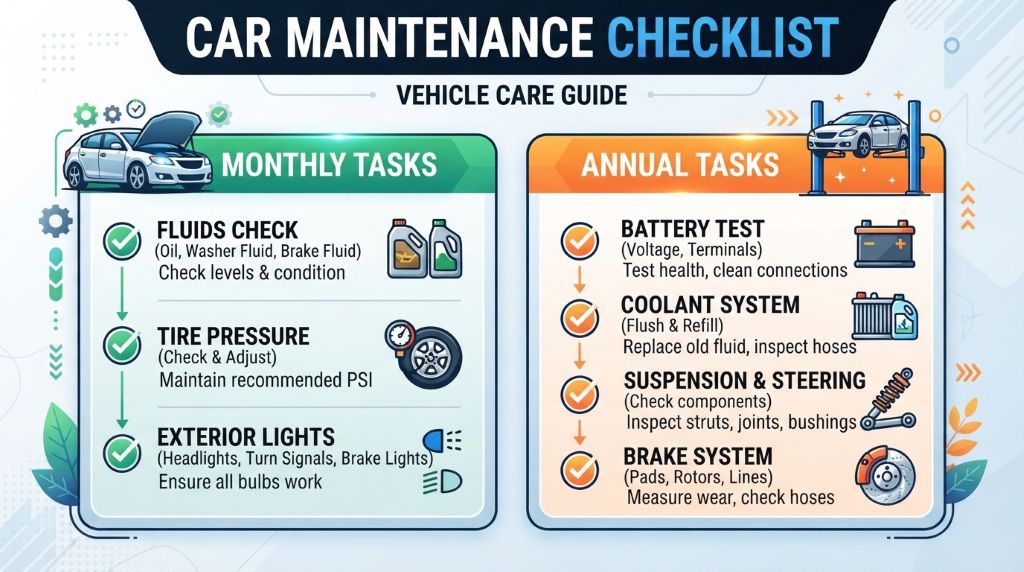
Monthly checks take fifteen minutes and prevent most roadside emergencies. Build these into your routine, ideally on the same day each month.
- Engine oil level and color: Pull the dipstick. Oil should look amber, not black or gritty.
- Tire pressure: Check all four tires plus the spare. Cold tires give the most accurate reading.
- Tire tread depth: Use the penny test. If Lincoln’s head shows fully, replace the tire soon.
- Windshield washer fluid: Top it off, especially before winter or pollen season.
- All exterior lights: Headlights, brake lights, turn signals, and reverse lights.
- Coolant level: Check the overflow reservoir when the engine is cold.
- Wiper blades: Look for cracking or streaking during use.
These small habits catch problems while they’re still cheap fixes. A tire losing pressure slowly, for instance, often signals a slow puncture. Catching it monthly means a $20 patch instead of a blowout on the highway.
Annual Maintenance Checklist
Annual checks require more tools or a trip to a trusted mechanic. However, they matter just as much as monthly habits, if not more.
- Brake system inspection: Pads, rotors, and brake fluid condition.
- Battery health test: Corrosion, terminal tightness, and voltage output.
- Cabin and engine air filters: Replace if clogged or discolored.
- Wheel alignment and rotation: Uneven wear shortens tire life dramatically.
- Suspension components: Shocks, struts, and bushings for wear or leaks.
- HVAC system check: Test heating and cooling before seasonal shifts.
- Undercarriage inspection: Rust, exhaust leaks, and loose components.
Annual inspections catch the issues that monthly glances simply can’t. Brake pads, for example, wear gradually and rarely announce themselves until they’re dangerously thin. A yearly inspection by a mechanic adds a trained eye to your own routine checks.
There’s a financial argument here too. Research from Kwik Fit in the UK found that drivers who skip servicing often end up spending more later, with delayed maintenance adding measurable costs to eventual repair bills. Consistency beats procrastination, every single time.
Mileage-Based Maintenance Checklist
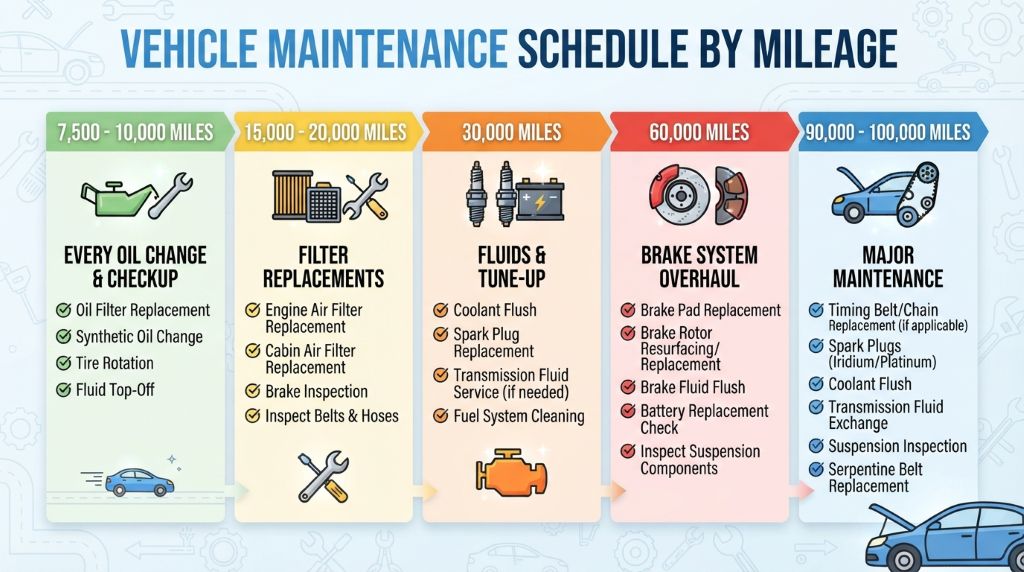
Some maintenance isn’t tied to a calendar at all. It’s tied to how far your car has traveled. Always start with your owner’s manual, since intervals vary by make and model. Still, these general benchmarks apply to most vehicles.
- Every 5,000–7,500 miles: Oil and filter change, tire rotation.
- Every 15,000–30,000 miles: Air filter replacement, brake inspection, fluid top-offs.
- Every 30,000–60,000 miles: Transmission fluid check, spark plug replacement, brake pad swap.
- Every 60,000–100,000 miles: Timing belt replacement, coolant flush, battery replacement.
- Every 100,000+ miles: Major component review, including suspension and drivetrain parts.
Mileage matters more than age for parts that experience friction or combustion stress. A timing belt, for instance, degrades from use, not from sitting in a garage. Skipping this one interval can destroy an engine entirely if the belt snaps mid-drive.
Additionally, driving conditions shift these numbers. Stop-and-go city traffic wears brakes and transmissions faster than highway cruising. Adjust your intervals if you drive in heavy traffic daily.
Building Your Own Car Maintenance Checklist
Every vehicle is different, so personalize this framework. Start with your manufacturer’s recommended schedule, then layer in the monthly habits above. Keep a simple log, whether it’s a notebook or a phone app.
Maintenance records also pay off later. A documented service history strengthens resale value and buyer trust. It shows a car was cared for, not just driven until something broke.
If you’re short on time, prioritize safety items first: brakes, tires, and lights. These affect your ability to stop, see, and be seen. Everything else can follow once safety basics are locked in.
Final Thoughts
A car maintenance checklist isn’t about perfection. It’s about consistency and awareness. Small monthly habits catch cheap problems before they become expensive ones. Annual inspections add a professional layer of protection. Mileage-based service keeps major components running as designed. For a practical overview of the most important routine checks, see these seven essential car maintenance tasks every driver should know.
Cars reward attention. Mine has crossed 140,000 miles without a major failure, and I credit that entirely to sticking with this system. Try building your own checklist this month, and see the difference over the next year.
If this guide helped you, share it with a fellow driver or leave a comment below. I’d love to hear what maintenance habits have saved you money or trouble.
Frequently Asked Questions
How often should I check my car’s oil?
Check oil monthly and change it every 5,000 to 7,500 miles, depending on your manual.
What happens if I skip a scheduled maintenance check?
Skipping checks raises the risk of costly repairs and sudden breakdowns down the road.
Is a mileage-based or time-based schedule more accurate?
Mileage-based schedules matter most for parts worn by use, like brakes and belts.
Can I do car maintenance myself, or do I need a mechanic?
Basic checks like fluids and tires are doable at home; brakes and belts need a professional.
Does regular maintenance really increase resale value?
Yes, documented maintenance records build buyer trust and typically raise resale price.