
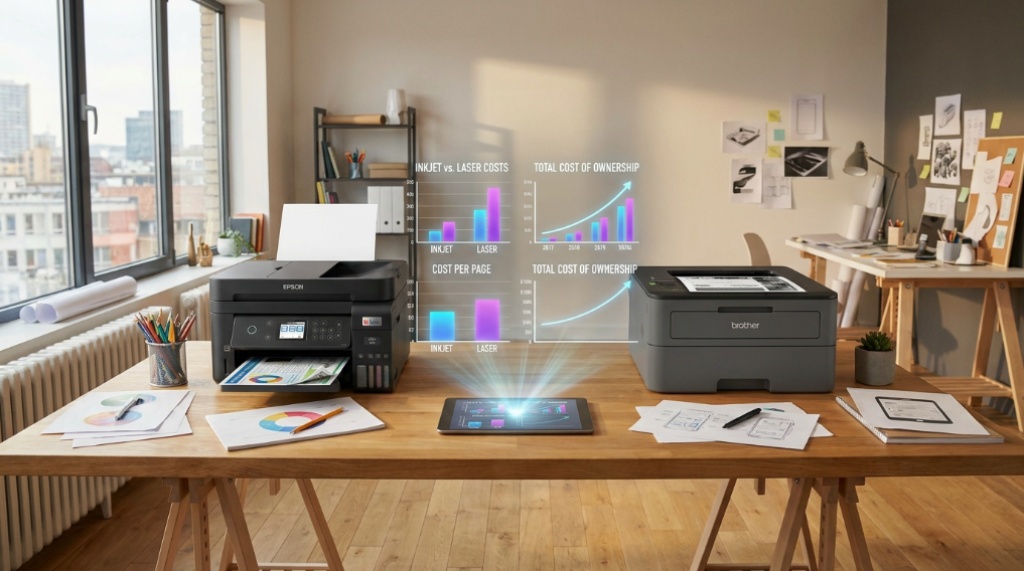
You just spent forty minutes setting up a new printer, only to realize the cartridge it came with will run dry after a few dozen pages. For anyone running a home office or a small business, that single realization captures the entire ink-versus-toner dilemma: the device is cheap, but keeping it fed is not. If your printer uses genuine HP 67 ink cartridges, you already know how quickly two small cartridges can disappear during a busy month of printing. This article breaks down the real cost-per-page math, the hidden expenses most comparisons ignore, and the situations where each technology actually wins.
Quick Answer
Toner usually delivers a better return on investment (ROI) for home and small offices that print more than roughly 100–150 pages per month, because its cost per page is typically lower and cartridges last much longer. Inkjet printing, using cartridges like genuine HP 67 ink cartridges, generally offers a better ROI for low-volume users who print occasionally, need color photos, or want a lower upfront printer price. The decision depends less on the technology itself and more on your monthly print volume, color needs, and how long the printer sits idle.
Key Takeaways
- Cost per page, not cartridge price, is the metric that determines ROI — a pricier cartridge that yields far more pages is often cheaper per page.
- Toner cartridges typically last several times longer than ink cartridges, which reduces how often you buy replacements and how often you’re caught with an empty cartridge.
- Inkjet printers win on upfront cost and photo quality, but their advantage shrinks fast once monthly print volume climbs.
- A printer that sits unused for weeks is a bad fit for inkjet, because dried printheads cost money to recover or replace.
- The genuine-versus-third-party cartridge decision affects ROI as much as the ink-versus-toner decision does.
What “ROI” Actually Means for a Printer
Printer ROI is not just the purchase price divided by pages printed. It is the total cost of ownership spread across the pages you actually produce. That includes the printer itself, every cartridge you buy over its life, the cost of wasted prints, and the value of your time spent troubleshooting jams or replacing cartridges.
A home office that prints 30 pages a month and a small business that prints 400 pages a month can own the same printer and get completely different returns. The math only becomes clear when you look at cost per page rather than the sticker on the box or the cartridge.
Ink vs. Toner: How the Two Technologies Differ
Inkjet printers spray liquid ink onto paper through tiny nozzles. Toner printers use a dry powder that is attracted to a drum by static electricity, then fused onto the paper with heat. That physical difference drives almost every practical trade-off between the two.
| Factor | Inkjet (e.g., HP 67 cartridges) | Toner |
|---|---|---|
| Typical cartridge yield | Low — often tens to a few hundred pages per cartridge | High — often 1,000 to several thousand pages per cartridge |
| Cost per page | Higher, especially for color | Lower, especially for black-and-white text |
| Upfront printer cost | Generally lower | Generally higher |
| Color and photo quality | Excellent, particularly on photo paper | Good for documents, weaker for photos |
| Idle behavior | Printheads can dry out or clog if unused | Tolerates long idle periods well |
| Best fit | Low-volume, color-heavy, occasional printing | Regular document printing at moderate to high volume |
Notice that neither column wins outright. The table only becomes a decision when you match it against your own habits.
The Real Cost-Per-Page Math
The honest way to compare ink and toner is to divide cartridge price by page yield. A cartridge that costs more but yields five times as many pages can be dramatically cheaper per page.
As a simplified example: if a cartridge costs $30 and yields 100 pages, that is $0.30 per page. If another cartridge costs $80 and yields 1,500 pages, that is about $0.05 per page. The second cartridge looks expensive at checkout but is six times cheaper across the printer’s life. Actual prices and yields vary by model and region, so always check the manufacturer’s stated page yield for your specific cartridge before running this math — and expect real-world yields to be somewhat lower than the rated figure, since page yield assumptions usually involve typical text documents, not full-page photos or heavy graphics.
Why Rated Yield Isn’t Real-World Yield
Manufacturers measure page yield under standardized conditions: a specific coverage percentage, continuous printing, and often black-and-white documents. Printing photos, dense spreadsheets, or documents with heavy color usage burns through ink far faster than the rating suggests. Toner is more forgiving here, but the same principle applies. Treat rated yields as a comparison tool between cartridges, not a promise about your monthly output.
When Inkjets Deliver Better ROI
Inkjet printing wins in specific, identifiable situations — and it’s worth being honest about which ones those are, because most comparisons either dismiss inkjets outright or oversell them.
- Very low print volume. If you print fewer than 50–100 pages a month, the lower upfront cost of an inkjet and the smaller cartridge investment per purchase can outweigh toner’s per-page advantage.
- Color and photo work. If your output includes photos, design proofs, or marketing materials, inkjet quality is usually the deciding factor.
- Space and budget constraints. Compact inkjet all-in-ones take up less room and cost less to replace if they fail.
- Occasional specialty printing. Printing on photo paper, labels, or certain cardstock is typically easier with inkjet hardware.
The catch: if your inkjet sits idle for weeks between jobs, those savings can evaporate. Clogged printheads often require cleaning cycles that consume ink, and if the damage is severe enough, a replacement cartridge or even a new printer becomes the cheapest fix, to complement your office setup, check out what your office decor says to your clients and how to make it speak volumes.
When Toner Delivers Better ROI
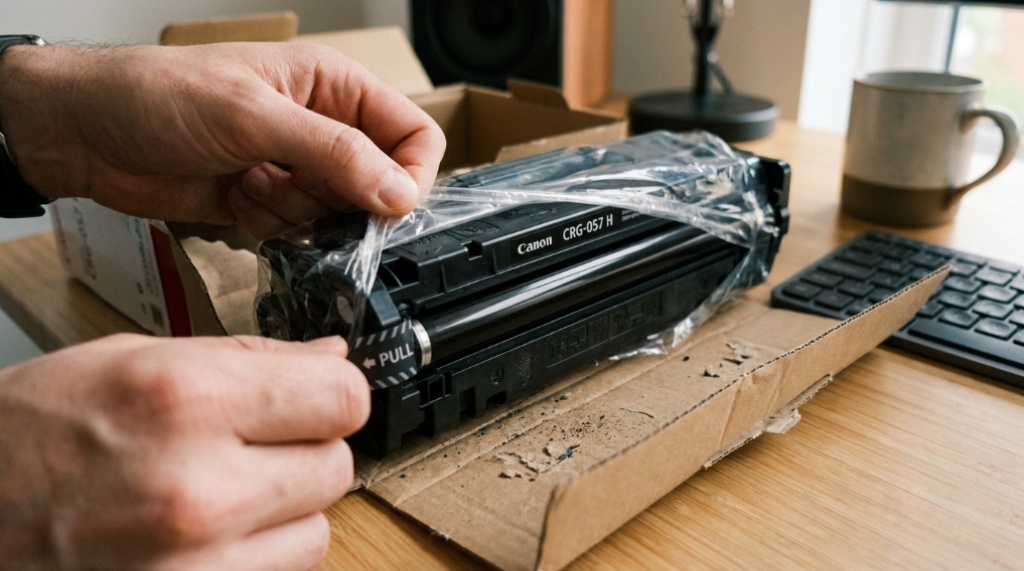
Toner becomes the clear winner once print volume crosses a modest threshold — often somewhere around 100–150 pages per month, though the exact crossover depends on the specific models being compared.
- Predictable document printing. Invoices, contracts, shipping labels, and internal documents are toner’s home turf.
- High-volume months. A small office that prints 500+ pages monthly will usually feel toner’s lower cost per page within the first year.
- Irregular usage patterns. Toner tolerates weeks of inactivity without clogging, which matters if your printing comes in bursts.
- Faster output. Toner printers generally print pages faster, which has real value for anyone printing in batches.
Toner’s downside is the upfront cost. The printer itself is pricier, and replacement cartridges are a larger single expense even when they’re cheaper per page. That hurts cash flow in the short term even when the long-term math favors toner.
Overlooked Costs That Change the Calculation
A few expenses rarely appear in headline comparisons but can swing your ROI significantly.
Printhead Maintenance and Recovery
Inkjet printheads are the most common hidden cost. Cleaning cycles consume ink. If a printhead dries out badly, replacement cartridges with integrated printheads can cost as much as a new budget printer. Toner drums eventually need replacement, but they last far longer and don’t dry out.
Cartridge Availability and Storage
Ink cartridges can dry out on the shelf over time, which matters if you stockpile them for convenience. Toner can sit for a long time without degrading. If you depend on a specific cartridge — say, genuine HP 67 ink cartridges for a compact all-in-one — it’s worth confirming local availability so you’re not paying a premium or waiting days for delivery in the middle of a deadline week.
Monthly Subscription and Instant Ink Programs
Some manufacturers offer subscription programs that ship ink automatically based on usage. These can lower effective cost per page for frequent inkjet users, but they work best when your print volume is reasonably stable. If you print in unpredictable bursts, a subscription can cost more than buying cartridges as needed. Always compare the subscription’s monthly fee against your own average output before signing up.
Genuine vs. Third-Party Cartridges
Third-party cartridges often cost less up front, but the ROI isn’t always better. Print quality can vary, yields may be lower than advertised, and some printers reject non-genuine cartridges through firmware checks. Genuine cartridges from the printer manufacturer typically offer more predictable yields and fewer compatibility surprises, which matters more when your printing is tied to business deadlines.
How to Decide in Five Steps
- Estimate your monthly page count. Check the printer’s job history if you already own one, or count a typical week’s printing and multiply by four.
- Note how much is color. If color is mostly for logos or occasional charts, a toner printer with color capability may still work. If it’s photos, lean inkjet.
- Calculate cost per page for both options. Divide cartridge price by rated page yield for the specific models you’re considering.
- Factor in idle time. If weeks pass between print jobs, weight toner more heavily regardless of volume.
- Compare total cost over two to three years. Include the printer, expected cartridge purchases, and any subscriptions or maintenance.
Common Mistakes That Skew the Decision
- Comparing cartridge prices instead of cost per page. A $20 cartridge that lasts 80 pages is far more expensive per page than a $70 cartridge that lasts 1,500.
- Buying an inkjet because it’s cheap, then printing heavily. The printer price advantage disappears quickly when cartridges are replaced monthly.
- Assuming toner is always cheaper. For someone printing 20 pages a month, a toner printer’s higher upfront cost may never pay itself back.
- Ignoring idle time. An inkjet that clogs after a quiet month costs more than the per-page math suggests.
- Stocking cartridges you won’t use quickly. Ink can dry out; only stockpile what you’ll realistically use within a reasonable window.
Frequently Asked Questions
Is toner always cheaper than ink per page?
For black-and-white document printing, toner is almost always cheaper per page. For color printing, the gap narrows, and high-quality inkjet photo printing can compete or even win on certain paper types. The comparison only holds when you look at cost per page for your specific models, not cartridge price alone.
How many pages should I print per month before switching to toner?
There’s no universal threshold, but many home offices find that toner becomes cheaper overall somewhere around 100–150 pages per month. Below that, a low-cost inkjet often costs less to own. Above it, toner’s lower cost per page usually outweighs the higher purchase price within a year or two.
Do genuine cartridges actually save money compared to third-party ones?
Not always on sticker price, but often on effective cost. Third-party cartridges may deliver lower yields than advertised or fail prematurely, which raises your real cost per page. Genuine cartridges offer more predictable yields and fewer compatibility problems, which matters most when printing supports business work.
Can I leave an inkjet unused for a month without problems?
Sometimes, but it’s a risk. Inkjet printheads can dry out during long idle periods, and the cleaning cycles needed to recover them consume ink. If your printing comes in unpredictable bursts with long gaps, a toner printer is usually the safer choice.
Does printer speed matter for ROI?
It can, indirectly. Faster printing reduces the time you spend waiting on jobs, which has real value in a busy office. Toner printers are generally faster for documents, while inkjets may slow down considerably on high-quality color output.
What’s the single most important number to check before buying?
Cost per page for the cartridges that fit the printer you’re considering, based on the manufacturer’s rated yield. Multiply that by your estimated monthly page count to see your likely monthly ink or toner cost. That single calculation prevents most bad printer purchases.
Conclusion
For most home and small offices printing more than 100–150 pages a month, toner delivers the better long-term ROI through lower cost per page and longer-lasting cartridges. For occasional, color-heavy, or photo-focused printing, an inkjet — fed with genuine cartridges like the HP 67 line — usually costs less to own overall. Before you buy anything, calculate cost per page for your realistic monthly volume, factor in how often the printer will sit idle, and let those two numbers make the decision for you.