
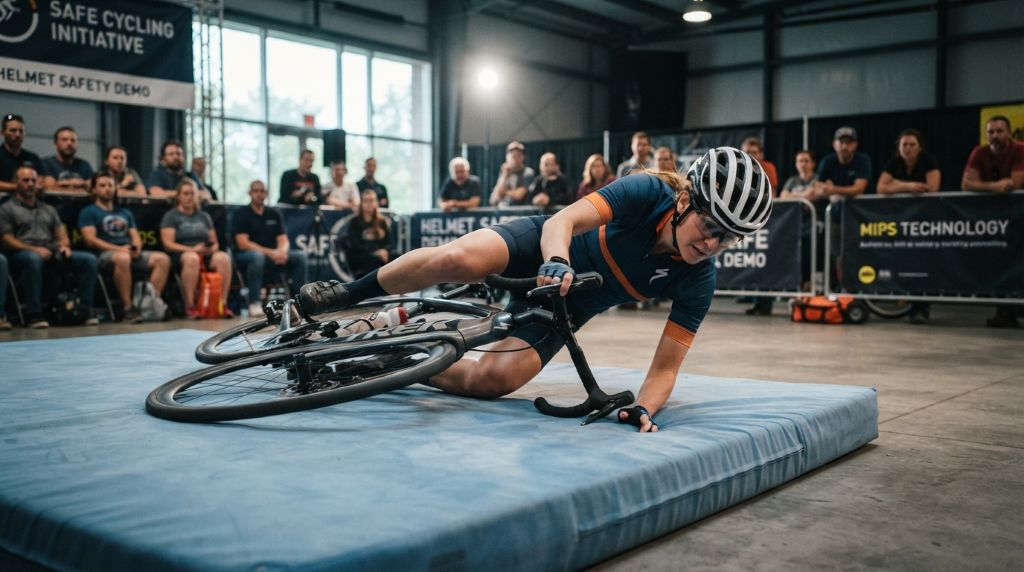
A bicycle ride can change in seconds when a wheel slips or a vehicle appears suddenly. When a crash happens, your head can hit the road, curb, vehicle, or another object. A bicycle helmet cannot prevent every injury. However, it can greatly reduce the force reaching your skull and brain.
So, how do bicycle helmets protect the head in an accident? They use a hard outer shell, energy-absorbing foam, and a secure retention system. Together, these parts help manage impact energy and keep the helmet in position.
Research also supports helmet use. A Cochrane review found that bicycle helmets reduced the risk of head, brain, and severe brain injuries by 63% to 88%. The review included cyclists involved in different types of crashes.
The CDC also recommends helmets for people who ride bicycles. It says helmets can lower the chance of traumatic brain injury during recreational activities.
In this guide, we will explain what happens during a crash. We will also look at helmet materials, fit, impact protection, and their limits.
What Happens to Your Head During a Bicycle Crash?
During a crash, your body can stop very quickly. Your head, however, keeps moving because of momentum. This can cause your head to strike another surface with considerable force.
For example, imagine riding downhill when your front wheel hits a pothole. The bicycle may stop suddenly, but your upper body continues forward. You may then fall onto the pavement.
Without protection, the skull absorbs much of the impact. The brain can also move inside the skull. That movement can cause a concussion or other traumatic brain injury.
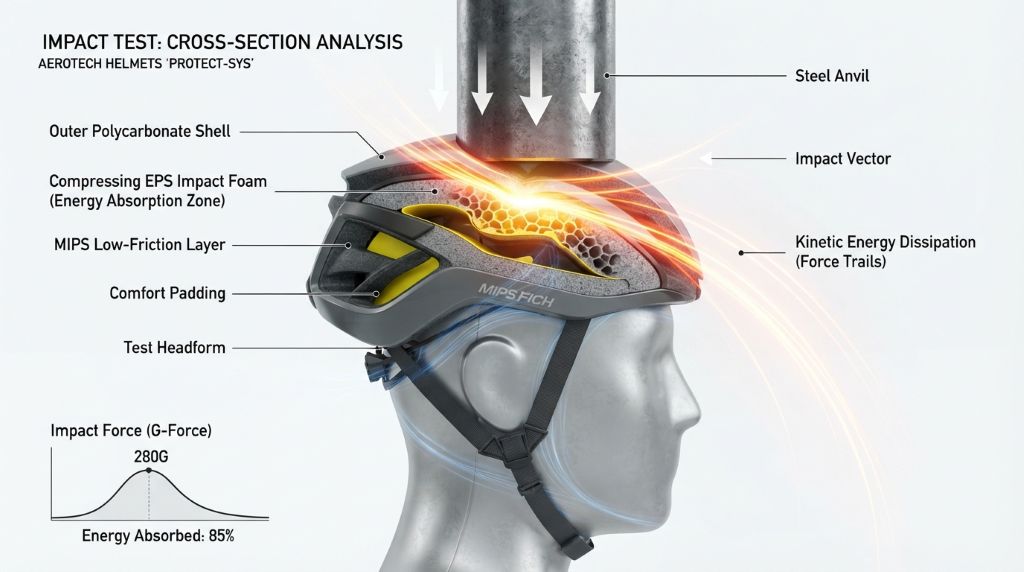
A helmet works by changing how that impact reaches your head. Instead of allowing the skull to receive the full force at one point, the helmet spreads and absorbs some of the energy.
The basic process looks like this:
- The helmet shell receives the initial impact.
- The shell spreads some force across a wider area.
- The foam liner compresses or deforms.
- That deformation absorbs part of the impact energy.
- The remaining force reaches the head at a lower level.
This process does not make a crash harmless. Instead, it reduces the severity of many impacts.
The CDC reported an estimated 596,972 emergency department visits for bicycle-related traumatic brain injuries from 2009 through 2018 in the United States.
Therefore, head protection remains an important part of bicycle safety. However, riders should also use lights, follow traffic rules, and choose safer routes.
How Does the Helmet Foam Absorb Impact Energy?
The foam liner plays one of the most important roles in a bicycle helmet. Most traditional helmets use expanded polystyrene, commonly called EPS foam.
EPS foam contains many tiny air-filled structures. During a strong impact, the foam can compress and crush. This process absorbs energy that would otherwise reach your head.
Think about dropping an object onto concrete. It stops almost instantly. Now imagine placing a thick layer of protective foam between the object and the concrete. The foam creates more time and distance for the object to stop.
A similar principle applies to helmet protection.
The helmet does not simply act as a hard shield. Instead, it helps manage the energy produced during the collision. The foam deforms as it absorbs part of that energy.
This protection also explains why you should replace a helmet after a serious crash. The foam may have compressed internally, even when the damage is difficult to see.
Some modern helmets also use systems designed to manage rotational movement. These systems aim to reduce certain rotational forces during angled impacts.
However, no helmet can completely prevent brain movement. The CDC specifically warns that bicycle helmets are not designed to prevent every concussion.
Therefore, riders should not treat a helmet as complete protection. It works best as one part of a wider safety approach.
How Does the Outer Shell Protect Your Head?
The outer shell provides another important layer of protection. It covers the foam and helps the helmet maintain its structure during an impact.
A shell can help spread impact forces over a wider area. It can also protect the foam from minor damage during everyday use.
Additionally, the smooth surface can help the helmet move across some surfaces after an impact. This can be useful during certain crashes because the helmet may slide rather than catch suddenly.
However, the shell does not work alone. Its protective value depends on the foam underneath and the helmet’s overall design.
The retention system also matters. This system includes the straps and adjustment mechanism that hold the helmet on your head.
A helmet that moves out of position cannot protect the intended area effectively. Therefore, correct fitting remains essential.
Before riding, check these points:
- The helmet sits level on your head.
- The front edge sits above your eyebrows.
- The straps form a comfortable V around your ears.
- The chin strap feels secure without being painfully tight.
- The helmet does not move easily when you shake your head.
A properly fitted helmet should feel secure without creating pressure points.
The CDC advises choosing the right helmet for the activity and making sure it fits correctly. It also recommends replacing damaged helmets.
Therefore, buying a good helmet is only the first step. You must also wear it correctly every time you ride.
How Effective Are Bicycle Helmets in Real Crashes?
Laboratory testing can show how helmets handle controlled impacts. Real-world research can show whether those benefits translate into actual crashes.
Research strongly supports the protective role of bicycle helmets.
A Cochrane review examined five well-conducted case-control studies. It found that helmets reduced the risk of head, brain, and severe brain injury by 63% to 88%.
The review also found similar protection during different crash situations. Helmet protection remained substantial in crashes involving motor vehicles and other types of bicycle crashes.
More recent CDC information also supports helmet use. The CDC reports that bicycle helmet laws have been associated with reductions of up to 55% in serious head injuries, including traumatic brain injuries.
These numbers do not mean a helmet guarantees survival. They show that wearing one can significantly reduce the risk of serious head injury.
It is also important to understand what the numbers do not say. A helmet cannot stop every concussion. It cannot prevent injuries to every part of the body. It also cannot compensate for dangerous riding behavior.
For instance, speeding through traffic can increase crash risk. Poor visibility can also increase the chance of collisions.
Therefore, helmet use should work alongside other safety habits.
A safer rider should:
- Wear a properly fitted helmet.
- Use front and rear lights when visibility is poor.
- Follow traffic signals and road rules.
- Avoid riding while distracted.
- Keep the bicycle maintained.
- Choose safer roads whenever possible.
This combined approach provides better protection than relying on a helmet alone.
Why Proper Helmet Fit Matters So Much
Even a high-quality helmet can provide poor protection when it fits incorrectly. The helmet must stay in the correct position during a crash.
Imagine a helmet sitting too far back on your head. During a sudden fall, it may shift further backward. That movement could expose part of your forehead.
A loose helmet can also move from side to side. Therefore, riders should adjust the straps before every ride.
A simple fit check takes only a few seconds.
First, place the helmet level on your head. The front should sit low enough to protect the forehead. Next, adjust the side straps around your ears.
Finally, tighten the chin strap. It should feel secure without causing discomfort.
Shake your head gently from side to side. The helmet should remain stable.
Also check the helmet regularly for damage. Look for cracks, crushed foam, broken straps, or damaged adjustment parts.
You should replace a helmet after a serious impact. Even if the outside looks normal, internal foam damage may reduce future protection.
The CDC recommends replacing helmets that have been damaged.
Therefore, helmet fit is not a minor detail. It is a major part of effective head protection.
What Bicycle Helmets Cannot Protect You From
Bicycle helmets provide important protection, but they have clear limits.
First, they cannot prevent every concussion. A crash can produce forces that cause the brain to move inside the skull. The helmet can reduce some forces, but it cannot eliminate them completely.
Second, helmets do not protect the entire body. A crash can still cause broken bones, cuts, shoulder injuries, or spinal injuries.
Third, a helmet cannot prevent a collision. Traffic awareness remains essential.
For example, a rider wearing an excellent helmet can still face serious danger from a fast-moving vehicle. Therefore, safe road behavior remains critical.
A helmet should be viewed as a final layer of protection. It is not permission to take greater risks.
The CDC recommends a broader approach to bicycle safety. This includes helmet use, safer infrastructure, traffic-law compliance, and better visibility.
This is especially important for children and inexperienced riders. Parents should teach children to wear helmets consistently. Adults should also set a good example.
The goal is simple. Reduce the chance of a crash, then reduce the possible harm if one happens.
A Simple Real-Life Lesson From a Bicycle Fall
Many cyclists have experienced a small fall that seemed harmless at first. A slippery road, loose gravel, or unexpected obstacle can cause a rider to lose balance quickly.
Consider a common situation. A cyclist rides slowly through a neighborhood after light rain. The bicycle crosses a slippery patch and suddenly turns sideways.
The rider falls toward the pavement. Their shoulder may hit first, followed by the side of the helmet.
The rider may walk away with a few scratches. However, the helmet could show a dent or crushed area afterward.
This simple example explains why helmets matter even during ordinary rides. Serious crashes are not the only situations where head protection becomes useful.
A personal experience can make the lesson memorable, but it should not replace research. Scientific evidence gives us a stronger basis for safety decisions.
The research is clear about one important point: bicycle helmets reduce the risk of serious head and brain injuries.
Therefore, wearing a helmet should become as normal as checking your brakes before a ride.
You may never know when a small mistake will become a sudden fall. A helmet gives your head another layer of protection when that moment arrives.
Final Thoughts: Why Wearing a Bicycle Helmet Matters
So, how do bicycle helmets protect the head in an accident?
They help by spreading impact forces and absorbing energy through their protective materials. The outer shell provides structure, while the foam liner helps reduce the energy reaching the head.
Research shows that this protection can make a major difference. A Cochrane review found substantial reductions in head and brain injury risk among helmeted cyclists.
However, helmets have limits. They cannot prevent every concussion or protect every part of the body. They also cannot prevent crashes.
That is why smart cycling requires several safety habits working together.
Wear your helmet correctly every time. Check your bicycle regularly, especially after riding in wet conditions. If you notice unusual noises or mechanical issues after a rainy ride, learn more about Bike Creaking After Riding in Rain to understand possible causes and solutions. Stay visible in traffic. Follow road rules and avoid distractions.
Most importantly, do not wait for your first serious crash before taking helmet safety seriously.
If this article helped you understand bicycle helmet protection, share it with another cyclist. You can also leave a comment and tell us about your bicycle safety experience.
FAQs
Do bicycle helmets really prevent head injuries?
Yes. Research shows that bicycle helmets substantially reduce the risk of head and brain injuries during crashes.
Can a bicycle helmet prevent a concussion?
Not always. Helmets can reduce injury risk, but they cannot prevent every concussion.
How tight should a bicycle helmet be?
It should fit securely without causing pain. The helmet should stay level and should not move easily during normal head movement.
Should I replace my helmet after a crash?
Yes. Replace a helmet after a significant impact. Internal foam damage may not always be visible.
Does an expensive bicycle helmet provide better protection?
Price alone does not guarantee better protection. Look for an appropriate safety-certified helmet with a proper fit. Correct use also matters greatly.